Horrific Press, Great Outcomes and Fascinating History: The Mongols

Few figures in history have been more feared than Genghis Khan. While there have been more than a few truly horrific political leaders able to act on global ambitions, Genghis Khan stands out as an exceptional empire builder. During his sixty-one years (1162 – 1227), he conquered created what many consider the largest state ever, covering much of Asia, from China to parts of Europe. Hundreds of millions were affected by him and tens of millions lots their lives. But what do we know of Genghis Khan as a person? Jack Weatherford, an anthropology professor and author, penned an accessible best-selling biography that has remained in print – and popular – for more than two decades. Genghis Khan and the Making of the Modern World reads like a novel and sheds a great deal of light on this extraordinarily fascinating – and understandably polarizing – figure.
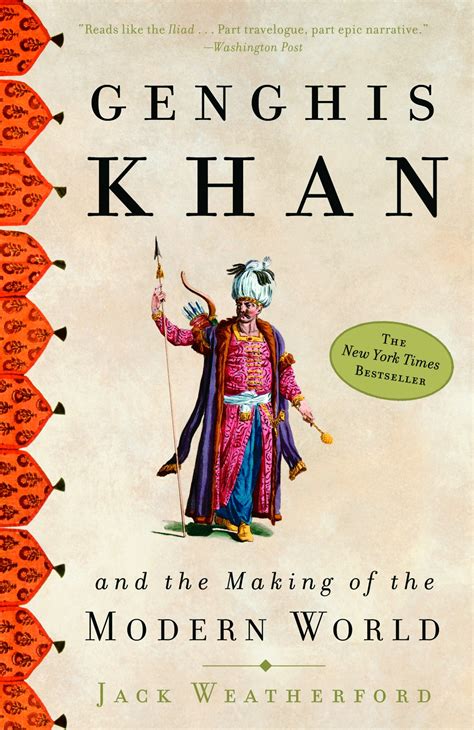
Weatherford’s aim is to explain, to contextualize, and to appreciate the impact of Khan and his empire. Questions of morality are view through an anthropological lens. Weatherford’s goal is not to judge, but to document and explicate. With that as a grounding, the book provides a extremely interesting history of a compelling man. Khan, through ruthless intelligence, was able to build power within Mongolian culture and then across a continent. He was rigorously meritocratic, restless to a fault, and innovated in how he treated and organized peoples. From military structure to rights for women to how conquered lands were treated, Khan established a kind of rough “fairness” for those under his control. His approach benefited him, naturally, and distinguished the Mongolian army and empire from all others. He sought great power without any sustained interest in cultural conversion. If one agreed to submit to the power of Genghis Khan and his taxes and wants, life could be good. Resist his empire and death was more than likely.

Without any real practice of agriculture or the making of goods, the Mongol economy depended upon taxes and plunder. Accordingly, outcomes mattered more than anything else to sustain Mongolian rule. What mattered and did not to Khan and his people is very interesting. The Mongols greatly valued Mongol life. There were no sacrifices of troops. They had little interest in torture or excessive cruelty, in contrast to many leaders of the period. The Mongols had no sense of honor and were not keen on proselytizing. The unusual admixture of traits and preferences gave the Mongols great advantages in their drive to expand. They used terror and general fear to achieve their aims. Genghis Khan, who appreciated the value of scribes, laws and structure, took advantage of all and more. They welcomed the terrible press, for it made sieges all the easier.

Weatherford’s book moves quickly. He knows how to dwell on an anecdote and when to pull back to explain broader themes. The big picture does not suffer, for he shows how the Mongolian empire had an incredible impact on world trade and commerce. Were it fiction, it would stand on its own as an incredible story. All in all, Genghis Khan is a fascinating window into an ancient and little understood world.

David Potash
Magic of Mules

Rinker Buck is a character, a raconteur, a man you cannot help but admire. Author, former journalist and inveterate adventurer, he has made improbably journeys a hallmark of his life.

As a teenager, Rinker and one of his brothers flew a rebuilt Piper aircraft across the country. That became Flight of Passage, an award-winning book. In 2022, he wrote Life on the Mississippi, an account of his time on a home-built flatboat on the river. Between the two, in 2015, Buck penned The Oregon Trail: A New American Journey. It is a wild tale of Buck’s trip in a covered wagon from Missouri to Oregon. Rinker, by the way, came from a large family, and a different brother joined him on this adventure.

The book is a travel memoir, a personal history, a space for observation and reflection, and a training guide for those who might take DIY all too seriously. Rinker’s reason for the trip were complicated. He was reshaping a career, redirecting his life after a painful divorce, and working to come to grips with his childhood. His father, a charismatic, successful, and self-destructive man, took his children on a much shorter wagon journey through Bucks County, PA. The time in the wagon resonated with Rinker and in some ways, the entire adventure was an attempt to give himself clarity about his family and himself.

As one might imagine, the trek across the west was a tremendous adventure. No one had attempted such a feat in many decades. Complicating the effort, the history of the Oregon trail was hazy. There was no one route. People came, went, came back again over decades until train travel took over continental America. The Buck brothers met extraordinary people and made many, many friends. They had problems, disasters, mistakes and much to learn across the thousands of miles. Parts of Oregon Trail are truly funny, especially if you appreciate the challenges with trying to do something on your own. The Buck brothers also found moments of true transcendence.

The true heroes of the adventure, though, at least to me, are the three mules that made it all a reality. Rinker gives us a good history of mules, the vital role they played in American and world history, and the difficulties of finding and managing a reliable team. Mules, the offspring of a male donkey and a female horse, are not so much stubborn as sensible. They are indefatigable and surprisingly interesting. Buck’s journey is wholly dependent upon the hard work of Beck, Bute and Jake. Each had their strengths and weaknesses, their personalities. Averaging twenty plus miles a day, the trio towed the Becks, their wagon, their pup wagon (worthy of its own history), over two thousand miles. Think about that!

My other takeaway from the Oregon Trail was overwhelming admiration for the courage and drive of the tens of thousands of Americans who sought a better life out West. What they endured – willingly – in pursuit of that dream is beyond impressive. It reflects something fundamental of the American story. For that and more, I am most grateful to Rinker Buck.

David Potash

Rethinking Attica and the Carceral Imperative

The 1971 Attica prison riot lives in collective culture as a violent event during a period of historical civil unrest. It is a call out in history text books and a reference in studies of America’s criminal justice system. Details of what actually happened, though, are far from well known. As the years add up, fewer are aware of what transpired and why. Pay attention, look more closely, and understanding Attica explains a great deal about America, its political history, and the power of government to shape a narrative.

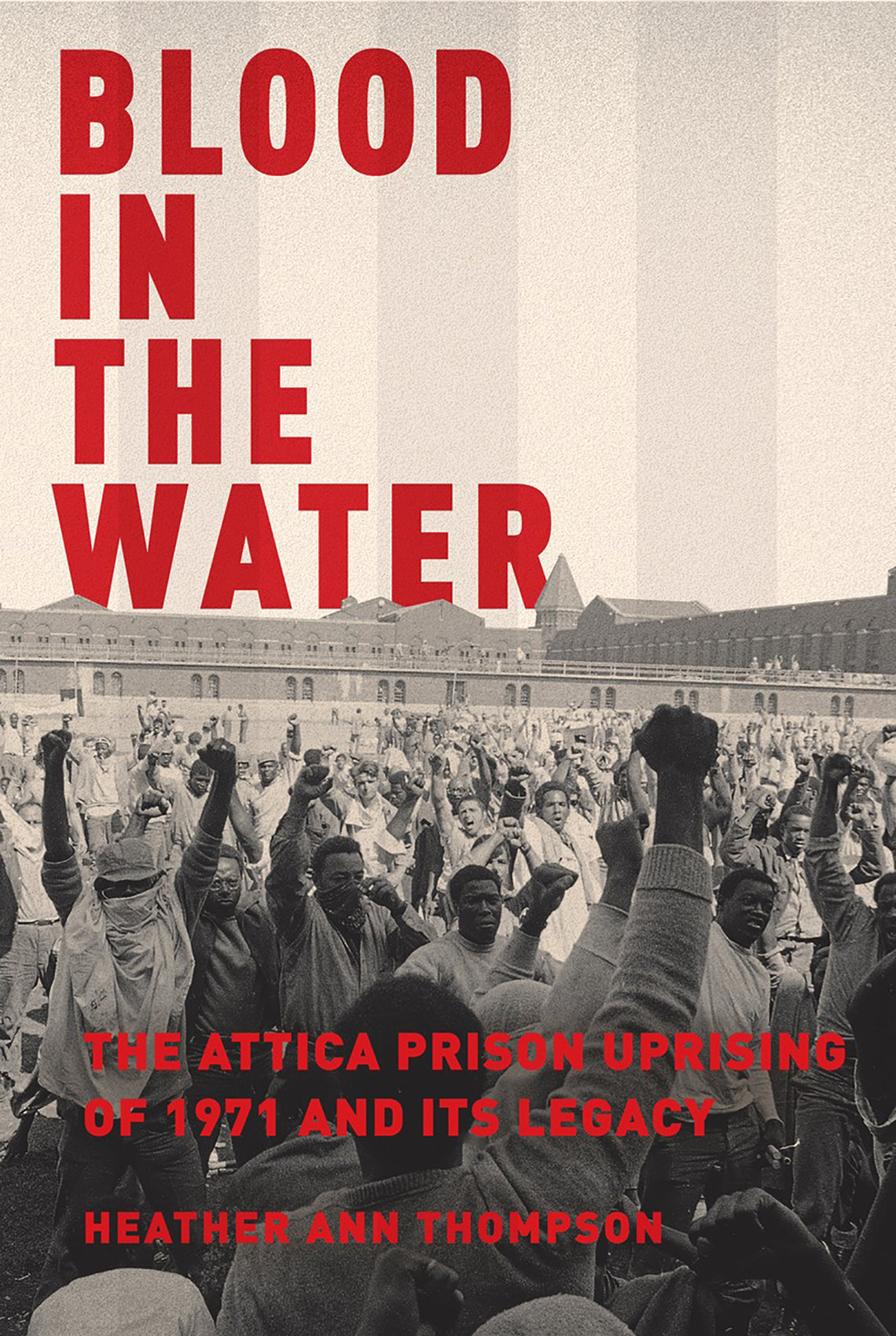
To make sense of Attica, historian Heather Ann Thompson devoted more than a decade to research, filing numerous Freedom of Information Requests and challenging New York State and other government entities for records. With perseverance and luck (her words), she found all manner of material. With great skill and insight, she wrote the uprising’s definitive history: Blood in the Water: The Attica Prison Uprising of 1971 and Its Legacy. It is truly an outstanding work, well worthy of its many accolades and awards.

The Attica State Correctional Facility is located in Erie County, New York, not far from Buffalo. In 1971, as today, many of its inmates are people of color from the New York City area. Erie County is primarily White. Thompson sketches this out effectively, along with the rebellions of prisoners across the country in the period. Conditions in many prisons were deplorable, with inmates housed in outdated facilities designed for far fewer people. Prisoners sought changes that might bring them basic decencies. Their requests were often met with retribution, violence and disdain. The problem was nationwide and linked by many to broader questions of civil rights and justice.

Thompson addresses the budding tensions fairly, as one might analyze a labor conflict. She explains, expands, and teases out the nuance that is woven into change, resistance, and negotiation and/or resolution. We meet prison officials, prisoners, and numerous figures involved in the criminal justice system in New York State. The riot, or takeover of part of the prison, happens almost accidentally. There was initial violence, with a guard severely beaten (he later dies of his wounds), a prisoner murdered, rape and other terrible trauma. Surprisingly quickly, however, leadership among the inmates took hold. The inmates organized and began to think about their situation and requests. Their prisoners – guards – were protected. In a fluid situation, leadership among the prisoners sought stability and some relief. The inmates negotiated, seeking protections and greater opportunities, such as competent medical care. Elected and civil officials from around the country made their way to Attica. It was a major news story and a flashpoint for race, law and order.

NYS Governor Nelson Rockefeller, ambitious for the presidency and publicly supported by President Richard Nixon, decided to end negotiations. He ordered NYS police and others retake the prison by force. Hundreds of criminal justice professionals, armed to the teeth, stormed the prison and began shooting everywhere. They killed 39 people, hostages and prisoners, and wounded hundreds more. The prisoners were not armed. It was a naked display of power.

Government officials lied and/misled about the nature of the attacks, the violence, and what was transpiring in the prison. Worse still, as the prison fell under official control, wounded inmates were beaten, tortured and denied medical care. Thompson provides chilling details of the violence, which was truly terrible. It was also not initially reported to the public. Much of what happened took many years and court cases to emerge. Many records remained sealed to this day. In brief, Attica was a bloodbath, a site of racist violent retribution of government officials against prisoners. The weeks following the Attica uprising were horrific for the inmates. “Blood in the Water” is an apt title for the book.

The story does not end in 1971, though, for the state worked hard to prosecute prisoners involved in the riot. Thompson tracks the court cases, the multiple investigations, and the four-decade plus push for accountability. She documents how police and other state officials murdered and tortured inmates and then covered up crimes. The details of Attica emerged slowly, report by report and case by case. Lawyers, both for the state and the prisoners, devoted their professional careers to cases both holding prisoners and officials accountable. So, too, did coroners, prison officials and many others involved. Ultimately, no government official was ever held responsible for the deaths in retaking the prison or the following deplorable behavior of prison officials.

Thompson brings the history into a full circle through investigation of the lives of the guards and their families. Families of guards killed during the retaking of the prison struggled to find justice and support. Over time, many found connections with the inmates. The entire hisstory calls into question what justice might or could mean.

Thompson raises so many questions. Blood in the Water is more than a moment in history; it is a study of how broader societal trends in law, crime, and criminal justice intersect with civil unrest, political ambition, and the tremendous power of the state.

David Potash