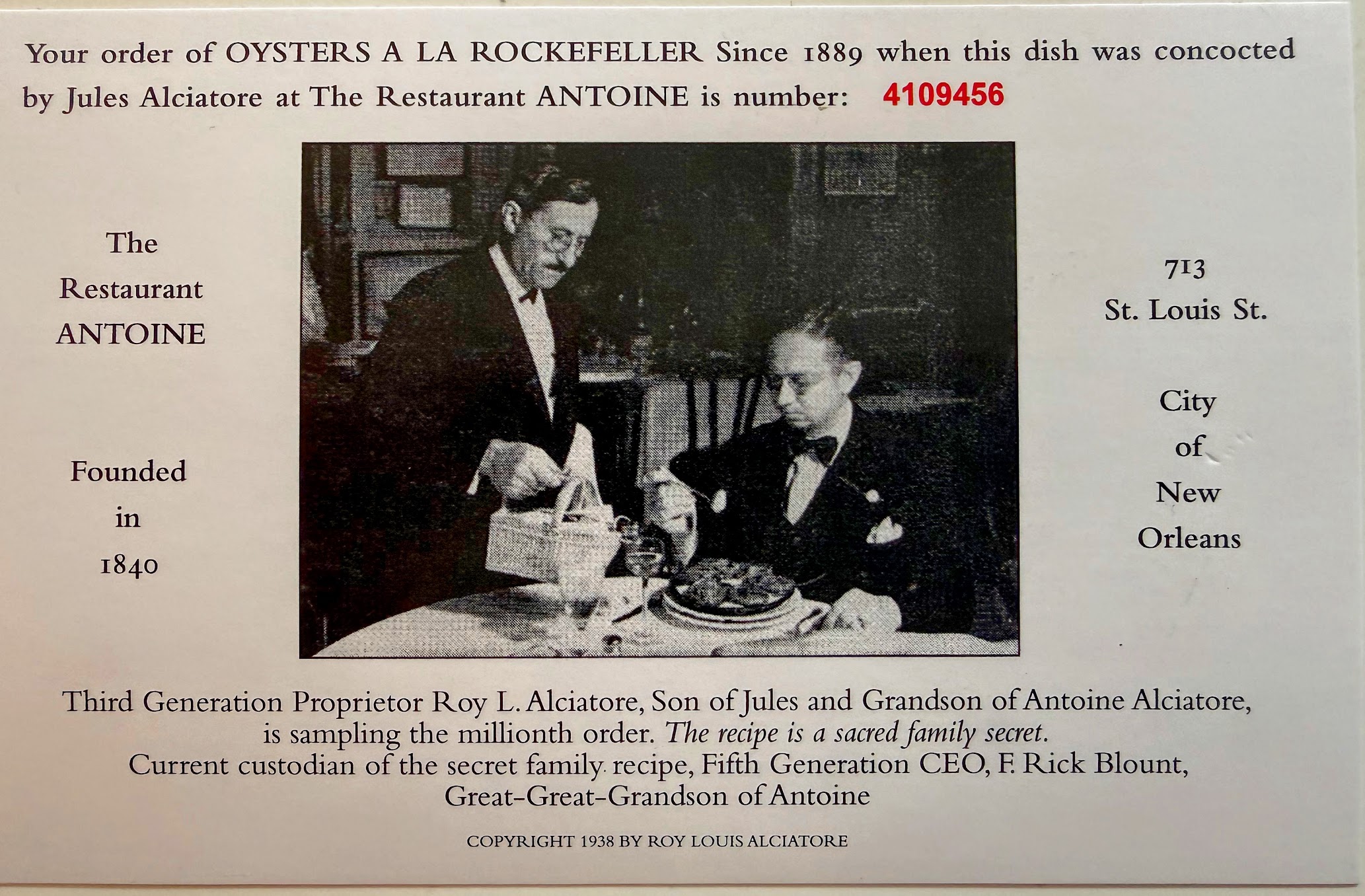
In 1840, Martin Van Buren, the “little magician” was president of the United States. Florida had yet to become a state. In New Orleans, then America’s third largest city, a recent immigrant from Marseille opened a restaurant. Named Antoine’s for its founder, Antoine Alciatore, it was a great success, serving fine French food to a sophisticated clientele. It became and remains a gastronomic institution. Antoine’s is the oldest continuously operating restaurant in the country.
In 1889, Jules Alciatore, son of the founder, faced a shortage of escargot. He decided to replace snails with oysters from the Gulf. He tinkered with the sauce and, happy with the result, placed Oysters A La Rockefeller on the menu. Truly delicious, the dish was an immediate favorite. Oysters Rockefeller is on the menu to this day. If you’re fortunate enough to visit NOLA and to make your way to Antoine’s, order it. You reward, above and beyond great tastes and a bit of history, includes a post card.
Life can be short. Since one must eat, why not eat well? Hope to see you in the Crescent City.
Dig deep in the library or at a used book store in the fiction shelves and it’s possible to find a any number of very talented writers whose work, often semi-biographical, speak of rough times. Some are well-known and famous. Others may never find commercial success. Naturalistic and often stylish, you can recognize these works in the Beats, in some of the Soviet samizdat, and in some pieces of French naturalism at the end of the 1800s. Characters struggle with poverty, drugs and alcohol, poor choices and difficult outcomes. More often than not, dark humor leavens the prose. Several popular American writers, especially those who worked in the short story vein, explored these lives. Jack London, Raymond Carver and O. Henry come to mind. There’s a texture to this sort of fiction that can really ring true.
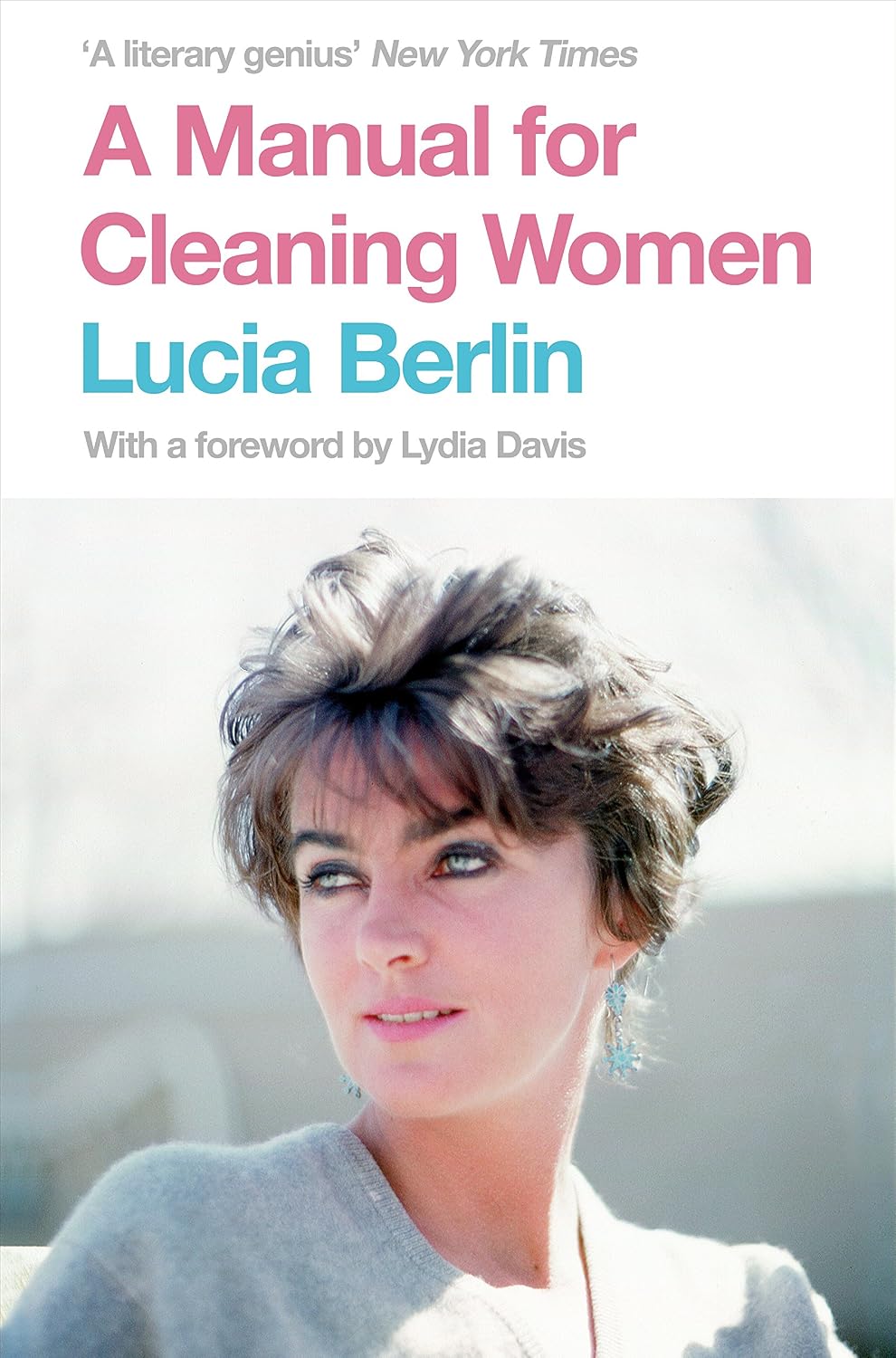
Lucia Berlin was such an author in the post-WWII years. A collection of her short stories, A Manual for Cleaning Women, resonated with me. I am not alone, for her work is enjoying a renaissance. Berlin (1936 – 2004), had issues with alcohol, difficult men, and poor health throughout her life. She held numerous working class jobs, including as a house cleaner, and drew deeply from her personal experience and the lives of those around her. Berlin kept writing through it all. Eventually her talent was recognized and she secured a faculty position. This was later in her life. Berlin was an outstanding teacher, and I would imagine that part of her skill set in the classroom was deep empathy. It is embedded in her stories.
Berlin’s prose is sharp. Lydia Davis, who penned the introduction, writes that it is exhilarating. There is great economy to her stories, which are far from formulaic. They proceed quickly, with all unnecessary detail stripped away. Do not look for set endings or catharsis. Things jump, often quickly, and with a point. Berlin provides slices of reality from perspectives and voices rarely heard. In most of the stories in this collection, she writes as a woman and as a mother, roles that many male authors simply will not or cannot assume. One would not call her fiction feminist, though, for there is little to no polemics. Berlin’s greater concerns, above and beyond literature, were liberal in the old sense of the term. Every person (or character) has value. Everyone’s voice has some worth.
Berlin is democratic with a small “d.”
If one were to consider thematic issues, class is perhaps as important as gender. Berlin’s vantage point is without privilege, with limited agency, and ongoing concerns of control. She does not romanticize poverty or distress, though, and she is consistently thoughtful. The aim is not to shock. Nonetheless, some of her stories do cut to the quick, often unexpectedly.
My wish after reading A Manual? That I knew of her earlier and had read her along with other contemporary authors. I also wish there was something of a personal happy ending for Berlin, that her immense skill was recognized, that she found some comfort and ease amid all the grit.
One of the most influential American international corporations of the twentieth century, the United Fruit Company encompassed much more than a business. Founded by New England elites, United Fruit’s growth and influence mirrored the nation’s expansion in the Caribbean basin and later the world. The company relentlessly pursued monopoly controls and vertical integration, built a market for bananas as a staple part of an everyday diet, and successfully marketed itself domestically with amazing public relations. On the other side of the ledger, United Fruit was ruthless and an outsize player in US foreign policy, unconcerned with issues of democracy or self-determination.
Journalist Peter Chapman’s Jungle Capitalism: A Story of Globalization, Greed and Revolution is a high-altitude historical critique of United Fruit. Chapman, who is an editor at the Financial Times and an experienced writer, knows how to engage a reader. He plays up people, personalities, and conflict, always keeping an eye out for the idiosyncratic and memorable. While the focus may be on a company, the book doles out fascinating facts. O. Henry invented the term “banana republic” in his novel Cabbages and Kings. The US Centennial exhibition of 1876 appears, as do political leaders (dictators and US officials), entrepreneurs (Sam Zemurray spurred the company’s growth in the first half of the 1900s), and cultural icons (Carmen Miranda and Harry Belafonte). The action zips from conflict to resolution to conflict in high-relief. Chapman emphasizes, though, that there are no banana jokes in the countries dependent upon the crop.
Goodness knows, there’s much for Chapman to share. United Fruit played a critical role in the government, economics and histories of Guatemala, Panama, El Salvador, Honduras and Costa Rica. It influenced US foreign policy at the highest levels, aligning its counsel and leadership with extremely powerful political leaders. The Guatemalan coup of 1954, one of the CIA’s most direct influences on the sovereignty of a country, was a effort made possible through the lobbying of United Fruit.
Anchoring the story is the suicide of Eli M. Black in 1975. Black was a wildly successful corporate raider, a Polish immigrant who climbed the ladder at Wall Street. He reorganized United Fruit into United Brands. Debt and a hurricane put the company into great peril and Black jumped out of the 44th floor of the Pan Am building in New York City. Shortly after, investigators learned of a $1.25 million bribe Black paid to the Honduran president Arellano to reduce taxes on bananas. Black’s son is Leon Black, billionaire, philanthropist and friend of Jeffrey Epstein.
As a cursory critique, Jungle Capitalism serves its purpose. Unfortunately, its arguments are not buttressed to withstand close historical analysis. Long on narrative, Chapman’s approach is weak on hard data, sources and specifics. The company’s structure, organization, leadership and profits are absent. Corporate reports, share prices and other forms of real information would have been welcome to gain a better understanding of organizational strategy and impact. The book provides ample metaphors – octopus most frequently to describe United Fruit – but lacks numbers.
Similarly, understanding foreign policy is a notoriously tricky affair. Decisions are almost always made with insufficient information. Clashes of politics, histories and priorities shape actions, leading to analysis relying on assumptions. United Fruit was a major player in Central America, to be sure, but it was not the only multinational corporation? What roles did other businesses play? And what about the complexities of domestic politics, in the United States and abroad? Discussion of these factors are thin to non-existent in Jungle Capitalism. This is not to fault Chapman for writing a non-academic book. Instead, it would simply have been a more effective book with more contextual acknowledgements.
Jungle Capitalism is entertaining history-light, looking at an important history that calls out for heavier attention. Like a tabloid, it is long on sizzle and short on substance.
Outstanding restaurants are magical. Their food is superb, of course, but something else is afoot. A special meal can transform into a memorable experience. Our behavior changes when we eat at someplace exceptional. Smiles come easier, the conversation flows, for food brings people together, and our awareness of time shifts.
How does a restaurant make that happen? And do it consistently, meal after meal, year after year? It takes much more than hard work and luck.
Molly Irani’s Service Ready: A Story of Love, Restaurants, and the Power of Hospitality opens an fascinating window into the building of an exceptional restaurant. Molly and her husband, Meherwan, are the founders and owners of Chai Pani, a James Beard award winning restaurant in Asheville, NC. Before taking the step, the couple had worked white collar jobs on the west coast but were frustrated by the lifestyle. They moved east to be closer to their family. Unsure of their future, they cast about for path to make money and live a fulfilling life as they re-imagined their lives. Molly’s parents had run a popular restaurant that nearly bankrupted them, leading to a divorce. Nonetheless, they decided to make a go of it, starting a restaurant that would serve the street food from Meherwan’s childhood in India.
With $60,000 and the support of friends and family, the couple found a sleepy diner for sale in a good location for traffic. The looming question: what sort of appetite might local residents in Asheville have for Indian cuisine? No one was serving anything like it.
The couple opened Chai Pani in 2009 with a robust business plan and confidence that by drawing upon their respective strengths they could make something special. A collective approach to leadership with a relentless focus on people was at the very foundation of their approach. They envisioned the enterprise as a people business that served food, not a restaurant that cared about people. Limited resources facilitated creativity. They decided that with inevitable challenges, reliance in innovative problem solving would get them through. The team called that kind of ingenuity “jugaad.” Fear, Irani writes, can paralyze entrepreneurship.
Chai Pani ran out food to sell their first day. The same thing happened on their second day. The restaurant was immediately popular. However, it took months, if not years, of work and adjustments to build a stable organization. Merewhan gave his attention on the food; Molly looked at everything else. Collectively, they organized around core principles including “mindblasting” hospitality, being a people company, mastery in servitude, fostering connection, inclusion and belonging, and finding where the love lies. Service Ready charts the business’s growth, its expansion (and retraction), and how principles shaped decision making. Molly writes from a perspective of curiosity and gratitude, giving the book a positive can-do vibe.
The lessons from Service Ready and Chai Pani are not limited to the culinary or hospitality sectors. They resonate in any organization that thinks of itself as a people business. It is a book that may find a home in business courses and on the shelves of aspiring entrepreneurs. My only complaint? No recipes.
Many years ago I attended a lecture by a well-respected physical anthropologist. The focus of his talk was a shard of stone, something that I never would have, nor could have, identified as a paleolithic tool. The anthropologist was more than able to do so – through close analysis, great skill, and an explanation of context – showing us what kind of people had made the tool, how it was created, and its purpose. He outlined the type of society that made such tools, how people lived, and what their life might have been like. What has stayed with me ever since is the power of true expertise, to see and explain things that the rest of us may miss.
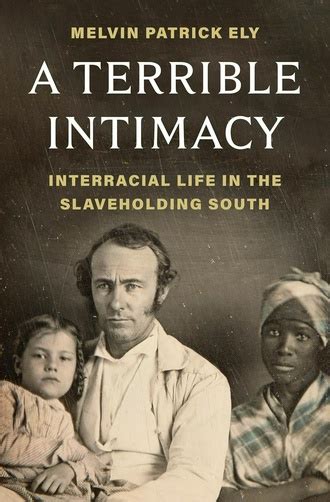
Historian Melvin Patrick Ely has a similar proficiency in a different field. The Kenan Professor of Humanities and Professor of History at the College of William and Mary, Ely is a masterful researcher and writer. His latest work, A Terrible Intimacy: Interracial Life in the Slaveholding South, invites the reader into a close study of six court cases involving slaves in Prince Edwards County, Virginia. Primary sources from the trials are the heart of the work, informed by Ely’s vast knowledge of the time and area. The trials challenge assumptions, and through Ely’s analysis, we get a much better handle on the complex and complicated ties of racism, gender, economics and power in antebellum America. It is local history, but local history with broad consequences for appreciation of the slaveholding South. The book’s conclusion is inescapable: slavery, a horrific institution and practice, corrupted everyone – whether directly involved or not. It was a deadly cancer on society.
Ely wants the reader to “walk through these stories” with him, “to hear for yourself everything that Black and white people said about their own lives and deeds, and about each other, during these trials.” The book offers a special kind of close reading, for the trial documents were compiled for a particular purpose. White people kept the records and like all documents, questions, contradictions and challenges emerge over time. Nonetheless, with Ely’s patience, persistence and curiosity, we see how the six trials do not proceed as one might imagine. There are repleted with complicated judgements, irreconcilable evidence, and unexpected outcomes. Ely is an active narrator, explaining how historians advance theories, render judgments, and determine when to press an argument and when to move on.
Rendering A Terrible Intimacy engaging is the nature of the trials. We want to find out what happened, why it happened, and to learn of the verdict. The first case concerns a Black slave who killed a white man in 1825. The second, from 1826, is about an enslaved man charged with killing a white woman. An 1854 charge of rape by a white woman against a Black slave is next, followed by a white man charged with trying to kill an enslaved Black man. A charge of facilitating an unlawful assemblage of slaves – a major crime – is our next focus, with the case of a white man who was attacked by a Black slave as the concluding the book. Through it all, Ely is a patient companion, offering guidance and commentary.
A Terrible Intimacy is not a light read. Nonetheless, it is an important read. Were I to imagine a twentieth century comparison, it would be how the courts in Europe tried to function under Nazi rule in World War II, or some study of life under the Pol Pot dictatorship. Real evil – like slavery – has the ability to invade all aspects of life. Many potentially decent people become monsters, or at least behave monstrously, in environments such as this. It is deeply distressing and vitally important – if we are to work towards common decency and humanity – to give books like A Terrible Intimacy deep consideration.
Emile Guillaumin was a French farmer, a peasant, who spent almost his entire life (1873 – 1951) in Ygrande, a small commune in central France. With only five years of schooling under his belt, Guillaumin was nonetheless a gifted and influential writer. During the day he farmed and at night he read and wrote. He published poetry, articles, an agricultural quarterly, and a masterpiece of a fiction, The Life of a Simple Man. Released in 1904, the book was a sensation across France. Guillaumin gave voice to a sharecropper (metayan) named Tiennon, describing his life, his family, and his world with sympathy, dignity and great care. It is a beautiful book, one that remains relevant to this day.
The goal of the work, Guillaumin wrote, was to show the elites what a sharecropper’s life was really like. He does that through a straightforward first-person autobiography, as “told” to the author. Born in 1823, Tiennon speaks of his childhood in a small commune not far from Ygrande. We learn of his family and the day-to-day grind of rural life. Most of the people in France at the time were peasants, people born into poverty with limited options, family who struggled to have enough to eat, a safe and comfortable place to live, and sufficient basic necessities. Tiennon does not complain so much as explain, and through his words, we learn. He works, marries, starts a family, renting one farm after another, providing for himself and his family. At best, he does a little better than scrape by. Life is basic and quite tough.
Tiennon is a very sympathetic hero. He is a truly decent man, works extraordinarily hard, and wants what is right and best for his family. He does not complain; he deals with problems as they arise. There is little by way of new opportunity and the very sense of his agency is quite limited. Without an education or mathematics, he and his family are cheated out of money. Poverty limits the very idea of travel or exploration. Tiennon’s world-view, and those of his community, are severely circumscribed. He is aware of this, too, and is uncomfortable when confronted with wealth. Nonetheless, Guillaumin is very attuned to the technological changes sweeping rural France in the 1800s.
Importantly, Guillaumin does not belittle Tiennon or his world. Nor does he romanticize it. Instead, the author paints a picture of decent people who could do and be so much more if there was greater wealth and investment in them. He shows when and how opportunity are available and when they are not. There’s an anthropological quality to the descriptions, a narrative that is grounded in fact and labor. When the one key meal of the day is a thick soup, the soup matters.
A Simple Man is a timely reminder of the power of well-written, authentic prose, to foster empathy and understanding. It is at the very grounding of a liberal society, one in which we realize that each one of us has worth. Seems to me that we can never have too much of this kind of work.
The novels of Jane Austen paint a romantic picture of Georgian England. Flirting, balls, romance and weddings shape an upper class world always thinking about marriage, family and status. Everyone talked about inheritances, engagements and annuities; they were public knowledge. But what about wealth? Who was making money, not simply marrying into it? And how did it happen?
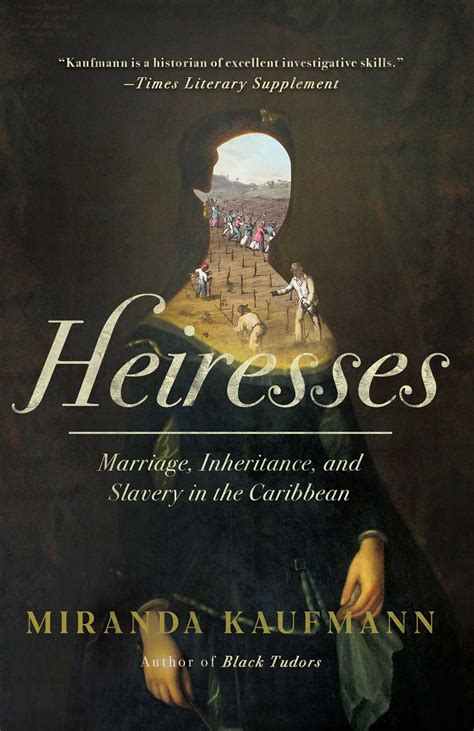
Look to history to answer that and other questions. The reality is that Caribbean slavery enriched many strivers, producing new money at scale. England built a colonial empire in the region from the mid-1600s and by the 1700s, sugar production surged, generating enormous profits. It was backbreaking dangerous work and the life expectancy of those who did it – enslaved men and women – was awful. Slavery made Georgian wealth possible. Rape, violence and all manner of degradation were rampant. Those enslaved in the British West Indies suffered in a man-made hell designed to enrich white owners. Moreover, men were not the only ones profiting from enslaved labor. Women and families cannot be ignored if we are to gain a full understanding of enslaved labor. Miranda Kaufmann’s Heiresses: Marriage, Inheritance, and Slavery in the Caribbean is a fascinating look at nine women who profited from slavery.
Kaufmann is a researcher at the University of London, journalist and educator. Black Tudors, her first book, received numerous well-deserved awards. Heiresses will as well. It is superb history. Meticulously researched and fascinating in its detail, the book sheds a powerful light on upper-class family finances and slavery. Kaufmann’s explanations of economics, English law, and the importance of first-born males (primogeniture) gives a clear framework to the reader. The book functions as a fact-based primer on Austen’s world and, by extension, the importance of slavery to the British empire. Heiresses is not abstract or textbook, though. The book offers a set of carefully crafted biographies, replete with family charts, illustrations and when possible, primary source quotes. We get to know the women, their families, and their lives.
One of Kaufmann’s great strengths is her curiosity and empathy, really to understand these women’s choices and worlds. She rightly calls out racism and hypocrisy, but the aim is not to scold. The book is ethical and fair in its judgments. Nevertheless, what it reveals is far from romance. It is a society and world driven by greed and indifference to fellow humans. The empire was exploitative and brutal.
The recurring theme for the women and their families was maintaining wealth. When Britain outlawed slavery 1834, there was a concerted effort for reparations. Some of the heiresses were active in the pro-slavery movement. Keeping in mind the many constraints society at the time placed on women, it was nonetheless possible for some to exercise significant agency with regard to their fortunes.
The nine women lived most of their lives in England, though there was ongoing travel across the Atlantic. Ignorance of the violence woven into slavery was impossible. They were first-hand witnesses and Kaufmann’s study makes clear that the women knew full well of slavery’s costs. None were abolitionists and evidence is scant of any concern about those enslaved. When a note does appear, Kaufmann calls it out in curiosity.
Heiresses is powerful and bound to generate conversations and inquiry. In Kaufmann’s words, “we must confront uncomfortable truths head on.” Ethical decisions and an ethical life depend upon it.
One of the most telling observations about history is that it always written by the victors. But do the vanquished have anything to say? And can we learn from them?
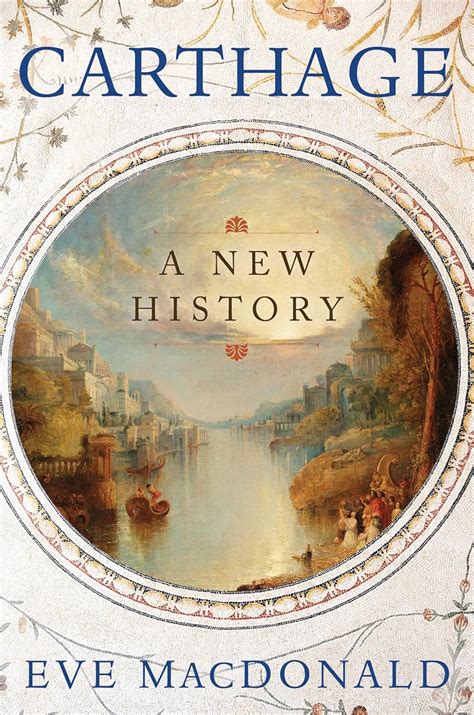
Carthage: A New History is a fascinating study of the ancient city. Admittedly, I knew very little about the old or traditional history, save that the city was flattened by the Roman Empire, its fields were sown with salt, and that Carthage’s most famous general, Hannibal, took elephants over the Alps in his war with Rome. It turns out that in the expert hands of an classicist who writes exceptionally well, the history of Carthage can tell us a great deal. It is interesting!
Eve MacDonald is just such a guide. She has written numerous scholarly studies along with a biography of Hannibal, that famous general, that received outstanding reviews. In Carthage: A New History she tells the story of the city from its founding by the Phoenicians as a trading post on the Mediterranean to its destruction at the hands of the Roman army under Scipio. MacDonald draws from classical texts as well as new discoveries in archeology, aided by science. She explains, to the extent that it is possible, Carthaginian society, from architecture to economy to government. Carthage was a beautiful city with many grand public spaces. People worshiped multiple gods, include Melqart, Tanit and Ba’al. That god is part of the foundation of Hannibal’s name and that of many other figures. Difficulties with sources, naming and the perspective of written histories, almost all by Romans, complicate scholars work. It is one of the reasons that we know so little about Carthage.
Nonetheless, MacDonald is an enthusiastic source. Her book highlights the tremendous dynamism around the Mediterranean Sea in ancient times. People traveled, explored, and traded. They started families, alliances, and wars. Carthage was part of a loose Punic empire. Its fortunes waxed and waned until its final defeat in 146 BC. Carthage was one of the largest and wealthiest cities in the region.
City states were almost always in some conflict or alliance with another city state. Stability was elusive and lives could be easily cut down by war. Reflecting on the history reminded me of the relevance of Hobbes’ maxim about life being “nasty, brutish and short.” Violence was endemic.
The battles were epic and ongoing. It was a period dominated by military actions and exploits of men. Hannibal’s skills as a general, leading a Carthaginian force from Iberia (Spain) over land through the Alps and to the lands north of Rome, were amazing. He was not alone, though, in being an exceptional warrior. MacDonald neither romanticizes nor critiques in this history. She guides and explains. MacDonald makes space, too, to explore the lives and limited agency of women.
In contrast to a history with a clear outcome, the arrival of a “better” state, for centuries the Mediterranean was a swirl of expansion and contraction through conflict. For example, Carthage engaged in multiple wars to secure Sicily. At the initial battle at Himera, the first outpost on the island to be settled by Greeks, Carthage was soundly defeated in 480 B.C.E. In 409 B.C.E, the Carthaginian army secured a massive victory under the leadership of Hannibal Mago (this is a different Hannibal – two hundred years before the famous Hannibal). The city of Himera was razed, everything torn down and never rebuilt. The city’s fate, like that of Carthage, was not unique.
Interestingly, the work of MacDonald and other scholars complicate the idea of city/state or national identity. Lives and actions do not fit neat categories. Back at Himera, fighters for the defeated Greek/Sicilian army were buried in mass graves. These were recently excavated and the soldiers’ remains were studied. The men hailed from far and wide, including the Mediterranean, the Baltic, Asian Steppes, and even Siberia. One has to be careful not read back into the history contemporary identities and assumptions.
Rome’s victory in the Punic Wars was essential in the development of the Roman Empire. It took many, many years and hundreds of thousands of lives in numerous battles. Carthage’s tale, as one of Rome’s many vanquished, is well worth considering as we consider our collective past. History need not be unidirectional. There is often much we can gain from questioning the stories told by the victors.
Sometimes one comes across a work of nonfiction that is so engrossing and engaging that it can stop time’s passage. Exceptional history has this power, pulling the reader in and rendering relatable what might initially appear to be alien and all too far away. It can build bridges of understanding, fueled by curiosity and research. History of this mettle changes minds, redirects students’ course of study, and lives outside of the page and decades after publication. Amy Stanley’s Stranger in the Shogun’s City: A Japanese Woman and Her World is that kind of work, a window on a distant world.
Stanley is a professor of history at Northwestern University. An accomplished academic with deep expertise in Japan, she wrote Stranger for a less-informed public. What, after all, do most of us know about Japan in the first half of the nineteenth century? These are the years before Admiral Perry “opened” Japan to the west – a problematic concept on so many levels. And if we imagine that we have some basic knowledge of samurai and shoguns, it is often through the lens of Hollywood or historical fiction. What Stanley does in this book is open the reader’s mind to a culture that is distant, exotic, and still – in her carefully crafted prose – accessible.
The subject of the biography is a woman named Tsuneno, the child of a Buddhist priest. Tsuneno was born in 1801 in a rural part of western Japan, the Echigo province. Tsuneno and her family were literate, like many other Japanese, and extensive letter writers. They had some money and education. One of Tsuneno’s letters was posted on a scholarly website and Stanley, reading it, became obsessed with learning more about the woman. Tsuneno led a messy, rebellious life. She had aspirations, plans and courage. Some of her choices turned out well and others, less so. Tsuneno was not a political or major cultural figure, but her needs, her story, and her life dominated her family’s letters. Her very lack of fame speaks to what makes her all the more special.
Curiosity piqued, Stanley set about mapping Tsuneno’s family’s correspondence, assiduously tracking down the people, their lives, and tons of details. From these she built a biography, a history of the family, the region, and the period. From the the weather – Echigo shut down during the winter because of heavy snow – to the clothing, from the pawnshops to tax structure to the danger of fires in the city, Stanley crafts a comprehensive picture of what life was like in early 19th century Edo and Echigo. Edo figures prominently, at the time and over the centuries. It was a city of opportunity, culture, power and danger. It transformed into Tokyo, but remnants of Edo can still be found.
As for life in Edo in the early 1800s, concerns then and there remain familiar: having enough money, status and agency, how to navigate family dramas, the importance of marriage and position, finding friends and love. Stanley makes certain, too, that we know what was different. It is important not to assume certain set rules or practice. Tsuneno, for example, was divorced three times and was able to move to Edo as an unmarried woman. Family honor, however, was always a major concern.
Stanley is generous with the subjects of her study, giving them full consideration and appreciation. All of this is set against the larger shifts aligning to change Japan. Foreign influence was at Japan’s door and significant economic challenges were challenging shogunate structures. While people at the time did not know it, their way of life was about to change in significant ways. It is a powerful message, something that once read, felt and considered, stays with you. All it takes is a little time to read, reflect and imagine.
Stranger in the Shogun’s City is truly an exceptional book.
How does one – and when can one – wrestle with the monstrosities of the Holocaust and World War II? I circle around it, with a book or movie here or there, but rarely for longer stretches of time. In-depth study can be devastating, calling into question the very nature of what it means to be human and our collective future. I find it all encompassing and often too much to process. But avoiding it is no solution. Recent political violence and hateful rhetoric have elevated the need to return to the subject, which is never all that far away – if we listen attentively.
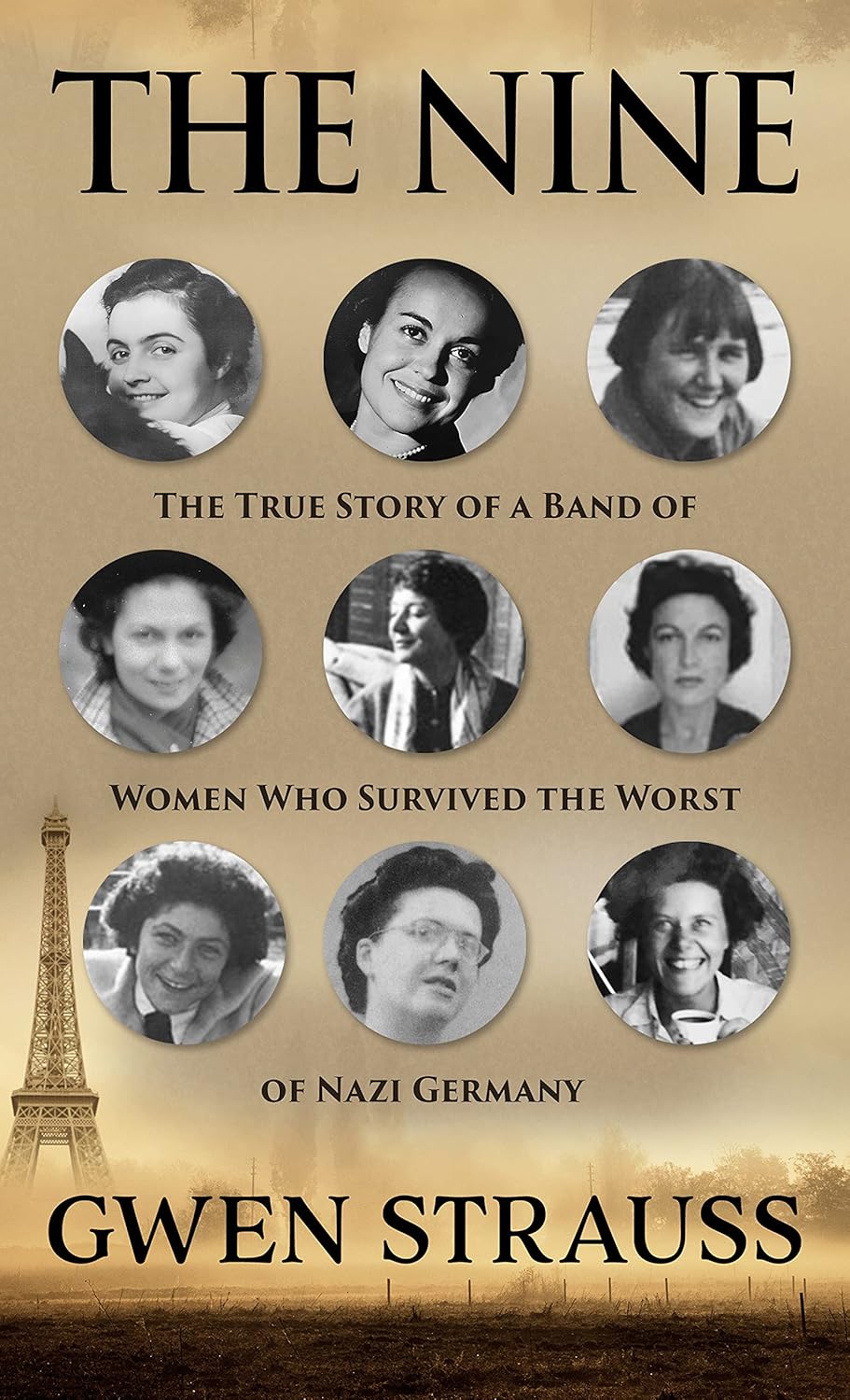
Amid the overwhelming number of titles and perspectives, a recent non-fiction work is worth your time and consideration. Gwen Strauss, a poet and children’s book author, recently wrote the story of her great aunt’s escape from an end-of-the war death march. The Nine is dramatic history at a personal level, linked to a much larger and terrifying narrative. It humanizes heroism and horror.
We do not know the full extent of the resistance in Europe during World War II. Many fought the Nazis, risking torture and death. Some of their stories have been recorded and many have not. Survivors of the conflict often sought to avoid dwelling in darkness, instead seeking a new start after the war. Survivor guilt, complicated choices and issues of identity and gender further worked against retelling the story of resistance at scale. A chance discussion over lunch connected Strauss with her great aunt through marriage, Helene Podliasky, and her story of resistance and survival. Without the intervention, we would never know. At the social gathering Podliasky mentioned that she had escaped from Ravensbruck, the Nazi concentration camp for women, with eight others who fought in the resistance.
Strauss took notice, but it took time for her to begin to look more closely into the history. Jews were only some of the prisoners who held at Ravensbruck. The camp held political prisoners, sex workers, Roma, communists, and women from all over Europe. Those that Germany considered to be political or military threats were often sent there. In the camp prisoners worked as slaves, were tortured, subject to medical experiments, and murdered en masse. More than 132,000 were held in Ravensbruck during the war. It truly was a hell on earth. After the war there were trials and publicity, but systematic study emerged over decades.
Strauss followed up the lunch with an interview. While Podliasky said that she did not see much point in recounting her story, she did – in detail. Strauss took extensive notes and was driven by to learn more. Podliasky joined the Resistance in 1943. She was twenty-three then, a brilliant young engineer who could speak five languages. Captured and tortured in 1944, Podliasky was shipped to Ravensbruck where day-to-day survival was never certain. At the camp, she found an old friend from school named Zaza. As Strauss’s research continued, she came across a book by Suzanne Maudet, who wrote an account from Zaza about her escape from the camp with Podliasky and the seven other women. Through more research, tracking down relatives and working in archives, the story came together.
The Nine is Strauss’s history of the nine women, each imprisoned in Ravensbruck for resistance to the Nazis. The women took on a treacherous ten-day trek to find freedom and safety with the American Army. As the Allies advanced through Germany, Nazi leadership accelerated the killing of prisoners. They were shot, starved, murdered in large numbers as the Nazis feared the end of the war and accountability. Many prisoners were sent of “death marches” that ended in direct murder or death through starvation or exposure to the elements. On such a group march from Ravensbruck, Podliasky and her eight friends slipped away and hid in a ditch, pretending to be corpses. The dead were ever present and guards did not notice. The nine women carefully slipped further away, finding food and evading threats as they made their way to the front lines. Had they not, they would have been murdered along with hundreds of others. on that march.
Strauss describes the ten-day ordeal in detail, mixing in biography and adding her own work as a relative and researcher. The nine women relied on each other, trusted each other, and all survived, through wile, courage, cleverness and luck. It was extremely dramatic and makes for edge of the seat reading.
The book’s structure calls for careful attention. Each of the women has a different background, a different path to the Resistance and capture, and a different future after the war. Advance knowledge of the contours and timeline of the war makes for an easier read. I referenced maps and the internet to better understand specifics. Even without these additional aids, The Nine resonates as a powerful window into a very dangerous world.
The nine’s teamwork, mutual support, heroism, friendship and inherent goodness stands as an extraordinary counter the darkness all around them. It is wonderful that they were able to survive and quite fortuitous that a talented relative, Gwen Strauss, made it her mission to tell their story.