The Nine: Proof of Hope
How does one – and when can one – wrestle with the monstrosities of the Holocaust and World War II? I circle around it, with a book or movie here or there, but rarely for longer stretches of time. In-depth study can be devastating, calling into question the very nature of what it means to be human and our collective future. I find it all encompassing and often too much to process. But avoiding it is no solution. Recent political violence and hateful rhetoric have elevated the need to return to the subject, which is never all that far away – if we listen attentively.
Amid the overwhelming number of titles and perspectives, a recent non-fiction work is worth your time and consideration. Gwen Strauss, a poet and children’s book author, recently wrote the story of her great aunt’s escape from an end-of-the war death march. The Nine is dramatic history at a personal level, linked to a much larger and terrifying narrative. It humanizes heroism and horror.
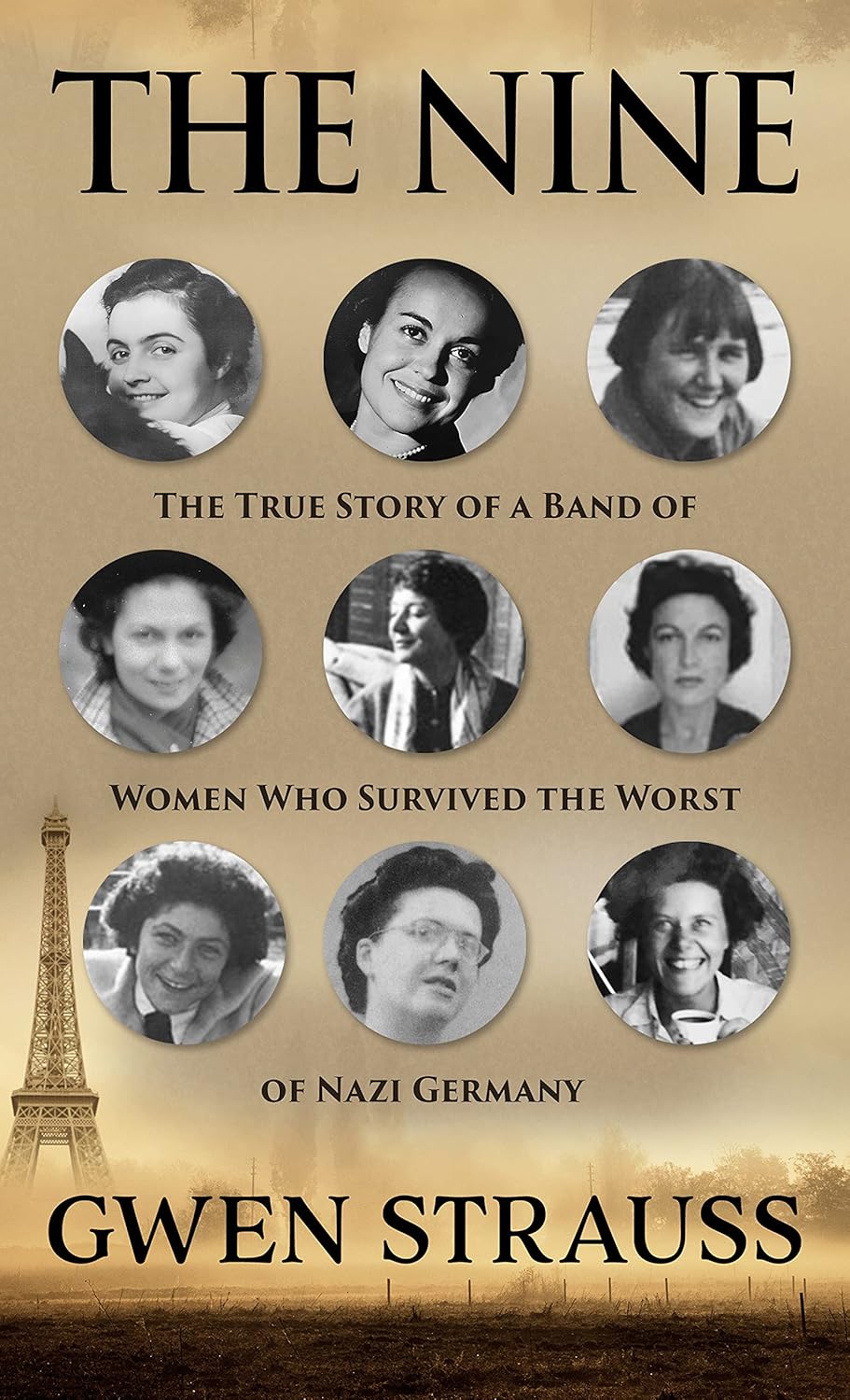
We do not know the full extent of the resistance in Europe during World War II. Many fought the Nazis, risking torture and death. Some of their stories have been recorded and many have not. Survivors of the conflict often sought to avoid dwelling in darkness, instead seeking a new start after the war. Survivor guilt, complicated choices and issues of identity and gender further worked against retelling the story of resistance at scale. A chance discussion over lunch connected Strauss with her great aunt through marriage, Helene Podliasky, and her story of resistance and survival. Without the intervention, we would never know. At the social gathering Podliasky mentioned that she had escaped from Ravensbruck, the Nazi concentration camp for women, with eight others who fought in the resistance.
Strauss took notice, but it took time for her to begin to look more closely into the history. Jews were only some of the prisoners who held at Ravensbruck. The camp held political prisoners, sex workers, Roma, communists, and women from all over Europe. Those that Germany considered to be political or military threats were often sent there. In the camp prisoners worked as slaves, were tortured, subject to medical experiments, and murdered en masse. More than 132,000 were held in Ravensbruck during the war. It truly was a hell on earth. After the war there were trials and publicity, but systematic study emerged over decades.
Strauss followed up the lunch with an interview. While Podliasky said that she did not see much point in recounting her story, she did – in detail. Strauss took extensive notes and was driven by to learn more. Podliasky joined the Resistance in 1943. She was twenty-three then, a brilliant young engineer who could speak five languages. Captured and tortured in 1944, Podliasky was shipped to Ravensbruck where day-to-day survival was never certain. At the camp, she found an old friend from school named Zaza. As Strauss’s research continued, she came across a book by Suzanne Maudet, who wrote an account from Zaza about her escape from the camp with Podliasky and the seven other women. Through more research, tracking down relatives and working in archives, the story came together.
The Nine is Strauss’s history of the nine women, each imprisoned in Ravensbruck for resistance to the Nazis. The women took on a treacherous ten-day trek to find freedom and safety with the American Army. As the Allies advanced through Germany, Nazi leadership accelerated the killing of prisoners. They were shot, starved, murdered in large numbers as the Nazis feared the end of the war and accountability. Many prisoners were sent of “death marches” that ended in direct murder or death through starvation or exposure to the elements. On such a group march from Ravensbruck, Podliasky and her eight friends slipped away and hid in a ditch, pretending to be corpses. The dead were ever present and guards did not notice. The nine women carefully slipped further away, finding food and evading threats as they made their way to the front lines. Had they not, they would have been murdered along with hundreds of others. on that march.
Strauss describes the ten-day ordeal in detail, mixing in biography and adding her own work as a relative and researcher. The nine women relied on each other, trusted each other, and all survived, through wile, courage, cleverness and luck. It was extremely dramatic and makes for edge of the seat reading.
The book’s structure calls for careful attention. Each of the women has a different background, a different path to the Resistance and capture, and a different future after the war. Advance knowledge of the contours and timeline of the war makes for an easier read. I referenced maps and the internet to better understand specifics. Even without these additional aids, The Nine resonates as a powerful window into a very dangerous world.
The nine’s teamwork, mutual support, heroism, friendship and inherent goodness stands as an extraordinary counter the darkness all around them. It is wonderful that they were able to survive and quite fortuitous that a talented relative, Gwen Strauss, made it her mission to tell their story.
David Potash