Carthage, Restored on the Page
One of the most telling observations about history is that it always written by the victors. But do the vanquished have anything to say? And can we learn from them?
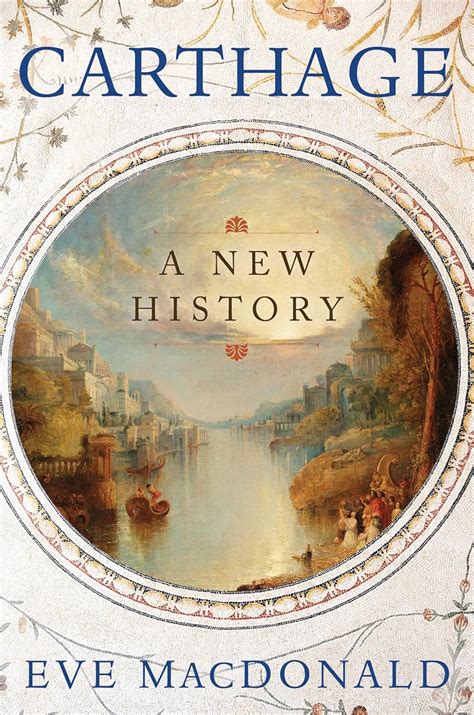
Carthage: A New History is a fascinating study of the ancient city. Admittedly, I knew very little about the old or traditional history, save that the city was flattened by the Roman Empire, its fields were sown with salt, and that Carthage’s most famous general, Hannibal, took elephants over the Alps in his war with Rome. It turns out that in the expert hands of an classicist who writes exceptionally well, the history of Carthage can tell us a great deal. It is interesting!
Eve MacDonald is just such a guide. She has written numerous scholarly studies along with a biography of Hannibal, that famous general, that received outstanding reviews. In Carthage: A New History she tells the story of the city from its founding by the Phoenicians as a trading post on the Mediterranean to its destruction at the hands of the Roman army under Scipio. MacDonald draws from classical texts as well as new discoveries in archeology, aided by science. She explains, to the extent that it is possible, Carthaginian society, from architecture to economy to government. Carthage was a beautiful city with many grand public spaces. People worshiped multiple gods, include Melqart, Tanit and Ba’al. That god is part of the foundation of Hannibal’s name and that of many other figures. Difficulties with sources, naming and the perspective of written histories, almost all by Romans, complicate scholars work. It is one of the reasons that we know so little about Carthage.
Nonetheless, MacDonald is an enthusiastic source. Her book highlights the tremendous dynamism around the Mediterranean Sea in ancient times. People traveled, explored, and traded. They started families, alliances, and wars. Carthage was part of a loose Punic empire. Its fortunes waxed and waned until its final defeat in 146 BC. Carthage was one of the largest and wealthiest cities in the region.
City states were almost always in some conflict or alliance with another city state. Stability was elusive and lives could be easily cut down by war. Reflecting on the history reminded me of the relevance of Hobbes’ maxim about life being “nasty, brutish and short.” Violence was endemic.
The battles were epic and ongoing. It was a period dominated by military actions and exploits of men. Hannibal’s skills as a general, leading a Carthaginian force from Iberia (Spain) over land through the Alps and to the lands north of Rome, were amazing. He was not alone, though, in being an exceptional warrior. MacDonald neither romanticizes nor critiques in this history. She guides and explains. MacDonald makes space, too, to explore the lives and limited agency of women.
In contrast to a history with a clear outcome, the arrival of a “better” state, for centuries the Mediterranean was a swirl of expansion and contraction through conflict. For example, Carthage engaged in multiple wars to secure Sicily. At the initial battle at Himera, the first outpost on the island to be settled by Greeks, Carthage was soundly defeated in 480 B.C.E. In 409 B.C.E, the Carthaginian army secured a massive victory under the leadership of Hannibal Mago (this is a different Hannibal – two hundred years before the famous Hannibal). The city of Himera was razed, everything torn down and never rebuilt. The city’s fate, like that of Carthage, was not unique.
Interestingly, the work of MacDonald and other scholars complicate the idea of city/state or national identity. Lives and actions do not fit neat categories. Back at Himera, fighters for the defeated Greek/Sicilian army were buried in mass graves. These were recently excavated and the soldiers’ remains were studied. The men hailed from far and wide, including the Mediterranean, the Baltic, Asian Steppes, and even Siberia. One has to be careful not read back into the history contemporary identities and assumptions.
Rome’s victory in the Punic Wars was essential in the development of the Roman Empire. It took many, many years and hundreds of thousands of lives in numerous battles. Carthage’s tale, as one of Rome’s many vanquished, is well worth considering as we consider our collective past. History need not be unidirectional. There is often much we can gain from questioning the stories told by the victors.
David Potash
Leave a Reply