The Utopia of Rules, or How Anthropology Upends Conventions

The Utopia of Rules is a 2015 collection of essays by anthropologist David Graeber. Nominally about bureaucracies, this book is also about modernity, power, the state, technology and the world in which we inhabit. Graeber is a fascinating writer, easy to grasp and yet fully versed in theory. This is an academic book as well as something that could be published by the popular press (think The Atlantic). It is fascinating reading, for Graeber’s asides, explanations and manner of thinking are incredibly provocative in the most unexpected ways.

What are bureaucracies? Why do we hate them and need them? Is there such as thing as a real difference between the public and private? Questions like these drive the introductory essay. Graeber’s anthropological mindset brings a critical lens to the everyday. When speaking of power and the power to do violence, for example, he reminds us that it is omnipresent yet we’ve chosen to ignore it. Does state-sponsored power drive our institutions of higher education? Of course we’ll say no, but what happens if someone decides that they want to visit the closed stacks in the library? They’re arrested and hauled away. That threat hovers and has been internalized by all.

The second essay, “Dead Zones,” starts with complications surrounding the death of Graeber’s mother. The forms, the paperwork, the misalignment of forms, information and requirements, speak to a structural stupidity around one of the most important rituals in society: death. We think about and study death quite a bit, but we rarely look closely at the boring paperwork essential to the processing of death.

Graeber, an anarchist since his teens, emphasizes that structural violence supports and enables all of the paperwork, all of the bureaucracy, and the organizations around the state. He explains how his fieldwork in Madagascar helped him understand and appreciate structural violence. And from that, all manner of observations come forth, from the relationship of Sherlock Holmes and James Bond to the difficulties of communes owning a vehicle. Graeber may be very serious, but he also has a light touch and there’s great humor in his writing.

The essay on the disappointment of technology (where are the flying cars!?!), the shrinking of imagination, why we love (or at least are drawn to bureaucracy), and the disappointment of Batman round out this provocative book.

More than anything, reading this made me want to read more by Graeber, to learn more about him, and to see what he thought about our current situation. Sadly, he died unexpectedly in 2020, a relatively young man. He had the skills and experience to be an elite anthropologist, but his unwillingness to be passive probably cost him a tenured position at Yale. He found an academic home in England. His activism was present throughout; Graeber was key figure in several social justice movements, such as “Occupy Wall Street.” He blurred the boundaries between higher education and political life. And if only for that, his writing deserves ongoing consideration.

David Potash

Disability Rights and Support: Obligations and Opportunities

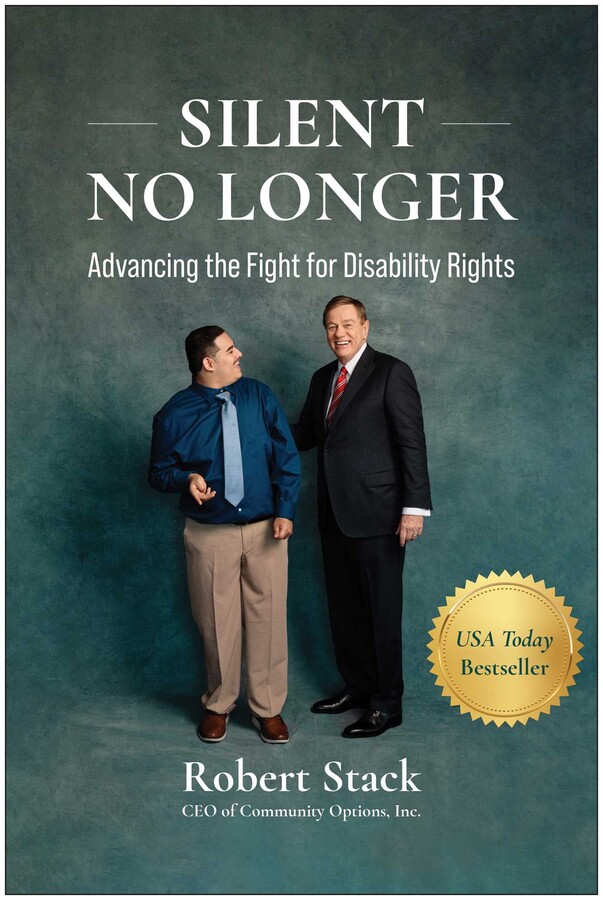
Robert Stack is the CEO of Community Options, Inc. It is a nation-wide organization that “works with individuals with significant disabilities through residential services, day programs, social enterprises that employ individuals with disabilities, high school transition programs, and specialized programs for respite and medically fragile adults.” Community Options stands in opposition to large-scale institutionalization, instead looking for local solutions to support people with profound needs. Stack founded the organization in 1989. Its annual budget now is approximately $400 million.

Stack, who has more than forty years in the field, recently wrote Silent No Longer: Advancing the Fight for Disability Rights. It is his third book. Silent No Longer is a mixture of professional memoir, critique of how the US cares (or doesn’t care) for people with disabilities, and a powerful call for reform. The heart of the work embodies the tension between the truly awful structures and painful histories of people with disabilities, with Stack’s career moves and reforms. He has been totally committed to community care as the best way for society, or communities, to provide needed support. After reading about the conditions in institutions for people with disabilities, the warehousing of humans, it is easy to understand how and why Stack became so passionate.

One of Stack’s great strengths is his courage to speak up for those with disabilities, to call to account those with the power to effect meaningful reforms. It is difficult to imagine him as ever silent. However, Stack does not present himself as savoir so much as a facilitator. In the book he highlights, again and again, truly deplorable institutions. Reading the stories makes one blood boil, as do the ways that laws, policies and bureaucracies get in the way of independent or semi-independent living for these people. Community structures, he persuasively argues, can do more and do it for less.

The book calls out the economic injustice and inefficiencies of disability support. Conditions and organizations vary widely from state to state. What is consistent is limited funding. Across the country those that help people, Disability Support Professionals (DSP), are consistently underpaid. Stack explain how many states have made questionable policy decisions. “Follow the money” he counsels, and with good cause.

Silent No Longer is strong on case studies, but relatively light on the nuts and bolts of policies, studies or evaluations of what makes for effective programs. This is not a strong source for a systematic examination of government support for the disabled. Moreover, sustainable long-term solutions in the absence of effective political action are not examined. More data would have been helpful. Where Stack truly shines in his accounts of people that he and his organization has helped. These are extraordinarily encouraging stories. One wonders why they aren’t the norm.

Unfortunately, Stack does not address the recent New York State settlement with the organization. Community Action systematically failed to document training and was accused of Medicaid fraud. The settlement was more than $5 million. The allegations and case undercut Stack’s moral position in the book. Nonetheless, Silent No More remains a powerful call for ongoing attention those who have disabilities and community focused ways to support them.

David Potash

Coke Does What To Life?

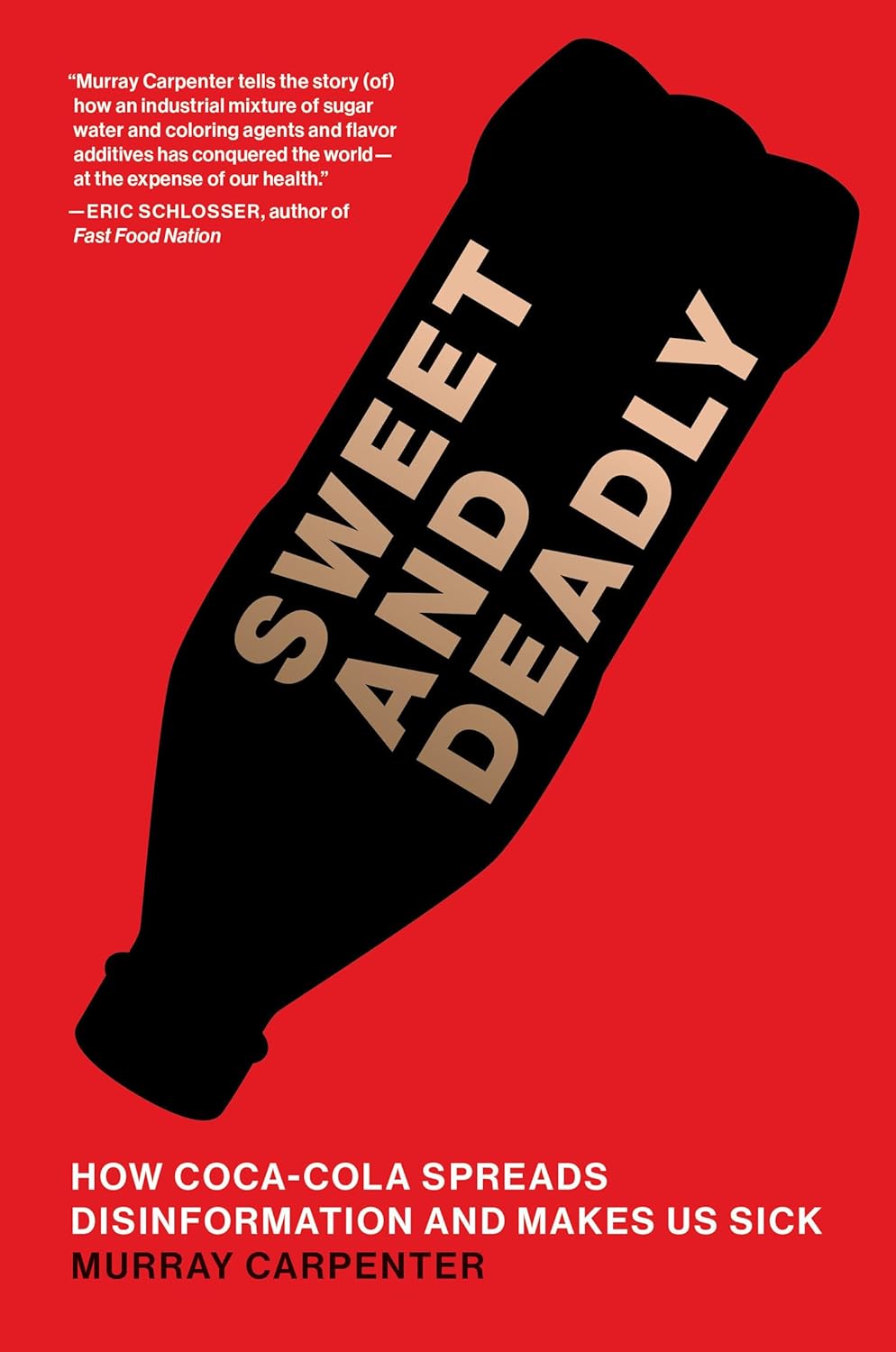
Murry Carpenter is a prolific science journalist. His latest effort, Sweet and Deadly: How Coca-Cola Spreads Disinformation and Makes Us Sick, is a comprehensive indictment of the soda company and its dangerous effectiveness in the first two decades of the twenty-first century. In a period where public health has tackled all manner of problematic substances, Coke has made scads of money and successfully avoided regulation. It is everywhere. Coke, Carpenter explains, is a harmful product that has remained on shelves and in our homes around the world through extraordinarily effective marketing, lobbying, strategizing and deceit.

Published by MIT, Sweet and Deadly is not a scholarly monograph. It is rigorously researched, but the format is very journalistic: short chapters, lots of facts and punchy prose. It is great with factoids and weaker on the larger argument of how soda fits within national debates about health and safety.

How do we talk about public health? The familiar arc, as Carpenter opens the book, is that when a product or issue is criticized, the critics are initially dismissed as cranks. Science, over time and through research, proves that there is merit to the criticism. The industry fights back. In most cases public opinion eventually turns, legislation is passed, and the problem is addressed. That is the history for tobacco, certain drugs and many other things that have been proven to be public health dangers. It is not the case for soda, even though there is overwhelming evidence that drinking soda has awful consequences. It leads to obesity, diabetes, and a host of medical issues. It is a major factor in the poor health of people in the US and around the globe.

The soda industry, led by Coke, has been remarkably successful in fighting back regulation and undermining science through pseudoscience and misdirection. This is the heart of Carpenter’s book. He moves quickly through Coke’s history. It is the big player in the soda industry and has been for over a century. Accompanying Coke’s popularity and pervasiveness has been a rising tide of health concerns. All of these are well-researched and Carpenter is very familiar with the studies. The book makes the dangers of soda drinking crystal clear.

What gives this book special focus is not the science or the studies. Instead, it is how government, business and public officials understand, shape and act on science. Sweet and Deadly documents how how science can be distorted, complicated, and redirected. Carpenter goes deep in explaining the many groups that do soda-friendly research, the campaigns that shift the burden of obesity to lifestyle changes (just exercise more!), and the lawsuits that have surrounding the soda industry for decades. It is a primer on how very smart and capable people framed public health issues so that they, and their companies, could continue to operate and turn a profit. The book shows how money can redirect studies, how policy and public opinion can be manipulated, and how difficult in can be to make nuanced arguments to effect change. It calls into question our understanding of expertise and authority.

Reading Sweet and Deadly will make it harder for you to want to drink soda, to see a Coke advertisement without considering the health consequences, and to question, without questioning, the health recommendations of “experts.” All told, some very good outcomes. For me, it made me quite happy with a glass of water.

David Potash

Who Decides & Who Is to Blame? Unaccountability Sinks and Modern Life

Making sense of what works and what doesn’t, at the big picture, at the macro level, is an extraordinarily difficult task today. Decades past we might have looked to wise elders, economics, history, or some combination of traditional academic disciplines to ask the right questions about the large systems that organize and structure our lives. We had “isms” that could guide us and help us understand. But what of recent times? Why are so many people frustrated? How is it that so many complain about feeling disempowered with their jobs, with their government, and their rights as citizens? Or as consumer? If think that people matter, why are so many feeling disempowered? Where are we headed and what is driving us there?

Dan Davies, an author and former economist, has been mulling over these and related questions for many years. He is an extremely innovative thinker, akin to a business entrepreneur, analyst and anthropologist. Davies writes across disciplines, and he is very much attuned to changes being wrought by technology. In his 2024 book The Unaccountability Machine: Why Big Systems Make Terrible Decisions – and How the World Lost Its Mind, he struggles to explain something elusive that is nevertheless sensed by many. The title encapsulates the difficult task Davies has set for himself.

The book weaves together several related, yet distinct threads. Davies is most effective and successful when he looks at the ways that society, over the past fifty years or so, has steadily industrialized decision making. Big decisions, he emphasizes, are increasingly now made by systems and policies, not by groups of people responding to special circumstances. As the amount and flow of information surges, we build models so that we are not confused and overwhelmed. This, he stresses, is a normal and sensible reaction.

For example, if you are running a business, it is important to have systems and processes to figure out how pay employees, how to track expenses, how to deal with various issues. As the size of your business grows, the complexity of your systems and processes grows – often exponentially. Add tech to the mixture and it can become even more complex.

Our growing reliance – and distrust – of systems is a simple and extremely powerful observation by Davies. While it might be difficult to prove – there is no way to measure such a claim – it nevertheless resonates when we consider businesses, the economy, and so very much else. To be sure, a powerful individual or situation might break a system or render it ineffective. That power, though, merely redirects and reshapes new models and systems. It is difficult to imagine a major factor in contemporary life that does not involve large systems, governed by policies, and almost all without any real accountability.

What decisions are Davies talking about? The examples, once considered, are all around us. Did the airline cancel your flight? You speak with a representative who cannot refund your fees because it is airlinepolicy. It does not even make sense to be angry at the employee. Wonder what happened in the latest financial crisis? Untold amounts of money may have been lost, but no one was responsible. The bankers remain employed, as do the brokers, economists and wealth managers. Read about a particularly stupid decision by a government agency? The spokesperson will issue a statement citing law, policy or process – but no one ever “owns” the decision. As a memorable illustration, Davies explains how squirrels lacking proper paperwork, shipped via airlines through Amsterdam, were were eventually all killed. Policy did them in, along with an industrial chopper. It is an ugly story, pulling together rules for airlines, for the airport, for international travel, and for animals. Once Davies provides the details, it is easy to see how simple solutions to solve straightforward problems can prove to be extraordinarily difficult, leaving truly disastrous consequences.

To explain at least some of the factors that led us to this uncomfortable place, Davies looks to the history of Stafford Beer, the father of cybernetics. Beer, a business professor and consultant, was an extremely influential player in the development of many modern corporations. He advanced systems thinking, the integration of technology, advanced the power of teams, a developed what was later labeled operations research. Beer’s work paved the way for conceptualizations of organizations and their functions. Moreover, it can provide insight into the ways that different stakeholders obtain and use information for different means. Information management can be even more consequential than we realize.

Davies walks us through leveraged buy outs to illustrate the phenomenon. He is very familiar with Wall Street and the power, for good and bad, of capital. An LBO features a small amount of up front money, joined with lots of debt, to takeover a business. The business’s assets are then used for more debt and/or stripped, undermining the company’s viability. Those doing the LBO, though, face little to no risk. As “good” LBO targets are snapped up, the markets increasingly took to buy outs of poor businesses or poor targets. The financial system knows that such moves were destructive in the past and most likely will be in the future – to businesses, communities, and our collective future. But the system and processes made stepping away irrational. The very structure and incentives of our large financial systems can cause tremendous damage.

It is thinking along these lines that make The Unaccountability Machine such a compelling book. Davies is on to something deep in modern life. He has unearthed an information/system ontology that, unchecked and unexamined, is leading to tremendous inefficiencies and unhappiness. He also offers a unique perspective from which to look at, analyze, and consider these larger issues. Yet before reading this book, I had neither the observation, language or arguments to even think about what it is or what to call it. This book makes for a very interesting read.

David Potash

Rethinking Attica and the Carceral Imperative

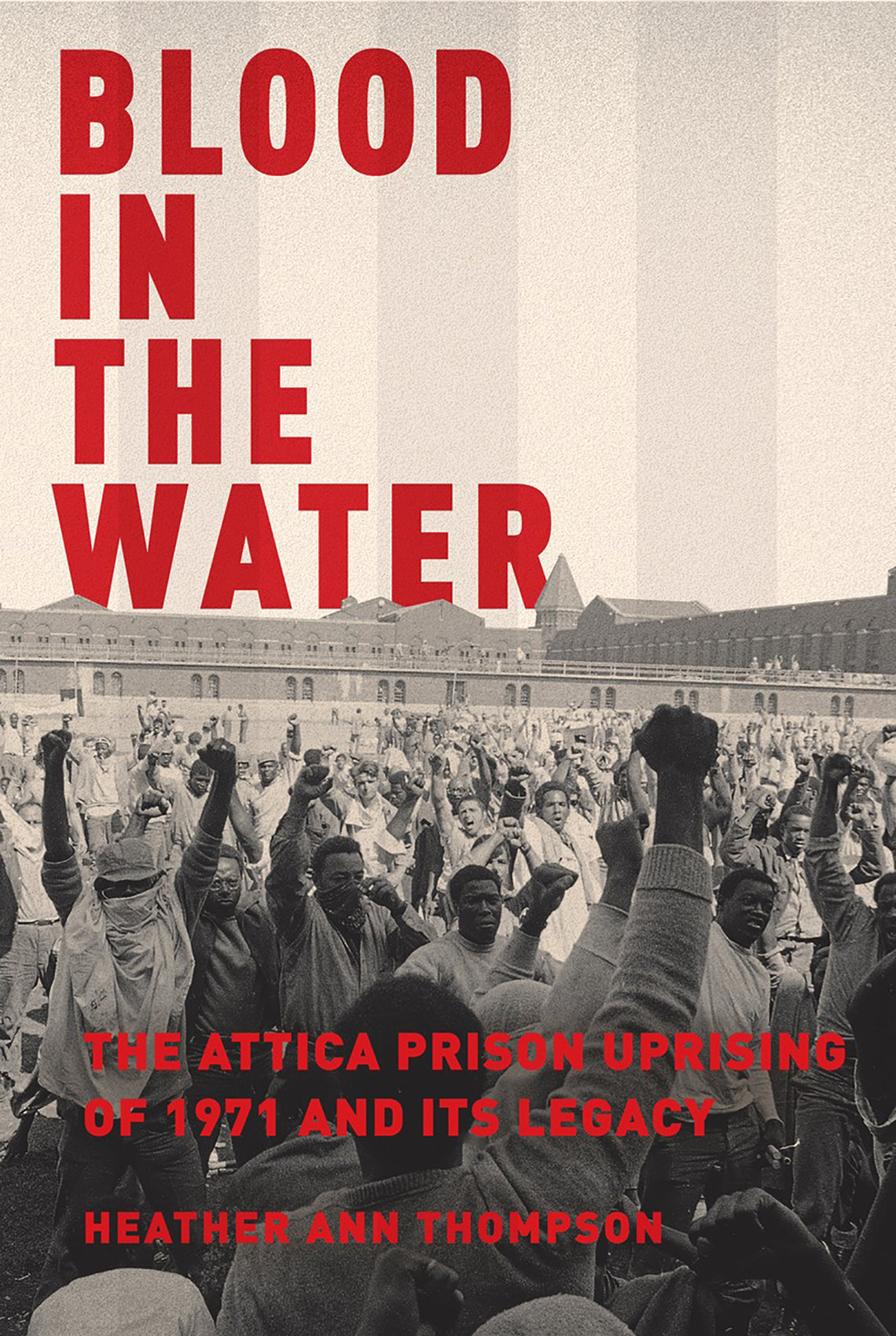
The 1971 Attica prison riot lives in collective culture as a violent event during a period of historical civil unrest. It is a call out in history text books and a reference in studies of America’s criminal justice system. Details of what actually happened, though, are far from well known. As the years add up, fewer are aware of what transpired and why. Pay attention, look more closely, and understanding Attica explains a great deal about America, its political history, and the power of government to shape a narrative.

To make sense of Attica, historian Heather Ann Thompson devoted more than a decade to research, filing numerous Freedom of Information Requests and challenging New York State and other government entities for records. With perseverance and luck (her words), she found all manner of material. With great skill and insight, she wrote the uprising’s definitive history: Blood in the Water: The Attica Prison Uprising of 1971 and Its Legacy. It is truly an outstanding work, well worthy of its many accolades and awards.

The Attica State Correctional Facility is located in Erie County, New York, not far from Buffalo. In 1971, as today, many of its inmates are people of color from the New York City area. Erie County is primarily White. Thompson sketches this out effectively, along with the rebellions of prisoners across the country in the period. Conditions in many prisons were deplorable, with inmates housed in outdated facilities designed for far fewer people. Prisoners sought changes that might bring them basic decencies. Their requests were often met with retribution, violence and disdain. The problem was nationwide and linked by many to broader questions of civil rights and justice.

Thompson addresses the budding tensions fairly, as one might analyze a labor conflict. She explains, expands, and teases out the nuance that is woven into change, resistance, and negotiation and/or resolution. We meet prison officials, prisoners, and numerous figures involved in the criminal justice system in New York State. The riot, or takeover of part of the prison, happens almost accidentally. There was initial violence, with a guard severely beaten (he later dies of his wounds), a prisoner murdered, rape and other terrible trauma. Surprisingly quickly, however, leadership among the inmates took hold. The inmates organized and began to think about their situation and requests. Their prisoners – guards – were protected. In a fluid situation, leadership among the prisoners sought stability and some relief. The inmates negotiated, seeking protections and greater opportunities, such as competent medical care. Elected and civil officials from around the country made their way to Attica. It was a major news story and a flashpoint for race, law and order.

NYS Governor Nelson Rockefeller, ambitious for the presidency and publicly supported by President Richard Nixon, decided to end negotiations. He ordered NYS police and others retake the prison by force. Hundreds of criminal justice professionals, armed to the teeth, stormed the prison and began shooting everywhere. They killed 39 people, hostages and prisoners, and wounded hundreds more. The prisoners were not armed. It was a naked display of power.

Government officials lied and/misled about the nature of the attacks, the violence, and what was transpiring in the prison. Worse still, as the prison fell under official control, wounded inmates were beaten, tortured and denied medical care. Thompson provides chilling details of the violence, which was truly terrible. It was also not initially reported to the public. Much of what happened took many years and court cases to emerge. Many records remained sealed to this day. In brief, Attica was a bloodbath, a site of racist violent retribution of government officials against prisoners. The weeks following the Attica uprising were horrific for the inmates. “Blood in the Water” is an apt title for the book.

The story does not end in 1971, though, for the state worked hard to prosecute prisoners involved in the riot. Thompson tracks the court cases, the multiple investigations, and the four-decade plus push for accountability. She documents how police and other state officials murdered and tortured inmates and then covered up crimes. The details of Attica emerged slowly, report by report and case by case. Lawyers, both for the state and the prisoners, devoted their professional careers to cases both holding prisoners and officials accountable. So, too, did coroners, prison officials and many others involved. Ultimately, no government official was ever held responsible for the deaths in retaking the prison or the following deplorable behavior of prison officials.

Thompson brings the history into a full circle through investigation of the lives of the guards and their families. Families of guards killed during the retaking of the prison struggled to find justice and support. Over time, many found connections with the inmates. The entire hisstory calls into question what justice might or could mean.

Thompson raises so many questions. Blood in the Water is more than a moment in history; it is a study of how broader societal trends in law, crime, and criminal justice intersect with civil unrest, political ambition, and the tremendous power of the state.

David Potash

Journey’s Fascinating Journey

Journey, one of the most popular rock bands of all time, has been making music – and fans and money – for more than fifty years. Their songs have been heard by hundreds of millions of people and sung in karaoke bars by nearly as many. Who they are, and were, and how it happened is the subject of David Golland’s fascinating band biography Livin’ Just to Find Emotion: Journey and the Story of American Rock. Golland is a fan of the group, but this is no expanded fanzine. The book is a critical look at the history of a creative enterprise that has played an outsize role in popular entertainment.

Golland is an historian with several books under his belt. He knows research, theory and the importance of a critical lens, such as race, through which to make compelling historical arguments. In Livin’ Just to Find Emotion, he balances rigorous scholarship with genuine enthusiasm and appreciation for the music. He relies heavily on primary sources and has talked with scores of people in and around the band. Journey has a long and complicated history. Golland’s approach, as it turns out, is truly the best way to chronicle this complicated group.

Journey’s origins stretch back to the early 1970s in San Francisco. Talented musicians with connections to popular artists such as Santana and the Steve Miller Band were the initial members. Golland is good with the fluidity of the scene, explaining how musicians joined, left, rejoined and formed new bands, looking for synergy and success. Journey’s creation was mostly due to the vision of Herbie Herbert, a well-known manager who stayed with the band through the 1990s. Herbert was a savvy businessman, entrepreneur, image-maker and hustler.

Known for their take on progressive rock, Journey was not especially successful in their early years. Their record company pushed for changes. Different musicians auditioned and/or were slotted into particular roles. By the late 1970s, a new lead singer, Steve Perry, joined and took Journey to a new level. Another personnel change a few years later brought keyboardist and songwriter, Jonathan Cain. He meshed with the group’s strengths and wrote several of Journey’s most popular rock ballads. The result was several years of extraordinarily popular songs and albums. Journey’s success was, literally, off the charts. More personnel changes took place in the latter part of the 1980s, followed by a several year break, and then a reunion. The band has remained active and popular since the early 2000s, with ongoing personnel changes and several lawsuits. For many of those years, Journey toured relentlessly, building and pleasing a multi-generational fan base.

Gollands skillfully charts these changes, giving just enough detail to help us appreciate the pressures, expectations, personalities and aspirations of the musicians and surrounding teams. Happily, he does not get pulled into trivia or unnecessary details. Golland is particularly good on explaining the unusual business organizational structure that bound band members together. They established a partnership, with equal representation, and then reformulated the partnership as membership changed. Golland walks us through the consequences. He is equally informative when it comes to appreciated the grueling schedule Journey adopted. They worked very, very hard.

What is less secure, and remains a topic for music critics, is knowing exactly why Journey became so popular. Golland’s thesis is that the band’s creative appropriation of Black music, particularly through the vocals of Perry, is key. There is much merit to that argument, for it has held true for many other musicians. On the other hand, quite a few White musicians have attempted to appropriate Black music and have not been anywhere nearly as effective. Something else is at play and equally elusive is figuring out the heart of the band over the years. With changing membership, its music and emphasis shifted. That is not to say that Journey changed significantly. There is a core sound to much of their music. Furthermore, it remained a mostly collaborative enterprise. That does not easily fit with our more traditional approach to evaluating popular music, which tends to give credit to a single genius with a supporting cast. Journey was and is a team.

One consequence, at least for this reader and listener, is that while Journey has made some amazing music, it has also made quite a bit of less interesting and engaging music. Critics have labelled some of their songs as corporate rock. Golland’s book, unintentionally or not, provides some evidence in support of that criticism. Some of the choices made by Journey over the years may have been driven more by business concerns than creative direction. The band has not always challenged themselves, their fans, or pushed musical boundaries. However, central to the idea of popular music is giving people what they want. On the other hand, expectations for creative works often carry with them more than simply doing what is expected. Parts of the creative endeavor are about values that are not market driven. The challenge is between seeking creativity and popularity, which may or may not align.

Where does Journey fit on this continuum? Before reading Livin’, I had thought mostly about their innovation and good fortune. Now, thanks to Golland’s research, I give the band more credit for intentionality. Many musicians aim for commercial success. Journey paid the price, worked diligently, and made their way to stardom, hits, and popular culture. And if you’ll allow me to quote one of their hits, “they never stopped believing.”

David Potash

Hope From Hyde Park

People are stressed about politics. The rhetoric, the drama, the threats, and the concerns – they all appear to be on the upswing. Is every election “the most important in recent memory” or is 2024 different? It most certainly has been historic, with the media avidly covering the changes, the shifting expectations and the ever more extreme positioning. We are in a period of extreme partisanship, so much so that some wonder if the country is coming apart at the seams. But are things truly that bad? And if we do face great challenges, are there any models or figures that might help us think through how to address these daunting difficulties?

To re-adjust my perspective and to gather hope, I recently visited the Franklin D. Roosevelt Presidential Library and Museum. Located on the beautiful family estate in Hyde Park, NY, not far from the banks of the Hudson River, the trip to the compound was exactly what I needed. The future President Roosevelt grew up there, lived there on and off throughout his life (it was his mother’s house), and is buried on the grounds. It is a National Park Service site, as FDR wanted, with frequent tours and inquisitive and appreciative tourists from all over the globe. Roosevelt was born to a generation who lived through the US Civil War (1882). When he passed away in the latter stages of WWII in 1945, the United States was securing its role as the preeminent military power in the world as a staunch defender of democracy. It is hard to suggest a political leader more responsible for that dramatic change. He truly was one of the most important figures in the 20th century.

The FDR story – born to wealth and privilege with expectations of service – is a vital reminder of character and leadership. Far from perfect, Roosevelt was a complicated and complex man, a masterful politician who reshaped the presidency and America. He worked tirelessly to help the US navigate the Great Depression, keeping American values alive. The world’s most horrific conflict, WWII, consumed him. Much of the war’s result can be traced to his resolve. Polio crippled him, yet his confidence and enthusiasm seemed to never lag. A small, rope-driven elevator in the house memorializes the man in a poignant manner. FDR, who simply could not walk after polio, would hoist himself up and down in this little contraption. Grandchildren would sit on his lap, the guard told us, and the president insisted on using the rope himself to get to the next floor. It is incongruous and telling, a personal fact that renders this extraordinary political leader all the more driven and all the more human.

Perhaps my greatest takeaway was one of overwhelming gratitude to FDR and those around him who fought the good fight, who worked to keep the country strong, to improve the lives of others, to secure the four freedoms that are essential to modern life. The economy may be troublesome now, but current difficulties pale in comparison to the hardship of the 1930s. The world may be contentious and dangerous now, but we are not facing a global conflict akin to WWII. And on a personal note, while I may face difficulties and responsibilities that, at times, may seem unfairly burdensome, FDR handled a million times more stresses and did so with values, elan and success.

The day at Hyde Park was humbling, inspirational, and a much needed remedy for today’s stresses. I encourage you to find the time to visit and reflect.

David Potash

American History the Democratic Purpose

Heather Cox Richardson is an outstanding historian. I first became aware of her work on the Civil War and Reconstruction years ago. Her scholarship is rigorous, her prose clear and compelling. If you were teaching a course on American history in the latter part of the nineteenth century, you would assign her books – and students would read them. She is that good.

In the past decade plus, Richardson’s work has moved into the public sphere as she engaged with broader issues. Richardson has a daily substack newsletter with many followers, a podcast series, and is balancing her traditional scholarship with a nuanced look at contemporary affairs. She describes herself as a “Lincoln Republican.” What makes so much of her writing engaging is her rigor. Richardson finds ways to build themes from facts, not assertions, and she respects consistency and detail.

In 2023, Richardson wrote Democracy Awakening: Notes on the State of America. It is a big-picture book, a work of American history that contrasts two themes: authoritarianism and democracy, over the centuries. Richardson moves quickly and selectively in the book, framing events in support of her larger argument. It is not a work of discovery, but rather one of explication. Democracy Awakening is history done tidy, with little time for the complexities and contradictions that render her other works so fascinating. Accordingly, I found it to be an unusual book, one that has me wondering about what history can – and cannot – and what sticks in the public’s mind.

Democracy Awakening is strongest, and most effective, in reminding readers that authoritarian tendencies are deeply woven into American political life. Moreover, these impulses have been vibrant and essential to the creation of the United States. Much of our history is one of conflict, which demands cohesion. Richardson, accordingly, is quite good at identifying the persistence of this strand. We tend to miss these, often assuming that the contingencies that have made today possible were rife with meaning. Some are and some are not.

On the other hand, America’s equally ambitious democratic impulse is a national aspiration. This matters a great deal and it is where Richardson’s values align. She notes, as we all have to when looking at facts, that the march towards democratic rights for all has not taken place in a straight line. The journey has been complicated and remains so today. What that means for history is that it is difficult to align historical figures, movements and events, into clear and consistent categories. The strength and importance of history, in other words, comes from the close analysis of how, when and why we can make supported claims for where and how we track and make sense of those changes.

Richardson does this and does it well. In Democracy Awakening, though, she gives more of her attention to the theme than perhaps in some of her other books. That left this reader wanting more complexity and contradiction. For it is in wrestling with these problems that Richardson’s skill truly shines.

David Potash

Paddling Out Past the Fear

Christine Blasey Ford doesn’t consider that her real name. At work, she’s Dr. Ford. For old friends, it’s Chrissy. In the mind of the public, however, it’s Christine Blasey Ford. That one detail – not being able to name oneself – encapsulates much of what it is like to be a media/political story. Ford’s memoir, One Way Back, is a fascinating exploration of what that all is like. The simple summary? It is awful and best avoided if at all possible.

Ford, as a reminder, is the academic research psychologist who came forward during the Senate hearings surrounding Supreme Court justice Brett Kavanaugh. He attacked her decades earlier when they were in their teens. Ford was traumatized, pushed much of the assault aside – the norm for the time period. Through therapy many years later, though, Ford realized how the assault affected her, its interplay with family dynamics, and other questions of choice and preference. When Kavanaugh was named, she thought sharing what happened to her was the right thing to do.

Morals, unfortunately, have little to do with the way that politics, political theater and the media operate.

One Way Back is about Ford’s journey, the why behind her decisions, and the terrific costs she and her family endured along the way. She’s a very intelligent, focused, and clear-thinking professional. Ford is also an avid surfer. More than a hobby to her, surfing is essential to her personal grounding, to her identity, and to her health.

I came away from the book liking her and admiring her choices. The memoir is not about policy and it is not an argument for anything. It is about her life, her values, and telling her story. Ford’s directness, which no doubt has caused her challenges over the years, is central to her identity. As a work of non-fiction, it offers credible first-hand information about how statements can be received (or not), how they are manipulated and shaped by others, and the massive distance between “history” and “media accounts.” One other important takeaway from One Way Back: be careful of snap judgments and headlines.

David Potash

Triumph and Freedom – Fighting the FLDS

An American religious cult based in the far west, the Fundamentalist Church of Jesus Christ of Latter-Day Saints (FLDS) is a polygamist group that split from the Church of the Latter Day Saints (Mormons) more than a century ago. For decades the FLDS has attracted concern and attention from law enforcement, often because of its sexual abuse of girls and casting out young men. The FLDS believes that its leader is the one and only voice of God. Accordingly, FLDS membership, family structures, work, and nearly all aspects of life is controlled and directed. The current leader, or prophet, of the FLDS, issues edicts from prison, where he is serving a life sentence for sexual assaults and other crimes. The FLDS has been covered extensively in the media, from news stories to documentaries. More is on the way as people escape the cult and attempt to create new lives, integrating into the modern world. A nativist domestic cult that has harmed thousands, the FLDS has patriarchy and the subjection of women at its core, along with violence and white supremacy. The FLDS is an evil organization.

Two memoirs, promoted at a local library, opened a window into life in the FLDS. Breaking Free: How I Escaped Polygamy, the FLDS Cult, and My Father, Warren Jeffs, by Rachel Jeffs, is the story of life in the cult and the author’s escape. Carolyn Jessop’s Triumph: Life After the Cult – A Survivor’s Lessons is written from a different place, as the author left the FLDS years before and is now working to free others from its grasp. Both Jeffs and Jessop hail from FLDS leadership families. Both authors had extremely difficult childhoods, were abused, and were forced into arranged marriages. Family ties – and through FLDS practice of arranged marriages and multiple wifes, the connections are very complex – supported and constrained both women. They love their children and their family members, yet at the same time, so many of the extended family and FLDS practices were toxic. Both women are heroes, fighting for agency and independence. The journey to agency, though, is neither quick or nor linear. It is no surprise that both actively resist being labeled as victims.

It is fascinating to learn how both women, and their friends and family, have wrestled with their personal histories and gaining independence. We are, by nature, social and our understanding of ourselves and our world is shaped by those around us. Change is difficult, and for these authors, it has required time and great strength. One cheers for them as they fight for decency and agency.

For those interested in what life was like in the FLDS, Jeffs’ account is the more immediate. To better understand how the FLDS used laws and structures to maintain power, Jessop’s book is more helpful. Read in conjunction, the two memoirs offer something else – a lesson on how extreme patriarchy functions. It is toxic, antithetical to democratic values, and denies people – especially women – anything akin to real humanity. This is not abstract academic gender theory. One does not need to study the Taliban or ancient history. The FLDS offers a close to home primer on the malevolent ways that religion, sex and family structures can persist, even today, while causing great harm.

The books are harrowing, frightening, and very personal. These are memoirs. The authors write directly, from the heart. Despite the hardships portrayed, ultimately, both books affirm the power of individual growth, choice and agency.

David Potash