Writing Into Being
Thinking about a novel as a linear work of art, using chronology to explain how the story unfolds over time, offers the easiest path to a simple explanation. But what if unspooling the narrative leads one back to the start? Perhaps the geometry supporting the creative endeavor is not Euclidean. Maybe our expectations for lines, planes, intersections and causality are not in alignment with the author’s rules. How would one explain a Zen novel, a novel that swallows its tail as it builds a world dependent upon the writing and reading of the narrator? Or a quantum work, which changes when it is read?
While all this might sound like the makings of an imposing work of experimental literature, something conceptual and challenging, it need not be inaccessible in skilled hands. Ruth Ozeki tells a terrific story in a exceptionally innovative way in her award winning A Tale for the Time Being. It is a super book, compelling and smart. Its stories are engaging. It raises questions of knowing and being, epistemology and ontology, without pedantry. The Booker Prize short-listed the novel in 2013. I’ll have to see what book won, for this novel is outstanding.
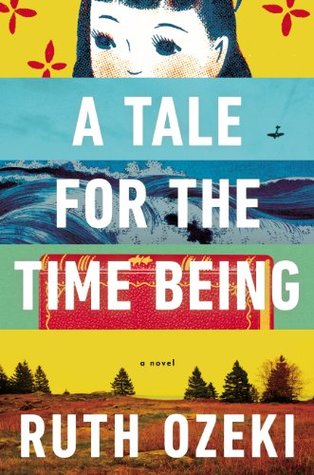
Nominally, the story is about a writer – whose life bears significant similarities to Ozeki – finding the diary of a traumatized teenage Japanese girl and letters penned by the girl’s grandfather. Our narrator lives in the pacific northwest, like Ozeki, and the diary and related materials wash up from the ocean. Struggling with her own writing, our narrator named Ruth, becomes obsessed with the girl and her family. As the novel moves around in time and place, much more is revealed. Observations, meaning-making and understanding emerge through discreet events, eventually building into something greater.
There’s Ruth’s story, the story of those around Ruth and those she encounters as she investigates the girl. Nao, the Japanese youngster, tells her story through her diary. Her voice is vibrant and her situation painfully difficult. Her father is depressed and suicidal. Her mother is working and absent. Her great grandmother is a life force, wise beyond her hundred-plus years. Her grandfather, a brilliant young philosopher, was forced into the military as a kamikaze pilot during World War II. And while much of what transpires is traumatic, if not simply awful, Ozeki is able to affirm a very positive message.
The crafting of the novel is exquisite without being too writerly. Mostly. Occasionally, awareness of the interlocking pieces hinted at a more intrusive authorial presence. Where Ozeki’s empathy truly shines in her depiction of Nao. It is haunting and memorable. Surrounding the story are footnotes, appendices, references and re-references, all crafting an inclusive and connected world.
In addition to being a novelist, Ozeki is an emerita professor, a filmmaker, and a Buddhist priest. She’s taught, lived in Japan, and directed TV shows. A Tale for the Time Being hints at these and other talents, for it is a novel of dazzle and great depth.
David Potash