A Japanese Heroine in Extraordinary Times

Sometimes one comes across a work of nonfiction that is so engrossing and engaging that it can stop time’s passage. Exceptional history has this power, pulling the reader in and rendering relatable what might initially appear to be alien and all too far away. It can build bridges of understanding, fueled by curiosity and research. History of this mettle changes minds, redirects students’ course of study, and lives outside of the page and decades after publication. Amy Stanley’s Stranger in the Shogun’s City: A Japanese Woman and Her World is that kind of work, a window on a distant world.

Stanley is a professor of history at Northwestern University. An accomplished academic with deep expertise in Japan, she wrote Stranger for a less-informed public. What, after all, do most of us know about Japan in the first half of the nineteenth century? These are the years before Admiral Perry “opened” Japan to the west – a problematic concept on so many levels. And if we imagine that we have some basic knowledge of samurai and shoguns, it is often through the lens of Hollywood or historical fiction. What Stanley does in this book is open the reader’s mind to a culture that is distant, exotic, and still – in her carefully crafted prose – accessible.

The subject of the biography is a woman named Tsuneno, the child of a Buddhist priest. Tsuneno was born in 1801 in a rural part of western Japan, the Echigo province. Tsuneno and her family were literate, like many other Japanese, and extensive letter writers. They had some money and education. One of Tsuneno’s letters was posted on a scholarly website and Stanley, reading it, became obsessed with learning more about the woman. Tsuneno led a messy, rebellious life. She had aspirations, plans and courage. Some of her choices turned out well and others, less so. Tsuneno was not a political or major cultural figure, but her needs, her story, and her life dominated her family’s letters. Her very lack of fame speaks to what makes her all the more special.

Curiosity piqued, Stanley set about mapping Tsuneno’s family’s correspondence, assiduously tracking down the people, their lives, and tons of details. From these she built a biography, a history of the family, the region, and the period. From the the weather – Echigo shut down during the winter because of heavy snow – to the clothing, from the pawnshops to tax structure to the danger of fires in the city, Stanley crafts a comprehensive picture of what life was like in early 19th century Edo and Echigo. Edo figures prominently, at the time and over the centuries. It was a city of opportunity, culture, power and danger. It transformed into Tokyo, but remnants of Edo can still be found.

As for life in Edo in the early 1800s, concerns then and there remain familiar: having enough money, status and agency, how to navigate family dramas, the importance of marriage and position, finding friends and love. Stanley makes certain, too, that we know what was different. It is important not to assume certain set rules or practice. Tsuneno, for example, was divorced three times and was able to move to Edo as an unmarried woman. Family honor, however, was always a major concern.

Stanley is generous with the subjects of her study, giving them full consideration and appreciation. All of this is set against the larger shifts aligning to change Japan. Foreign influence was at Japan’s door and significant economic challenges were challenging shogunate structures. While people at the time did not know it, their way of life was about to change in significant ways. It is a powerful message, something that once read, felt and considered, stays with you. All it takes is a little time to read, reflect and imagine.

Stranger in the Shogun’s City is truly an exceptional book.

David Potash
The Nine: Proof of Hope

How does one – and when can one – wrestle with the monstrosities of the Holocaust and World War II? I circle around it, with a book or movie here or there, but rarely for longer stretches of time. In-depth study can be devastating, calling into question the very nature of what it means to be human and our collective future. I find it all encompassing and often too much to process. But avoiding it is no solution. Recent political violence and hateful rhetoric have elevated the need to return to the subject, which is never all that far away – if we listen attentively.

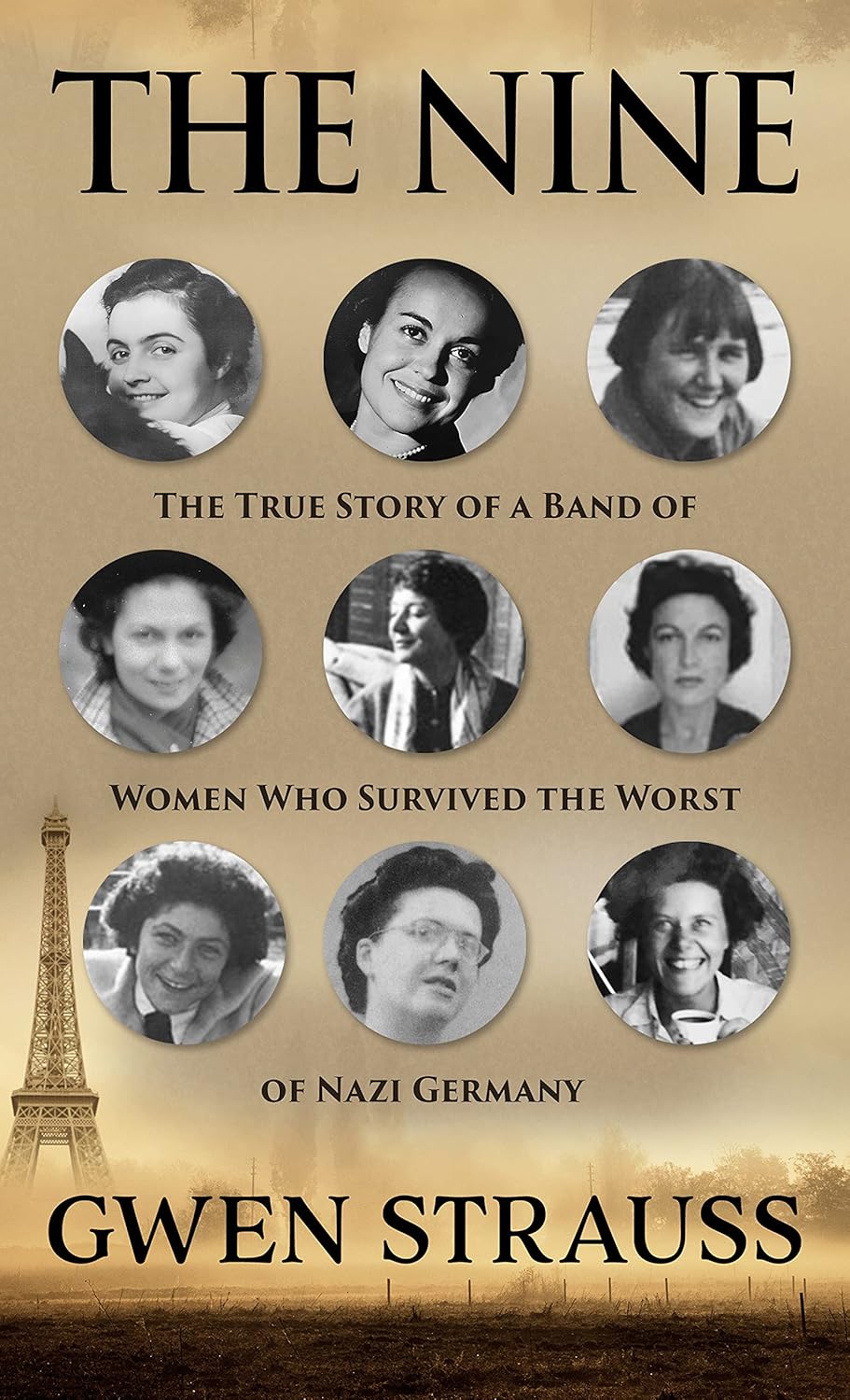
Amid the overwhelming number of titles and perspectives, a recent non-fiction work is worth your time and consideration. Gwen Strauss, a poet and children’s book author, recently wrote the story of her great aunt’s escape from an end-of-the war death march. The Nine is dramatic history at a personal level, linked to a much larger and terrifying narrative. It humanizes heroism and horror.

We do not know the full extent of the resistance in Europe during World War II. Many fought the Nazis, risking torture and death. Some of their stories have been recorded and many have not. Survivors of the conflict often sought to avoid dwelling in darkness, instead seeking a new start after the war. Survivor guilt, complicated choices and issues of identity and gender further worked against retelling the story of resistance at scale. A chance discussion over lunch connected Strauss with her great aunt through marriage, Helene Podliasky, and her story of resistance and survival. Without the intervention, we would never know. At the social gathering Podliasky mentioned that she had escaped from Ravensbruck, the Nazi concentration camp for women, with eight others who fought in the resistance.

Strauss took notice, but it took time for her to begin to look more closely into the history. Jews were only some of the prisoners who held at Ravensbruck. The camp held political prisoners, sex workers, Roma, communists, and women from all over Europe. Those that Germany considered to be political or military threats were often sent there. In the camp prisoners worked as slaves, were tortured, subject to medical experiments, and murdered en masse. More than 132,000 were held in Ravensbruck during the war. It truly was a hell on earth. After the war there were trials and publicity, but systematic study emerged over decades.

Strauss followed up the lunch with an interview. While Podliasky said that she did not see much point in recounting her story, she did – in detail. Strauss took extensive notes and was driven by to learn more. Podliasky joined the Resistance in 1943. She was twenty-three then, a brilliant young engineer who could speak five languages. Captured and tortured in 1944, Podliasky was shipped to Ravensbruck where day-to-day survival was never certain. At the camp, she found an old friend from school named Zaza. As Strauss’s research continued, she came across a book by Suzanne Maudet, who wrote an account from Zaza about her escape from the camp with Podliasky and the seven other women. Through more research, tracking down relatives and working in archives, the story came together.

The Nine is Strauss’s history of the nine women, each imprisoned in Ravensbruck for resistance to the Nazis. The women took on a treacherous ten-day trek to find freedom and safety with the American Army. As the Allies advanced through Germany, Nazi leadership accelerated the killing of prisoners. They were shot, starved, murdered in large numbers as the Nazis feared the end of the war and accountability. Many prisoners were sent of “death marches” that ended in direct murder or death through starvation or exposure to the elements. On such a group march from Ravensbruck, Podliasky and her eight friends slipped away and hid in a ditch, pretending to be corpses. The dead were ever present and guards did not notice. The nine women carefully slipped further away, finding food and evading threats as they made their way to the front lines. Had they not, they would have been murdered along with hundreds of others. on that march.

Strauss describes the ten-day ordeal in detail, mixing in biography and adding her own work as a relative and researcher. The nine women relied on each other, trusted each other, and all survived, through wile, courage, cleverness and luck. It was extremely dramatic and makes for edge of the seat reading.

The book’s structure calls for careful attention. Each of the women has a different background, a different path to the Resistance and capture, and a different future after the war. Advance knowledge of the contours and timeline of the war makes for an easier read. I referenced maps and the internet to better understand specifics. Even without these additional aids, The Nine resonates as a powerful window into a very dangerous world.

The nine’s teamwork, mutual support, heroism, friendship and inherent goodness stands as an extraordinary counter the darkness all around them. It is wonderful that they were able to survive and quite fortuitous that a talented relative, Gwen Strauss, made it her mission to tell their story.

David Potash

Martial Mindset: Bush’s War Cabinet

James Mann is a journalist and author. An expert on American foreign policy, he does his research thoroughly and writes with clarity. One of Mann’s strengths is that he knows how to build a narrative with direction and surety. Read his works and one comes away with a real sense of learning something.

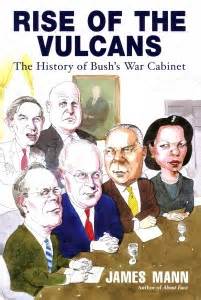
Rise of the Vulcans: The History of Bush’s War Cabinet is Mann’s best-known book. Published in 2004, it straddles the boundary between journalism and history. It was a best-seller for good reasons. Mann tells the history of the six key figures in President Bush’s war cabinet: Vice President Cheney, Secretary of State Powell, Deputy Secretary of State Armitage, Secretary of Defense Rumsfeld, Deputy Secretary of Defense Wolfowitz, and National Security Advisor Rice. Collectively, these well-known leaders helped to guide Bush and America into the invasion of Iraq. Understanding the team, their backgrounds and values, goes far in explicating the Republican foreign policy establishment. That goal – explication of them and how they thought – is the goal of Mann’s book. It is not an examination of how and why the US made the decision to invade.

The book spans more than three decades. We learn of the figures’ childhoods, education, and their rise to influence. As one might expect, amid the diversity of backgrounds there were multiple alignments and affiliations. One of Mann’s skills is teasing out those connections, something akin to backwards looking analysis. The book makes clear how the right background, ambition, and ability to skillfully play the Washington “game” of power could situate one in a position of privilege. Mann’s study likewise illustrates how the wrong choice, the wrong move, or simply bad luck could derail or delay a career. For each of the six, success was neither instantaneous nor assured. Each took different paths to secure a spot in history.

Mann sees the Bush group as representing both Cold War and post-Cold War thinking. He rightly stresses the prevalence of military thinking to the group. They had outsize faith in military solutions, regardless of the source of the issue. Accordingly, the group consistently advanced a military-first mindset, shaping policy and American priorities. Their influence spanned decades and remains a vital strand of thinking. The nickname “Vulcan” was self-assigned. The group believed that they were forging a military machine that would protect and advance US interests. Interestingly, that outsize belief may have been one of the reasons that they were chosen to be in Bush’s cabinet. Criticized for his lack of foreign policy bono fides, Bush intentionally sought out cabinet members that would burnish his reputation.

The traits that all shared, that seem to have pervaded the Bush establishment, included confidence, optimism that America was in the right (if only be default), and that American knowledge, values and problem-solving would eventual prevail in any situation. Mann is very effective in demonstrating how their confidence emerged, was rewarded and reinforced. We know more today about the missteps, the assumptions, and the outright errors of the Bush team. Mann, writing at the time, was able to forecast the strengths and weaknesses that could lead to all manner of consequences, good and bad.

Entertaining, illuminating and disheartening. Rise of the Vulcans remains a relevant book. One of Mann’s strengths is his ability to know how to explain while remaining disciplined. He does not pretend to explain broad historical movements. Nor is this a study of causality. Rather, the book humanizes political leadership and group think, something we would be well-served to always keep in mind.

David Potash

Southern Industrialism, New Deal to Civil Rights

How the South organized and worked to become an industrial force is the focus of Katherine Rye Jewell’s Dollars for Dixie: Business and the Transformation of Conservatism in the Twentieth Century. An outgrowth of Jewell’s Boston University dissertation, this closely researched book is very interesting. Using the SSIC (Southern States Industrial Council) as a framework, Jewell traces evolving and shifting strategies on behalf of southern businesses. Politics and intentionality were critical factors in the transformation of the south’s economic profile.

Jewell, a professor of history at Fitchburg State University, begins the book by tracking the emergence of the SSIC in the shadow of the NRA. Neither fully on board nor opposed to the NRA, business rallied around the SSIC to position the south as a special market, different from the north and cities, committed to lower wages and high productivity. Textile firms made up the majority of the SSIC’s membership. Southern business leaders tended to portray themselves as civic leaders, committed to the health and well-being of their communities. It was very much business in the owner-proprietor mindset, not managerial capitalism. Furthermore, business leaders championed traditional regional values, which meant the perseverance of class, gender and race norms. Holding on to that status quo was central to the argument of maintaining southern “values” in a changing world.

The Wagner Act, accordingly, was viewed as a great threat by the SSIC. Organized labor could hardly be aligned with southern values. Voters democratic leanings in the New Deal made SSIC leadership’s commitment to conservatism clear. The response, for southern conservative Democrats has limited national power, was to advance the South as a bastion of free markets and free labor. This is part two of Dollars for Dixie.

The SSIC’s strategies included no minimum wage, linking agriculture to industry, and emphasizing southern exceptionalism. Defensive actions, all geared to preserve a class and race based economic system, kept the organization active through the end of the 1930s. During the war, decentralization of industry became a key focus. After the war, the South and the SSIC tried to position itself as a bulwark of democracy. Local control was the main message. The first political battle was against the FEPC (Fair Employment Practices Commission), which was castigated as meddlesome and intrusive. By the end of the 1940s, the SSIC’s brand of conservatism neither had a home in the national Democratic or Republican parties. Anticommunism was the path forward to garner influence and support, especially as the SSIC downplayed racial conflict. It was, after all, bad for business. The SSIC may have emphasized southern traditions, but in many ways it stressed the South’s alignment with national values. The book does not end with a hard date, but instead a soft landing in the widespread changes affecting the region in the latter half of the 1950s and 1960s. Big picture, as Jewell summarizes, the SSIC’s efforts did not stop federal interventions or competition from abroad, but did shape thinking and policy.

Dollars for Dixie teaches a great deal, from the study of business organizations to the interplay of local and national politics. It underscores the complexity of conservatism, which is best understood in context. The book further expands appreciation of the South, which was and remains far from monolithic. Jewell’s monograph also offers fascinating reminders, too, of the many arguments made over the years to keep wages low and power in place.

David Potash

The New World: Gotham ’45

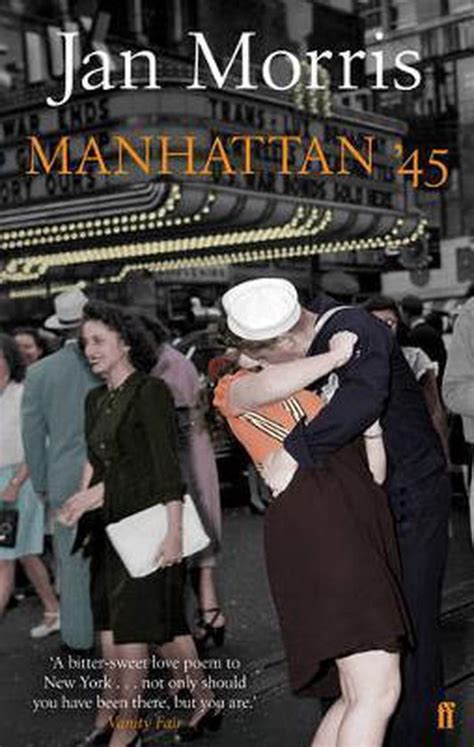
Manhattan ’45 is a history filled with love and nostalgia. Written in 1987 by Jan Morris, the book is an impressionistic look at New York City and the island just as World War II ended. Morris begins with the arrival of the SS Queen Mary in June of 1945, carrying nearly 15,000 servicemen and women. Morris ends with a backwards summary, stressing a deep and long-lasting affection for Gotham.

For those of us enamored of New York City, how can we not be attracted to this kind of history?

The end of the war brought tremendous optimism to the world and New York City. The horrors of WWII were ending and not yet fully processed, and to a certain degree a new age of internationalism was still a few years away. Morris paints the city in transition, shaking off an earlier mindset and beginning to think about embracing modernity – whatever that might mean. The chapters are structural, not chronological. On Style looks at manner, moralities, sights and sounds. On System describes government, leadership, the powerful and the structures of order. On Race takes in the key ethnic groups of the city: Blacks, Italians, Chinese and Jews. Celebrities, the wealthy and the less fortunate are recounted in On Class. On Movement describes the subways, busses, ferries and roads, and On Pleasure is about eating, dancing, music and performance. Last is On Purpose, which looks at business and economics.

Morris does outstanding work setting a mood through observation, anecdote and fact. Things that one might find in a history book are complemented with non-academic adjectives and tone. From trivia to important matters, the book is like a Circle Line tour of the island. Morris – whose history is worthy of a biography – wrote travel books as well as history. In Manhattan ’45 the reader is something akin to a time traveler, making sense of the center of the world at moment filled with romance and optimism.

Impressionistic and stylish, Manhattan ’45 intrigued me and made me want to wear a hat, dance at a nightclub, and enjoy the city. Thank you, Jan Morris, for a most unusual work.

David Potash

Settler Progressivism and the Antipodes

History, thankfully, is never finished. While the contours and highlights of a period might be readily agreed upon, questions of causality and correlation can remain contentious. Sorting out why something happened is often extremely difficult. A well-crafted argument, from a different viewpoint, will inevitably foster new thinking and raise new queries.

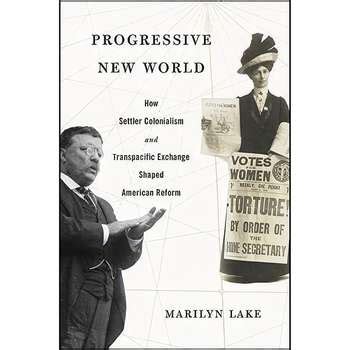
Australian historian Marilyn Lake has done just that in an outstanding work, Progressive New World: How Settler Colonialism and Transpacific Exchange Shaped American Reform. Lake is a professor of history at the University of Melbourne and an indefatigable researcher, spending years in America on this book. Starting from a less considered perspective – how did Australian reformers interact and influence American thought leaders in the Progressive Era – Lake paints a fascinating picture of mutual admiration through decades of robust exchange. The book, though, is about much more than a back and forth of people and ideas. Lake fashions a strong claim for the centrality of Whiteness as an organizing principle of multiple strains of “reform.”

The book opens with a prehistory of progressivism, grounded in elite responses to the major economic and social transformations in Australia and the United States. The intersections are fascinating and telling. In the 1870s Charles Pearson, an English historian of the Middle Ages who had a farm in South Australia, wrote National Life and Character: A Forecast, spelling out how White colonialism could effectively reshape the nation. Pearson was friends with Harvard historian Charles Eliot Norton, whose cousin, Francis Parkman, wrote extensively about the American frontier. Harvard-educated Theodore Roosevelt, before he became president, was an active writer who favorably reviewed Pearson’s book, locating it within the larger context of settler colonial advancement. Lake shows how these thinkers and leaders aligned progress with White democracy, White manhood, and self-government through a particular strain of state action. Indigenous peoples, the argument ran, lacked the character and self-discipline necessary for democracy and self-determination. These claims would play out over the decades in the American west, Hawaii, the Philippines, Cuba – literally all over the world. Elite institutions and networking, as Lake meticulously documents, facilitated the mutual group-think and collective action.

The allure of the frontier, hardy White men taming the elements and creating new social structures, appealed immensely to many of these thinkers. There were many of elites who embraced the conceit, too, as Lake’s list of elite thinkers who wrote to each other, visited each other, and supported each other is extensive. Part of the book are what akin to a late 1800s Who’s Who, with Harvard connections at the core. As they traveled the United States and Australia, these reformers wrote extensively, building a case for a new kind of political leadership, a form of sate socialism that would expand democracy and preserve community. Australian political leader Alfred Deakin, for example, traveled extensively through the US and was friends with many, including Harvard philosopher Josiah Royce. Among Deakin’s political accomplishments was an Aborigines Protection Act and a Water Supply and Irrigation Act, both of which supported White settler colonialism. This sort of state involvement and action was central to conceptions of a muscular progressive government (as well as the focus on many progressive scholars and thinkers). Deakin would later serve as Australia’s prime minister, effecting a legacy that structured Australia through the early part of the twentieth century.

Lake gives close attention to the Australian Ballot, or “secret ballot,” a reform that swept through the United States. Massachusetts was the first to adopt it in 1888 and with in a decade it was the norm in American elections. In years prior, political parties gave voters a printed ballot and voting was a public exercise. Through the Australian reform, the state printed ballots and voting was done in secret. It was very well received and scholars have shown how it reduced turnout of immigrants. The reform, in other words, was not about expanding the franchise and democracy. Lake highlights how an Australian reformer, Catherine Helen Spence, gave more than a hundred talks in her travels across the United States in 1893, advancing multiple reforms and the Australian ballot. Importantly, Spence’s push for proportional representation was not favorably received.

Many key leaders in the United States met with or became connected to Spence. Women reformers increasingly were able to take important roles in the US and Australia, especially when it came to issues around suffrage. In Australia, women won the right to vote and stand for election in 1902. Lake does not go deep into the history of the fight for women’s suffrage in the US. Rather, she explores how issues of women’s rights were framed by international exchange. One of the first women to stand for parliament, Vida Goldstein, figures prominently in this narrative – as well as her time in the United States and her visit with President Roosevelt.

Progressive New World investigates other progressive themes, including child reform, labor policies and social works. Lake calls out, in detail, the complaints voiced by indigenous peoples on both sides of the Pacific regarding state-sponsored paternalism. This proved especially true in issues of education.

Lake’s rigorous scholarship gives the narrative a close-to-the-source veracity. Surprisingly missing is a high-level summary that pulls these threads together. The pieces are all present. Moreover, the very terms employed through out beg for interrogation. What does it mean to be a settler? In an urban environment, such as Chicago, or the Australian frontier, settlement houses and white settlers seemed to employ similar language and tools. How did that identity, and the values it presented, affect future generations understanding of the role of government and political leadership?

I am profoundly impressed by the Marilyn Lakes work. Furthermore, I am especially keen on seeing how a new generation of thinkers respond to her book and deepen a new understanding of progressivism.

David Potash

Hispanics and the KKK in the 20s

Outstanding historical research is near – and the findings can be quite enlightening.

The Ku Klux Klan was formed in the years after the Civil War as a paramilitary terrorist organization, committed to assuring white rule in the defeated states of the Confederacy. The KKK spread violence, fear and death, murdering thousands, until the US federal government stepped in and through military, police and judicial action, suppressed it. The KKK returned in a new format in the 1910s, growing in size and influence. The early twentieth century Klan grew through mass marketing techniques, along with white robes and communal events – cross burning and lynching. Membership was possibly as high as 8 million by the middle of the 1920s. Numbers, though, dropped precipitously by the end of the decade. Ever since the KKK has existed as a fringe organization, focused on white nationalism.

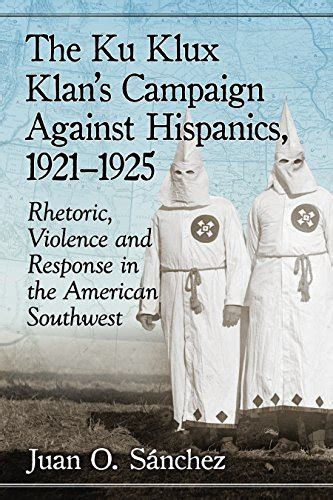
The Ku Klux Klan’s Campaign Against Hispanics, 1921-1925, a thorough work of history, was written by Juan O. Sanchez in 2018. The book is the result of several decades of rigorous research by Sanchez, who tracked down and collected numerous primary and secondary source documents from the period. He focused on Spanish language publications, but as he learned more about the period, Sanchez’s reach extended. The book is a testament to dogged investigation and systematic study. It aims to document facts, not make arguments, and it does so extremely effectively.

Between a strong introductory overview and a clear summary, Sanchez’s chapters look at Texas, New Mexico, Arizona and Colorado, and California. The Klan had a stronghold in Texas with more than 300 local organizations in the state. 1922 marked the KKK’s greatest electoral successes. The Klan was virulently anti-Mexican and it was only in the cities with large numbers of Mexican American was there organized anti-KKK resistance. The Mexican government was also an influence in protecting Hispanic Americans’ rights. Sanchez’s research highlights the many ways that the Spanish-speaking local press advanced pro-American anti-Klan arguments, as well as the rhetoric of KKK publications and editorials. The story was similar in other states, though the influence of the KKK was strongest in Texas. Sanchez shows how local conditions and opportunities framed local discussion, debate and action across the Southwest.

Big picture, The KKK’s Campaign Against Hispanics highlights the broad acceptance by many White Americans that Mexican Americans were dangerous criminals, robbing native born Americans of jobs, opportunities and wealth. The KKK repeatedly castigated Mexican Americans as a “mongrel race” with tendencies towards drunkenness, laziness, and criminality. Speaking Spanish was called un-American. Importantly, Sanchez’s sources underscore the KKK’s deep antipathy towards Catholicism. Religion and race were used complementarily by the Klan, which had deep ties to local Protestant churches and leadership. Mexican-Americans, they insisted, were not “real” Americans. God’s national order, the Klan affirmed, had Protestant white Americans at the top. Moreover, as Sanchez’s work documents, the KKK was as anti-Hispanic as it was anti-Black.

The KKK’s rise in the first half of the 1920s reflected long-standing trends in American society and politics. During this period controls over unions increased, immigration was great constricted, and a wide range of non-white groups were targeted. Happily, by the latter half of the decade more inclusive voices prevailed in the Southwest, thanks in great part to the organized resistance led by Spanish-language newspapers. Juan Sanchez’s scholarship ably documents a history of racism, intolerance, and resistance. It is history well worth studying and considering.

David Potash

Hope From Hyde Park

People are stressed about politics. The rhetoric, the drama, the threats, and the concerns – they all appear to be on the upswing. Is every election “the most important in recent memory” or is 2024 different? It most certainly has been historic, with the media avidly covering the changes, the shifting expectations and the ever more extreme positioning. We are in a period of extreme partisanship, so much so that some wonder if the country is coming apart at the seams. But are things truly that bad? And if we do face great challenges, are there any models or figures that might help us think through how to address these daunting difficulties?

To re-adjust my perspective and to gather hope, I recently visited the Franklin D. Roosevelt Presidential Library and Museum. Located on the beautiful family estate in Hyde Park, NY, not far from the banks of the Hudson River, the trip to the compound was exactly what I needed. The future President Roosevelt grew up there, lived there on and off throughout his life (it was his mother’s house), and is buried on the grounds. It is a National Park Service site, as FDR wanted, with frequent tours and inquisitive and appreciative tourists from all over the globe. Roosevelt was born to a generation who lived through the US Civil War (1882). When he passed away in the latter stages of WWII in 1945, the United States was securing its role as the preeminent military power in the world as a staunch defender of democracy. It is hard to suggest a political leader more responsible for that dramatic change. He truly was one of the most important figures in the 20th century.

The FDR story – born to wealth and privilege with expectations of service – is a vital reminder of character and leadership. Far from perfect, Roosevelt was a complicated and complex man, a masterful politician who reshaped the presidency and America. He worked tirelessly to help the US navigate the Great Depression, keeping American values alive. The world’s most horrific conflict, WWII, consumed him. Much of the war’s result can be traced to his resolve. Polio crippled him, yet his confidence and enthusiasm seemed to never lag. A small, rope-driven elevator in the house memorializes the man in a poignant manner. FDR, who simply could not walk after polio, would hoist himself up and down in this little contraption. Grandchildren would sit on his lap, the guard told us, and the president insisted on using the rope himself to get to the next floor. It is incongruous and telling, a personal fact that renders this extraordinary political leader all the more driven and all the more human.

Perhaps my greatest takeaway was one of overwhelming gratitude to FDR and those around him who fought the good fight, who worked to keep the country strong, to improve the lives of others, to secure the four freedoms that are essential to modern life. The economy may be troublesome now, but current difficulties pale in comparison to the hardship of the 1930s. The world may be contentious and dangerous now, but we are not facing a global conflict akin to WWII. And on a personal note, while I may face difficulties and responsibilities that, at times, may seem unfairly burdensome, FDR handled a million times more stresses and did so with values, elan and success.

The day at Hyde Park was humbling, inspirational, and a much needed remedy for today’s stresses. I encourage you to find the time to visit and reflect.

David Potash

American History the Democratic Purpose

Heather Cox Richardson is an outstanding historian. I first became aware of her work on the Civil War and Reconstruction years ago. Her scholarship is rigorous, her prose clear and compelling. If you were teaching a course on American history in the latter part of the nineteenth century, you would assign her books – and students would read them. She is that good.

In the past decade plus, Richardson’s work has moved into the public sphere as she engaged with broader issues. Richardson has a daily substack newsletter with many followers, a podcast series, and is balancing her traditional scholarship with a nuanced look at contemporary affairs. She describes herself as a “Lincoln Republican.” What makes so much of her writing engaging is her rigor. Richardson finds ways to build themes from facts, not assertions, and she respects consistency and detail.

In 2023, Richardson wrote Democracy Awakening: Notes on the State of America. It is a big-picture book, a work of American history that contrasts two themes: authoritarianism and democracy, over the centuries. Richardson moves quickly and selectively in the book, framing events in support of her larger argument. It is not a work of discovery, but rather one of explication. Democracy Awakening is history done tidy, with little time for the complexities and contradictions that render her other works so fascinating. Accordingly, I found it to be an unusual book, one that has me wondering about what history can – and cannot – and what sticks in the public’s mind.

Democracy Awakening is strongest, and most effective, in reminding readers that authoritarian tendencies are deeply woven into American political life. Moreover, these impulses have been vibrant and essential to the creation of the United States. Much of our history is one of conflict, which demands cohesion. Richardson, accordingly, is quite good at identifying the persistence of this strand. We tend to miss these, often assuming that the contingencies that have made today possible were rife with meaning. Some are and some are not.

On the other hand, America’s equally ambitious democratic impulse is a national aspiration. This matters a great deal and it is where Richardson’s values align. She notes, as we all have to when looking at facts, that the march towards democratic rights for all has not taken place in a straight line. The journey has been complicated and remains so today. What that means for history is that it is difficult to align historical figures, movements and events, into clear and consistent categories. The strength and importance of history, in other words, comes from the close analysis of how, when and why we can make supported claims for where and how we track and make sense of those changes.

Richardson does this and does it well. In Democracy Awakening, though, she gives more of her attention to the theme than perhaps in some of her other books. That left this reader wanting more complexity and contradiction. For it is in wrestling with these problems that Richardson’s skill truly shines.

David Potash

Liberators & The Good Fight

There is absolutely nothing as good as a well-written history book to improve one’s perspective. Thinking that we might have it tough today? Worried about leadership and the direction of the country or the world? Look no further than a study of how the United States navigated through World War II to make one grateful and appreciative. Ten years ago A.J. Baime wrote The Arsenal of Democracy: FDR, Detroit, and an Epic Quest to Arm America at War. It remains relevant, informative, and a gripping read.

Baime is a journalist, author, and public speaker who knows how to spin a tale. His 2009 book, Go Like Hell, was a best-seller that later became the movie Ford v. Ferrari. Baime is able to frame big-picture themes while rendering them personal, giving readers a real sense of the people involved. That skill is clearly evident in Arsenal of Democracy. It is a book about an extraordinarily important issue – how American industrial might was essential to the Allies effort to win World War II – with close attention to the dramatic story of three generations in the Ford family. While it might not be the most comprehensive or inclusive way to tell the complex history of the rise of the American armament industry in the 1940s, it is nonetheless memorable and very entertaining.

Understanding the history requires an appreciation of overlapping and intersecting lines of power and influence. Internationally, the rise of Hitler’s Germany was not understood by many at the time to be an existential threat to democratic values. Baime sketches this deftly, using Charles Lindbergh as an example of a pacifist, apologist, and political naif. US domestic policy was of even greater importance. Baime goes quickly here, using President Roosevelt as the primary lens through which to explain planning and policy. There is little in Arsenal of Democracy on the New Deal, US industrial policy, or even domestic economics. What Baime does explain well is the economics of Ford Motors and its extraordinary rise from start up to one of the globe’s most profitable and important companies, all within a few decades. Ford is where Baime anchors this history.

Henry Ford, of course, is the dramatic focus. Brilliant, driven, and more than a little anti-Semitic and eccentric, Ford was one of the most significant and divisive figures of the early 1900s. Baime is a generous biographer, at times giving the elder Ford the benefit of the doubt. He characterizes Ford’s son, Edsel, in tragic terms, while Henry Ford II is not fully examined as a figure. The back and forth of these three men over the years is at the heart of The Arsenal of Democracy.

Garnering less attention in the book are the technical aspects of what Ford and other companies did during the war. The production of the Liberator, a heavy bomber, was very important. So, too, was the rise of the shipbuilding industry, the creation of weapons, and much more. Curious readers will have to look elsewhere to gain a broader comprehension of the many different ways that the American economy responded to the challenges of World War II. The period experienced extremely complicated labor history, massive racial strife, gender issues, and much more – all while the very existence of the democratic west was under immediate and dire threat. This history is one thread in a larger and vitally important history.

There is so very much to recommend in Arsenal of Democracy. Baime has made complicated history intelligible, has highlight the right issues, and reminded us all of the great debt we owe those that fought to preserve democracy in World War II. While far from the final word, it is nevertheless a much appreciated history that invites further investigation. What more could one want from history?

David Potash