Disability Rights and Support: Obligations and Opportunities
Robert Stack is the CEO of Community Options, Inc. It is a nation-wide organization that “works with individuals with significant disabilities through residential services, day programs, social enterprises that employ individuals with disabilities, high school transition programs, and specialized programs for respite and medically fragile adults.” Community Options stands in opposition to large-scale institutionalization, instead looking for local solutions to support people with profound needs. Stack founded the organization in 1989. Its annual budget now is approximately $400 million.
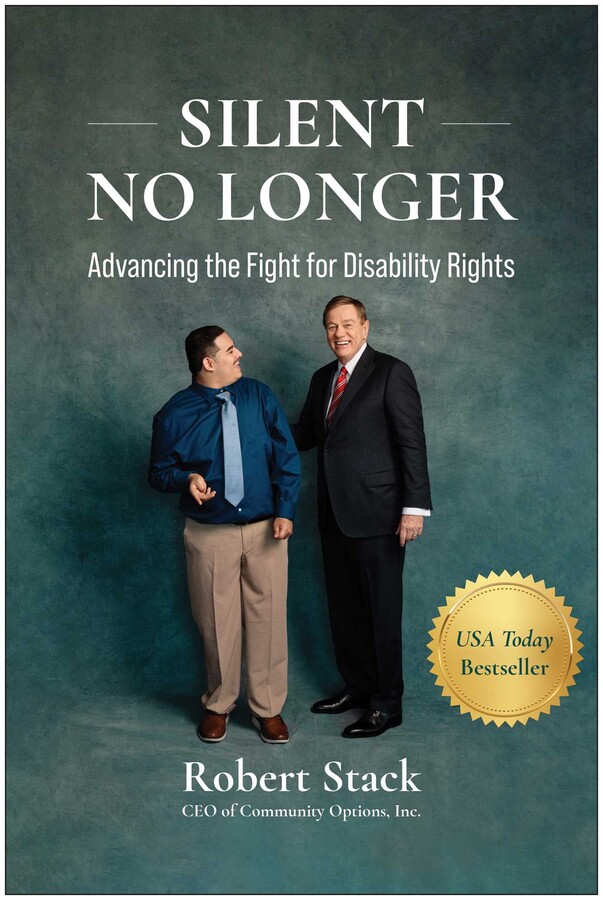
Stack, who has more than forty years in the field, recently wrote Silent No Longer: Advancing the Fight for Disability Rights. It is his third book. Silent No Longer is a mixture of professional memoir, critique of how the US cares (or doesn’t care) for people with disabilities, and a powerful call for reform. The heart of the work embodies the tension between the truly awful structures and painful histories of people with disabilities, with Stack’s career moves and reforms. He has been totally committed to community care as the best way for society, or communities, to provide needed support. After reading about the conditions in institutions for people with disabilities, the warehousing of humans, it is easy to understand how and why Stack became so passionate.
One of Stack’s great strengths is his courage to speak up for those with disabilities, to call to account those with the power to effect meaningful reforms. It is difficult to imagine him as ever silent. However, Stack does not present himself as savoir so much as a facilitator. In the book he highlights, again and again, truly deplorable institutions. Reading the stories makes one blood boil, as do the ways that laws, policies and bureaucracies get in the way of independent or semi-independent living for these people. Community structures, he persuasively argues, can do more and do it for less.
The book calls out the economic injustice and inefficiencies of disability support. Conditions and organizations vary widely from state to state. What is consistent is limited funding. Across the country those that help people, Disability Support Professionals (DSP), are consistently underpaid. Stack explain how many states have made questionable policy decisions. “Follow the money” he counsels, and with good cause.
Silent No Longer is strong on case studies, but relatively light on the nuts and bolts of policies, studies or evaluations of what makes for effective programs. This is not a strong source for a systematic examination of government support for the disabled. Moreover, sustainable long-term solutions in the absence of effective political action are not examined. More data would have been helpful. Where Stack truly shines in his accounts of people that he and his organization has helped. These are extraordinarily encouraging stories. One wonders why they aren’t the norm.
Unfortunately, Stack does not address the recent New York State settlement with the organization. Community Action systematically failed to document training and was accused of Medicaid fraud. The settlement was more than $5 million. The allegations and case undercut Stack’s moral position in the book. Nonetheless, Silent No More remains a powerful call for ongoing attention those who have disabilities and community focused ways to support them.
David Potash