Simple Brilliance in Napoleonic France
Emile Guillaumin was a French farmer, a peasant, who spent almost his entire life (1873 – 1951) in Ygrande, a small commune in central France. With only five years of schooling under his belt, Guillaumin was nonetheless a gifted and influential writer. During the day he farmed and at night he read and wrote. He published poetry, articles, an agricultural quarterly, and a masterpiece of a fiction, The Life of a Simple Man. Released in 1904, the book was a sensation across France. Guillaumin gave voice to a sharecropper (metayan) named Tiennon, describing his life, his family, and his world with sympathy, dignity and great care. It is a beautiful book, one that remains relevant to this day.
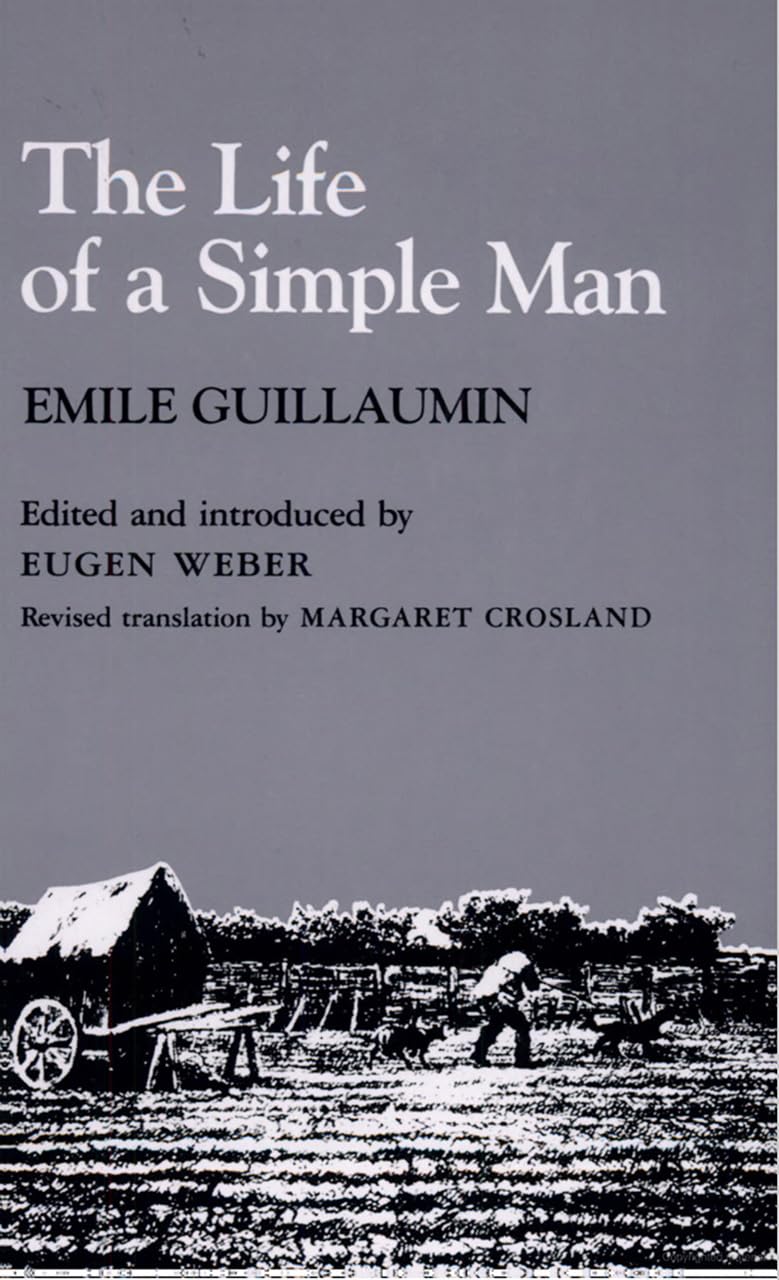
The goal of the work, Guillaumin wrote, was to show the elites what a sharecropper’s life was really like. He does that through a straightforward first-person autobiography, as “told” to the author. Born in 1823, Tiennon speaks of his childhood in a small commune not far from Ygrande. We learn of his family and the day-to-day grind of rural life. Most of the people in France at the time were peasants, people born into poverty with limited options, family who struggled to have enough to eat, a safe and comfortable place to live, and sufficient basic necessities. Tiennon does not complain so much as explain, and through his words, we learn. He works, marries, starts a family, renting one farm after another, providing for himself and his family. At best, he does a little better than scrape by. Life is basic and quite tough.
Tiennon is a very sympathetic hero. He is a truly decent man, works extraordinarily hard, and wants what is right and best for his family. He does not complain; he deals with problems as they arise. There is little by way of new opportunity and the very sense of his agency is quite limited. Without an education or mathematics, he and his family are cheated out of money. Poverty limits the very idea of travel or exploration. Tiennon’s world-view, and those of his community, are severely circumscribed. He is aware of this, too, and is uncomfortable when confronted with wealth. Nonetheless, Guillaumin is very attuned to the technological changes sweeping rural France in the 1800s.
Importantly, Guillaumin does not belittle Tiennon or his world. Nor does he romanticize it. Instead, the author paints a picture of decent people who could do and be so much more if there was greater wealth and investment in them. He shows when and how opportunity are available and when they are not. There’s an anthropological quality to the descriptions, a narrative that is grounded in fact and labor. When the one key meal of the day is a thick soup, the soup matters.
A Simple Man is a timely reminder of the power of well-written, authentic prose, to foster empathy and understanding. It is at the very grounding of a liberal society, one in which we realize that each one of us has worth. Seems to me that we can never have too much of this kind of work.
David Potash