Dying For Decades and Still Looking for Ships

On November 11, 2025 the New York Times published an article about the US Merchant Marine. Today few cargo ships operate under the US flag. President Trump and his supporters have other ideas. A bill was drafted that funds cargo ship building. It stipulates that the vessels must have Americans as part of their crews. Not many Americans are sailors. Merchant marine sailors can earn more than $100,000 a year.

I reached for John McPhee’s Looking For a Ship. The book had been resting on a shelf in my kitchen for months. The title is not compelling. I wondered if it, written in 1990, was still relevant. A blurb online noted that the book chronicled one of the last ships in the US Merchant Marine.

Thirty-five years later the Merchant Marine is still dying.

I own more than a few of McPhee’s books. He has written dozens and more articles than I care to count. McPhee is respected by authors and loved by readers.

McPhee’s writing is sharp, pointed and grounded in facts. He tends to avoid adjectives and adverbs. The writing is not sparse but McPhee likes clean sentences, with clear verbs and nouns and proper nouns. He writes with precision. It takes practice and forces the writer to think through word choice. I have endeavored to employ that style in this post. It has been a most interesting exercise.

The stream of consciousness of a Kerouc, Woolf or Proust stands in opposition to McPhee’s prose. Sometimes McPhee’s writing presents like journalism. Other times it reads like literature. It has been called “creative nonfiction.”

Looking For a Ship opens with a seaman, looking for a ship. He needs work and finding the right posting is complicated business. Good jobs are scarce. Selecting a good ship can set up a sailor for years or even a lifetime. A bad ship can result in less money, injury or even death.

The seaman, Andy Chase, finds a spot of the S.S. Stella Lykes. 635 feet long, the container ship plies the Atlantic and Pacific Oceans. Most containers have “STD” on the shipping manifest. “Said to Contain” is all that people know about what is in a container until it is opened. The Lykes’ cargo is extraordinarily random mix of things.

McPhee’s attention does not stay on one seaman, one ship, or one journey. McPhee’s prose wanders. He writes about other sailors, ships and ports. He reports on shipwrecks, pirates and union halls. Sailors tell their histories, talk of their families. It comes as no surprise that many are wanderers. The captain, Paul McHenry Washburn, tells many stories. Washburn, like many other sailors, did not plan his career path. It made more money and sense than boxing or the circus.

McPhee does not generalize or make assumptions about the people he meets on the ship or in the ports. Each person is treated as an individual. This commitment to facts and individuality sets McPhee apart from many other writers.

Sentence by sentence and paragraph by paragraph, Looking For a Ship explains what it is like to be an American merchant marine seaman in the 1980s. Neither romantic nor glamorous, it is an honest and dangerous way to make a living. McPhee has admiration for these sailors and their way of life. It may be nonfiction, but it is extremely creative, well worth time and consideration.

David Potash
Writing Into Being

Thinking about a novel as a linear work of art, using chronology to explain how the story unfolds over time, offers the easiest path to a simple explanation. But what if unspooling the narrative leads one back to the start? Perhaps the geometry supporting the creative endeavor is not Euclidean. Maybe our expectations for lines, planes, intersections and causality are not in alignment with the author’s rules. How would one explain a Zen novel, a novel that swallows its tail as it builds a world dependent upon the writing and reading of the narrator? Or a quantum work, which changes when it is read?

While all this might sound like the makings of an imposing work of experimental literature, something conceptual and challenging, it need not be inaccessible in skilled hands. Ruth Ozeki tells a terrific story in a exceptionally innovative way in her award winning A Tale for the Time Being. It is a super book, compelling and smart. Its stories are engaging. It raises questions of knowing and being, epistemology and ontology, without pedantry. The Booker Prize short-listed the novel in 2013. I’ll have to see what book won, for this novel is outstanding.

Nominally, the story is about a writer – whose life bears significant similarities to Ozeki – finding the diary of a traumatized teenage Japanese girl and letters penned by the girl’s grandfather. Our narrator lives in the pacific northwest, like Ozeki, and the diary and related materials wash up from the ocean. Struggling with her own writing, our narrator named Ruth, becomes obsessed with the girl and her family. As the novel moves around in time and place, much more is revealed. Observations, meaning-making and understanding emerge through discreet events, eventually building into something greater.

There’s Ruth’s story, the story of those around Ruth and those she encounters as she investigates the girl. Nao, the Japanese youngster, tells her story through her diary. Her voice is vibrant and her situation painfully difficult. Her father is depressed and suicidal. Her mother is working and absent. Her great grandmother is a life force, wise beyond her hundred-plus years. Her grandfather, a brilliant young philosopher, was forced into the military as a kamikaze pilot during World War II. And while much of what transpires is traumatic, if not simply awful, Ozeki is able to affirm a very positive message.

The crafting of the novel is exquisite without being too writerly. Mostly. Occasionally, awareness of the interlocking pieces hinted at a more intrusive authorial presence. Where Ozeki’s empathy truly shines in her depiction of Nao. It is haunting and memorable. Surrounding the story are footnotes, appendices, references and re-references, all crafting an inclusive and connected world.

In addition to being a novelist, Ozeki is an emerita professor, a filmmaker, and a Buddhist priest. She’s taught, lived in Japan, and directed TV shows. A Tale for the Time Being hints at these and other talents, for it is a novel of dazzle and great depth.

David Potash

Unsettling Brilliance of Schizophrenia Confronted

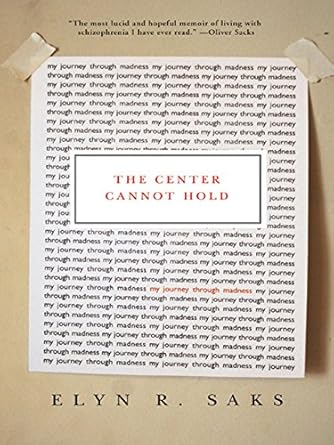
Elyn R. Saks is a brilliant legal scholar. The Orrin B. Evans Professor of Law, Psychology, and Psychiatry and the Behavioral Sciences in the Law School at the University of Southern California, Saks has a law degree from Yale University, a MacArthur “genius” award and many well-deserved honors. She’s written several books and has influenced law and policy. Saks has also learned how to live and flourish with schizophrenia. Her memoir, The Center Cannot Hold: My Journey Through Madness, is an amazing book chronicling her incredible journey.

It is difficult to imagine, let alone consider, what one’s sense of reality and self might be like when suffering from schizophrenia. Saks explains it to us, not as a clinician, but as a person from within the illness. Her struggles as the disease developed, and her attempts to control it with and without medication, are gripping.

The Center is an engaging read. One might start it out of curiosity and be pulled in from the unique nature of the story and the narrator’s voice. Saks’ prose is precise and haunting. She neither sensationalizes nor edits the hallucinations, the emotions – of her and those around her – and the battles as she fought to hold on to her sense of agency and identity. It is important to emphasize that madness (or mental illness) and intelligence are not at opposite ends of a continuum. Saks’ life and work make that abundantly clear. Neither do mental health issues necessarily mean a lack of connection or care for fellow humans. What emerges through Saks’ book is a lifelong struggle with her illness, acknowledgment of the voices in her head, and the fight she has made to manage them. Her candor and directness in explaining all of this to readers is unnervingly impressive.

Saks starts the book with her childhood, her traditional parents, and early challenges. She has difficulty with eating, self-care and hallucinations. A highly structured rehabilitation program gives her stability in her teens yet complicates her acceptance of medication. In college she is an outstanding student even as she works through episodes of psychoses with delusions. At Oxford University, as a Marshall scholar, the lack of friends and structure causes more difficulties, leading Saks to suicidal ideation. More direct care, including psychoanalysis, give Saks hope and direction. Unfortunately, as she returns to the US and eventually enrolls in law school, her symptoms return with a vengeance. Stable health eludes her, and cancer (not diagnosed in part because of her schizophrenia) makes her battles all the more frightening. Little, save structured academic work, came easily to her.

Heroes come in many shapes and sizes. In my mind, not only is Saks heroic because of the life she’s led, praise is deserved specifically because of this book. Appreciating her led me to think a great deal about assumptions of identity and self. What accompanies our assessment, connection and appreciation of others? What do we do when we meet someone who is mentally ill? Assumptions about mental illness and the mentally ill hindered Saks throughout her life. It is particularly galling to see how barriers were put up as she fought to earn a law degree and find employment. Discrimination, tacit and direct, were consistently present. Even some of Saks’ caregivers were unable to see her and appreciate her humanity. This is not to minimize her illness. Instead, the book – and Saks powerful narrative – problematize so much of what comes in the door when we talk about mental illness.

It is impossible to read The Center and not question many long held beliefs about those who have mental health problems.

David Potash

Coming of Age in a Moment in History

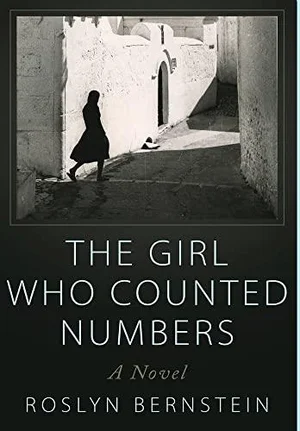
Historical fiction is tricky. Too much history and it feels contrived. Not enough history and one wonders why the author chose those characters at that particular time and place. Done well, though, and something special can happen – the reader gains appreciation and understanding while enjoying a story. Roslyn Bernstein’s The Girl Who Counted Numbers gets it right.

Bernstein, an emerita professor of journalism and creative writing at Baruch College, has written five books and scores of articles. She knows how to tell a tale. In 1961, Bernstein spent more than half a year in Jerusalem. That experience was the genesis for the novel, the story of a 17-year-old Jewish American girl who travels to Israel to solve a family mystery. Bernstein’s heroine, Susan Reich, is a smart, intrepid sleuth in a strange land. She wrestles with questions of identity, agency, justice, racism, and Jewishness. While one is tempted to conflate Bernstein with Reich, the author is clear: the book is fiction.

The primary quest driving the book and the visit to Israel is for Susan to gain information on a missing family member. Her father immigrated to the US as a child while his brother, Yakov, remained in Poland. All contact among family members was lost during WWII. Reich’s father challenges Susan to track down information about Yakov. The horrors of Europe before and throughout the war are woven through the narrative.

Reich’s time in Israel coincides with the Eichmann Trial. A major Nazi figure who played a critical role in the Holocaust and the murder of untold numbers of Jews and others, Eichmann was captured by Israeli intelligence officers in Argentina following years of investigation. Eichmann was tried for his crimes, convicted, and executed in 1962. It was a global event that helped to define the horrors of the Holocaust to the entire world. Hannah Arendt, who briefly appears in The Girl Who Counted Numbers, wrote about the trial in her book Eichmann in Jerusalem: A Report on the Banality of Evil. Bernstein tracks the trial and how different people at the time talked about it – or not.

Bernstein’s novel incorporates another important historical event, the increased immigration of Moroccan Jews to Israel. Through financial support from US organizations and the government of Israel, more than 120,000 Jews were incentivized to immigrate over a decade. The Moroccan Jews faced many difficulties in their new country, including discrimination, poverty and limited economic opportunity. Bernstein situates Reich in the midst of this demographic seeking rights. Susan falls in love with a charismatic Moroccan Jew, a young man keen on leading a protest movement.

As you might imagine, the three threads of the novel facilitate fascinating interactions. Susan grows up quickly in the novel, becoming an adult with agency. Her relationship with her father, her family, and her history changes. Susan begins to chart a new future. She comes to understand, as do we as readers, the complexities of choice and identity. It is much easier to judge, particularly with the benefit of time and foreknowledge, than to understand. Above and beyond being an entertaining novel, The Girl Who Counted Numbers contains a powerful message about learning and growth.

David Potash

It Was Special! I Was There!

We are hard wired, the experts say, to prefer the music of our teens – regardless of its quality. My bias, accordingly, is for the late 1970s and early 1980s. But not all music from the period. I like new wave, ska, hip hop and rap, rock and dance music – the things that you might find in on an alternative radio station. It seemed to me at that time – and it does now – that it was an unusually vibrant period of musical experimentation. There was just a going on, especially if you stayed away from the “I hate disco” vs. “Rock” debates. Boundaries were blurred and labels did not matter. While I do not think of myself as especially nostalgic, I still believe it to be very exciting period for music and culture.

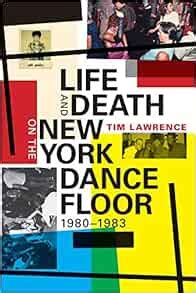
My assessment is not unique. While more than a few have agreed with me it the years, it was particularly gratifying to read Tim Lawrence’s Life and Death on the New York Dance Floor, 1980 – 1983 as scholarly confirmation. It was a special time and Lawrence does outstanding work tracking the hundreds of artists, the scores of nightclubs, and the rebirth of Gotham as a creative force in nightlife. This is a time of inexpensive real estate, shifting tastes, resistance to President Reagan, and a rejection of high status disco (Studio 54). What transpired – in a period before AIDS, before high rents, a raised drinking age and ATMs east of lower Broadway in Manhattan – was a flourishing of music and dance.

Tim Lawrence has written three books about music and dance. He’s a DJ, podcaster, producer, party-thrower, and professor of Cultural Studies at the University of East London. Not only does he know the music, he appreciates and values the music and the scene around it. Lawrence not a critic, keen on squeezing the life out of track or artist to make a point about theory. One of the lovely features of Life and Death on the Dance Floor are the song recommendations/references from key djs at their clubs. Many of them were deep in the crate of vinyl, too. This was, after all, before CDs. Lawrence clearly spent hundreds of hours interviewing to make the book possible.

The Mudd Club anchors the start of the book, as Lawrence’s prose is organized chronologically and roughly by nightclub. He tends to give more attention to disc jockeys than to musicians and groups, which makes for an unusual focus. It fits, though, with his overarching message of blurring and dynamism. The true superstar DJs would surprise crowds, creating memorable soundscapes. Lawrence is also good on the crossover between music and other arts. Warhol and Basquiat, for example, were often in the clubs. The story is very Manhattan-centric.

There’s a journalistic feel to the book. Chapters are brief and the structure is who, what, where, when and why. Record companies, real estate and politics are present but not fully accounted for; they lurk, appearing in some acts but not others. Missing from the work is a sustained long argument. Lawrence advances shorter arguments, and explores conflicts and resolutions, but there is no big cultural studies claim about the New York club scene in the first years of the Reagan presidency. Not that one could not mount such an argument . . . .

Lawrence’s approach is appropriate for the scope of the book, for the scene could only flower for a short period. Rising rents, changes in local laws, economic development and AIDS had a tremendous impact. It took place in a time of transition. People still went out to dance in the mid-80s, as they do today, but so many things changed.

As for the music, artists include Afrika Bambaataa, Art of Noise, Beastie Boys, B-52s (who were quite the presence in lower Manhattan), Black Uhuru, Blancmange, Blondie, Kurtis Blow, David Bowie, Bow Wow Wow, Laura Branigan, Bush Tetras, The Clash, The Contortions, Cristina, Culture Club, Devo, D Train, Ian Dury, Brian Eno, Marvin Gay, Grandmaster Flash (with and without the Furious Five), Eddy Grant, Gwen Guthrie, Herbie Hancock, Billie Idol, Rick James, James White and the Blacks, Grace Jones, Kid Creole and Coconuts, Kraftwerk, Cyndi Lauper, Liquid Liquid, Lydia Lunch, Madonna, Malcolm McLaren, Medium Medium, New Order, Klaus Nomi, Yoko Ono, Richard Hell and Voidoids, Run-D.M.C., The Smiths, Spandau Ballet, Sugarhill Gang, Talking Heads, Thompson Twins, Tom Tom Club, Was (Not Was), Jaw Wobble, and Yaz/Yazoo. There are others as well.

Life and Death on the Dance Floor is an excellent book for those looking to learn more about a particular scene in a particular period in New York City. If you knew nothing or very little, I cannot imagine a better guide. I wonder, though, about what those who were on the dance floor would think of the book. I was. Growing up in northern New Jersey, my first New York City club experience was in the late 1970s. By the early 1980s, every chance I could get I was in lower Manhattan, looking for bands and music and opportunities to dance. The talent, the diversity, the possibilities were extraordinary, inexpensive, and in constant flux. Most of all, it was great fun.

David Potash

Alligator Pears Never Had a Chance

One of the best bowls of guacamole I ever ate was prepared in Texas by a fifth generation German whose family settled in the hills country around Austin in the mid-1800s. He told me that his family had loved Mexican food forever, explaining that Texas culture was a wonderful mash-up of different heritages. It was a tasty reminder of how much of what we consume and enjoy has a fascinating history.

Towards that end, if you only read one book about avocados, please reach for Green Gold: The Avacado’s Remarkable Journey from Humble Superfood to Taste of a Nation. Sound silly, I know – but hear me out: the story of avocados is extraordinarily interesting, surprisingly complicated and it comes with lessons, too. Written by Sarah Allaback, an architectural historian and Monique F. Parsons, a journalist and avocado farmer, Green Gold mixes agriculture, botany, business, economics, global exploration, history; international trade, personalities and recipes most effectively. The authors, who have been friends since childhood, seem to have had fun researching and writing the book. A genuine enthusiasm for the subject is threaded throughout.

Avocados are the fruit from an evergreen tree that grows in warmer climes. Known as the “alligator pear” in the English-speaking world until the early 1900s, the aguacate (in Spanish) was a key component in the diets of Central and South American people for centuries. It was “discovered” as a potential crop for white Americans in the late 1800s. A fascinating cast of characters grew, modified, and promoted avocados. Foremost among them and a hero to the authors was Wilson Popenoe, a USDA employee and inveterate avocado champion. Through his work and others, strains of avocados were developed, promoted and organized through a growing group of associations and partnerships. There were genuine avocado influencers and scientists across the globe.

Avocados are a complicated plant and it took many efforts (and quite a bit of science) for growers and agricultural scientists to develop strains that withstood cold weather (a problem for US growers), remain shelf-stable (an issue for wider distribution), and would yield consistently tasty fruits (an issue to everyone who likes eating them). Expanding the use and popularity of avocados was also about education, experimentation, and widening palates. The American food market needed to learn what to do with the fruit. It took decades up decades of marketing and outreach to get the public even to accept and use the term avocado. Many generations thought of it as an alligator pear. Add to that the distrust of “foreign” foods, something that has been an ongoing concern for centuries, and the challenges facing avocado growers in Florida and California are formidable. Avocados were not an overnight success. Expansion was slow through much of the twentieth century.

It was not all marketing campaigns and publicity. Allaback and Parsons’ work demonstrates that great generosity and collaboration shaped the avocado industry. Central American growers shared cuttings from their trees. People traded information and assistance, helping to advance the fruit’s popularity. Celebratory meals and mutual gratitude stand out as highlights in the book. The popularity of avocados was a collaborative effort.

A significant portion of Green Gold looks at the latter part of the 1800s and early 1900s, a dynamic period in terms of international agricultural exploration and promotion. The world became smaller and better known. However, in 1914, as relations between the US and Mexico worsened, a seed weevil threat became the basis for an American ban of Mexican avocados. Bans had happened before, but this ruling hardened into decades of exclusion. Mexican growers had to find alternative markets and the US avocado industry profited. The ubiquitous Haas avocado was developed and promoted. It is a type that does well in American climes. The book tells the story of the Haas family and their tree whose cutting changed growing patterns and expectations. Individual trees, in fact, are very important to the development of particular avocado strains.

The United States lifted the ban of Mexican avocados in 1997. Mexico, unsurprisingly during the latter half of the 1900s, had been supporting a growing avocado industry. The change upended the avocado market. From the early part of the twenty-first century, the popularity of avocados exploded. It is now a $20+ billion dollar market in the US and the world has a taste for avocado toast and guacamole. The US is a major importer and the domestic avocado industry has peaked. Avocados are grown around the world, in Central and South America, Asia, Africa and Australia.

Consider reading Green Gold. It will change how you look at the produce section in the grocery store, and give you a little frisson of knowing when you enjoy guacamole or an avocado toast.

David Potash

Coke Does What To Life?

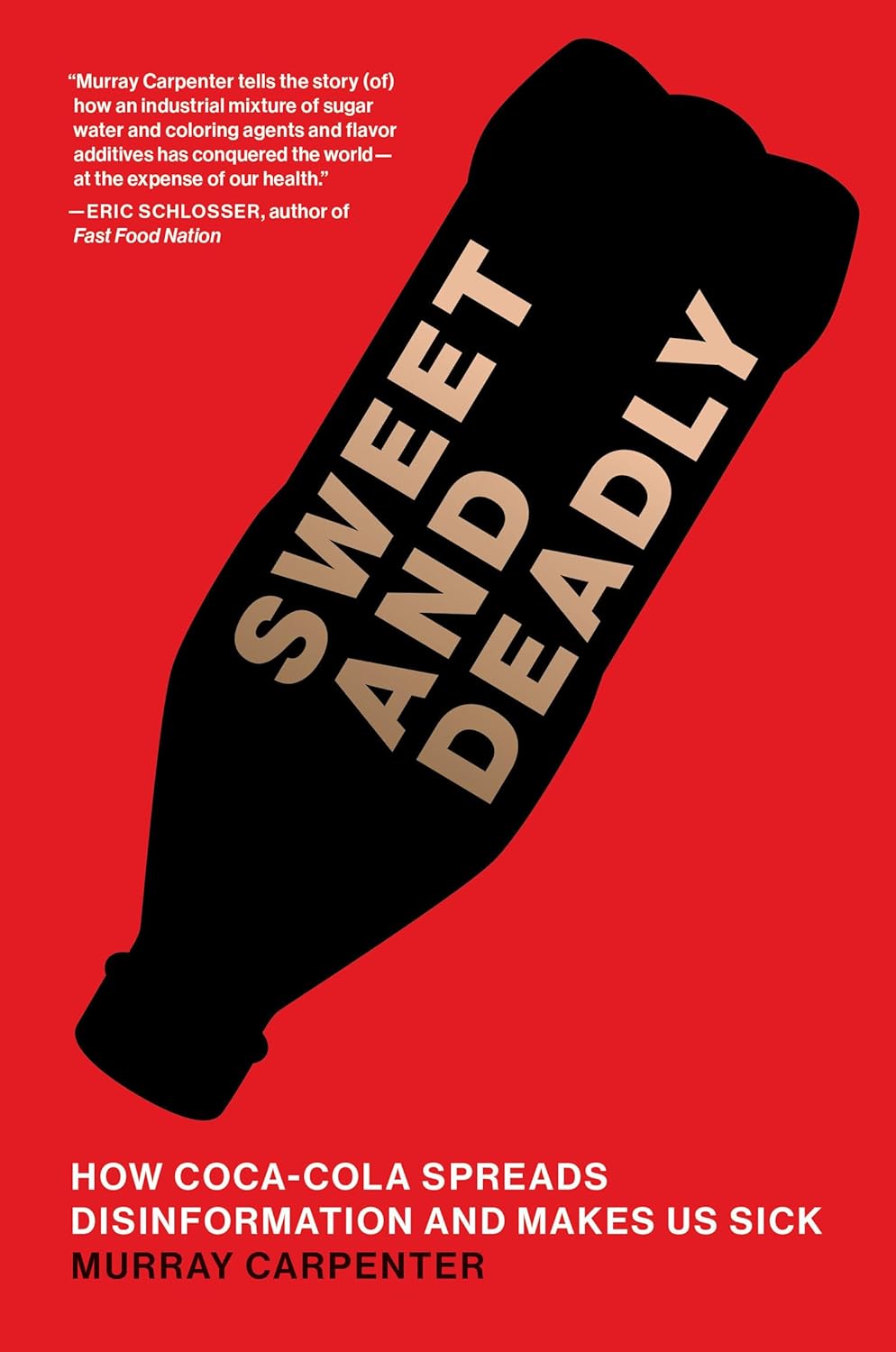
Murry Carpenter is a prolific science journalist. His latest effort, Sweet and Deadly: How Coca-Cola Spreads Disinformation and Makes Us Sick, is a comprehensive indictment of the soda company and its dangerous effectiveness in the first two decades of the twenty-first century. In a period where public health has tackled all manner of problematic substances, Coke has made scads of money and successfully avoided regulation. It is everywhere. Coke, Carpenter explains, is a harmful product that has remained on shelves and in our homes around the world through extraordinarily effective marketing, lobbying, strategizing and deceit.

Published by MIT, Sweet and Deadly is not a scholarly monograph. It is rigorously researched, but the format is very journalistic: short chapters, lots of facts and punchy prose. It is great with factoids and weaker on the larger argument of how soda fits within national debates about health and safety.

How do we talk about public health? The familiar arc, as Carpenter opens the book, is that when a product or issue is criticized, the critics are initially dismissed as cranks. Science, over time and through research, proves that there is merit to the criticism. The industry fights back. In most cases public opinion eventually turns, legislation is passed, and the problem is addressed. That is the history for tobacco, certain drugs and many other things that have been proven to be public health dangers. It is not the case for soda, even though there is overwhelming evidence that drinking soda has awful consequences. It leads to obesity, diabetes, and a host of medical issues. It is a major factor in the poor health of people in the US and around the globe.

The soda industry, led by Coke, has been remarkably successful in fighting back regulation and undermining science through pseudoscience and misdirection. This is the heart of Carpenter’s book. He moves quickly through Coke’s history. It is the big player in the soda industry and has been for over a century. Accompanying Coke’s popularity and pervasiveness has been a rising tide of health concerns. All of these are well-researched and Carpenter is very familiar with the studies. The book makes the dangers of soda drinking crystal clear.

What gives this book special focus is not the science or the studies. Instead, it is how government, business and public officials understand, shape and act on science. Sweet and Deadly documents how how science can be distorted, complicated, and redirected. Carpenter goes deep in explaining the many groups that do soda-friendly research, the campaigns that shift the burden of obesity to lifestyle changes (just exercise more!), and the lawsuits that have surrounding the soda industry for decades. It is a primer on how very smart and capable people framed public health issues so that they, and their companies, could continue to operate and turn a profit. The book shows how money can redirect studies, how policy and public opinion can be manipulated, and how difficult in can be to make nuanced arguments to effect change. It calls into question our understanding of expertise and authority.

Reading Sweet and Deadly will make it harder for you to want to drink soda, to see a Coke advertisement without considering the health consequences, and to question, without questioning, the health recommendations of “experts.” All told, some very good outcomes. For me, it made me quite happy with a glass of water.

David Potash

Who Decides & Who Is to Blame? Unaccountability Sinks and Modern Life

Making sense of what works and what doesn’t, at the big picture, at the macro level, is an extraordinarily difficult task today. Decades past we might have looked to wise elders, economics, history, or some combination of traditional academic disciplines to ask the right questions about the large systems that organize and structure our lives. We had “isms” that could guide us and help us understand. But what of recent times? Why are so many people frustrated? How is it that so many complain about feeling disempowered with their jobs, with their government, and their rights as citizens? Or as consumer? If think that people matter, why are so many feeling disempowered? Where are we headed and what is driving us there?

Dan Davies, an author and former economist, has been mulling over these and related questions for many years. He is an extremely innovative thinker, akin to a business entrepreneur, analyst and anthropologist. Davies writes across disciplines, and he is very much attuned to changes being wrought by technology. In his 2024 book The Unaccountability Machine: Why Big Systems Make Terrible Decisions – and How the World Lost Its Mind, he struggles to explain something elusive that is nevertheless sensed by many. The title encapsulates the difficult task Davies has set for himself.

The book weaves together several related, yet distinct threads. Davies is most effective and successful when he looks at the ways that society, over the past fifty years or so, has steadily industrialized decision making. Big decisions, he emphasizes, are increasingly now made by systems and policies, not by groups of people responding to special circumstances. As the amount and flow of information surges, we build models so that we are not confused and overwhelmed. This, he stresses, is a normal and sensible reaction.

For example, if you are running a business, it is important to have systems and processes to figure out how pay employees, how to track expenses, how to deal with various issues. As the size of your business grows, the complexity of your systems and processes grows – often exponentially. Add tech to the mixture and it can become even more complex.

Our growing reliance – and distrust – of systems is a simple and extremely powerful observation by Davies. While it might be difficult to prove – there is no way to measure such a claim – it nevertheless resonates when we consider businesses, the economy, and so very much else. To be sure, a powerful individual or situation might break a system or render it ineffective. That power, though, merely redirects and reshapes new models and systems. It is difficult to imagine a major factor in contemporary life that does not involve large systems, governed by policies, and almost all without any real accountability.

What decisions are Davies talking about? The examples, once considered, are all around us. Did the airline cancel your flight? You speak with a representative who cannot refund your fees because it is airlinepolicy. It does not even make sense to be angry at the employee. Wonder what happened in the latest financial crisis? Untold amounts of money may have been lost, but no one was responsible. The bankers remain employed, as do the brokers, economists and wealth managers. Read about a particularly stupid decision by a government agency? The spokesperson will issue a statement citing law, policy or process – but no one ever “owns” the decision. As a memorable illustration, Davies explains how squirrels lacking proper paperwork, shipped via airlines through Amsterdam, were were eventually all killed. Policy did them in, along with an industrial chopper. It is an ugly story, pulling together rules for airlines, for the airport, for international travel, and for animals. Once Davies provides the details, it is easy to see how simple solutions to solve straightforward problems can prove to be extraordinarily difficult, leaving truly disastrous consequences.

To explain at least some of the factors that led us to this uncomfortable place, Davies looks to the history of Stafford Beer, the father of cybernetics. Beer, a business professor and consultant, was an extremely influential player in the development of many modern corporations. He advanced systems thinking, the integration of technology, advanced the power of teams, a developed what was later labeled operations research. Beer’s work paved the way for conceptualizations of organizations and their functions. Moreover, it can provide insight into the ways that different stakeholders obtain and use information for different means. Information management can be even more consequential than we realize.

Davies walks us through leveraged buy outs to illustrate the phenomenon. He is very familiar with Wall Street and the power, for good and bad, of capital. An LBO features a small amount of up front money, joined with lots of debt, to takeover a business. The business’s assets are then used for more debt and/or stripped, undermining the company’s viability. Those doing the LBO, though, face little to no risk. As “good” LBO targets are snapped up, the markets increasingly took to buy outs of poor businesses or poor targets. The financial system knows that such moves were destructive in the past and most likely will be in the future – to businesses, communities, and our collective future. But the system and processes made stepping away irrational. The very structure and incentives of our large financial systems can cause tremendous damage.

It is thinking along these lines that make The Unaccountability Machine such a compelling book. Davies is on to something deep in modern life. He has unearthed an information/system ontology that, unchecked and unexamined, is leading to tremendous inefficiencies and unhappiness. He also offers a unique perspective from which to look at, analyze, and consider these larger issues. Yet before reading this book, I had neither the observation, language or arguments to even think about what it is or what to call it. This book makes for a very interesting read.

David Potash

Horrific Press, Great Outcomes and Fascinating History: The Mongols

Few figures in history have been more feared than Genghis Khan. While there have been more than a few truly horrific political leaders able to act on global ambitions, Genghis Khan stands out as an exceptional empire builder. During his sixty-one years (1162 – 1227), he conquered created what many consider the largest state ever, covering much of Asia, from China to parts of Europe. Hundreds of millions were affected by him and tens of millions lots their lives. But what do we know of Genghis Khan as a person? Jack Weatherford, an anthropology professor and author, penned an accessible best-selling biography that has remained in print – and popular – for more than two decades. Genghis Khan and the Making of the Modern World reads like a novel and sheds a great deal of light on this extraordinarily fascinating – and understandably polarizing – figure.

Weatherford’s aim is to explain, to contextualize, and to appreciate the impact of Khan and his empire. Questions of morality are view through an anthropological lens. Weatherford’s goal is not to judge, but to document and explicate. With that as a grounding, the book provides a extremely interesting history of a compelling man. Khan, through ruthless intelligence, was able to build power within Mongolian culture and then across a continent. He was rigorously meritocratic, restless to a fault, and innovated in how he treated and organized peoples. From military structure to rights for women to how conquered lands were treated, Khan established a kind of rough “fairness” for those under his control. His approach benefited him, naturally, and distinguished the Mongolian army and empire from all others. He sought great power without any sustained interest in cultural conversion. If one agreed to submit to the power of Genghis Khan and his taxes and wants, life could be good. Resist his empire and death was more than likely.

Without any real practice of agriculture or the making of goods, the Mongol economy depended upon taxes and plunder. Accordingly, outcomes mattered more than anything else to sustain Mongolian rule. What mattered and did not to Khan and his people is very interesting. The Mongols greatly valued Mongol life. There were no sacrifices of troops. They had little interest in torture or excessive cruelty, in contrast to many leaders of the period. The Mongols had no sense of honor and were not keen on proselytizing. The unusual admixture of traits and preferences gave the Mongols great advantages in their drive to expand. They used terror and general fear to achieve their aims. Genghis Khan, who appreciated the value of scribes, laws and structure, took advantage of all and more. They welcomed the terrible press, for it made sieges all the easier.

Weatherford’s book moves quickly. He knows how to dwell on an anecdote and when to pull back to explain broader themes. The big picture does not suffer, for he shows how the Mongolian empire had an incredible impact on world trade and commerce. Were it fiction, it would stand on its own as an incredible story. All in all, Genghis Khan is a fascinating window into an ancient and little understood world.

David Potash

Magic of Mules

Rinker Buck is a character, a raconteur, a man you cannot help but admire. Author, former journalist and inveterate adventurer, he has made improbably journeys a hallmark of his life.

As a teenager, Rinker and one of his brothers flew a rebuilt Piper aircraft across the country. That became Flight of Passage, an award-winning book. In 2022, he wrote Life on the Mississippi, an account of his time on a home-built flatboat on the river. Between the two, in 2015, Buck penned The Oregon Trail: A New American Journey. It is a wild tale of Buck’s trip in a covered wagon from Missouri to Oregon. Rinker, by the way, came from a large family, and a different brother joined him on this adventure.

The book is a travel memoir, a personal history, a space for observation and reflection, and a training guide for those who might take DIY all too seriously. Rinker’s reason for the trip were complicated. He was reshaping a career, redirecting his life after a painful divorce, and working to come to grips with his childhood. His father, a charismatic, successful, and self-destructive man, took his children on a much shorter wagon journey through Bucks County, PA. The time in the wagon resonated with Rinker and in some ways, the entire adventure was an attempt to give himself clarity about his family and himself.

As one might imagine, the trek across the west was a tremendous adventure. No one had attempted such a feat in many decades. Complicating the effort, the history of the Oregon trail was hazy. There was no one route. People came, went, came back again over decades until train travel took over continental America. The Buck brothers met extraordinary people and made many, many friends. They had problems, disasters, mistakes and much to learn across the thousands of miles. Parts of Oregon Trail are truly funny, especially if you appreciate the challenges with trying to do something on your own. The Buck brothers also found moments of true transcendence.

The true heroes of the adventure, though, at least to me, are the three mules that made it all a reality. Rinker gives us a good history of mules, the vital role they played in American and world history, and the difficulties of finding and managing a reliable team. Mules, the offspring of a male donkey and a female horse, are not so much stubborn as sensible. They are indefatigable and surprisingly interesting. Buck’s journey is wholly dependent upon the hard work of Beck, Bute and Jake. Each had their strengths and weaknesses, their personalities. Averaging twenty plus miles a day, the trio towed the Becks, their wagon, their pup wagon (worthy of its own history), over two thousand miles. Think about that!

My other takeaway from the Oregon Trail was overwhelming admiration for the courage and drive of the tens of thousands of Americans who sought a better life out West. What they endured – willingly – in pursuit of that dream is beyond impressive. It reflects something fundamental of the American story. For that and more, I am most grateful to Rinker Buck.

David Potash