Writing Into Being

Thinking about a novel as a linear work of art, using chronology to explain how the story unfolds over time, offers the easiest path to a simple explanation. But what if unspooling the narrative leads one back to the start? Perhaps the geometry supporting the creative endeavor is not Euclidean. Maybe our expectations for lines, planes, intersections and causality are not in alignment with the author’s rules. How would one explain a Zen novel, a novel that swallows its tail as it builds a world dependent upon the writing and reading of the narrator? Or a quantum work, which changes when it is read?

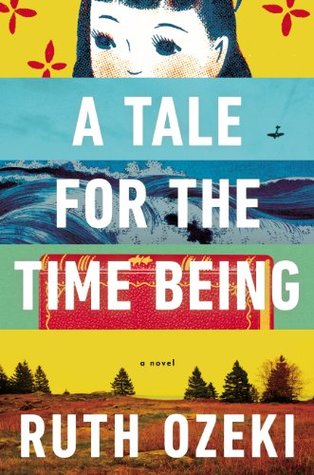
While all this might sound like the makings of an imposing work of experimental literature, something conceptual and challenging, it need not be inaccessible in skilled hands. Ruth Ozeki tells a terrific story in a exceptionally innovative way in her award winning A Tale for the Time Being. It is a super book, compelling and smart. Its stories are engaging. It raises questions of knowing and being, epistemology and ontology, without pedantry. The Booker Prize short-listed the novel in 2013. I’ll have to see what book won, for this novel is outstanding.

Nominally, the story is about a writer – whose life bears significant similarities to Ozeki – finding the diary of a traumatized teenage Japanese girl and letters penned by the girl’s grandfather. Our narrator lives in the pacific northwest, like Ozeki, and the diary and related materials wash up from the ocean. Struggling with her own writing, our narrator named Ruth, becomes obsessed with the girl and her family. As the novel moves around in time and place, much more is revealed. Observations, meaning-making and understanding emerge through discreet events, eventually building into something greater.

There’s Ruth’s story, the story of those around Ruth and those she encounters as she investigates the girl. Nao, the Japanese youngster, tells her story through her diary. Her voice is vibrant and her situation painfully difficult. Her father is depressed and suicidal. Her mother is working and absent. Her great grandmother is a life force, wise beyond her hundred-plus years. Her grandfather, a brilliant young philosopher, was forced into the military as a kamikaze pilot during World War II. And while much of what transpires is traumatic, if not simply awful, Ozeki is able to affirm a very positive message.

The crafting of the novel is exquisite without being too writerly. Mostly. Occasionally, awareness of the interlocking pieces hinted at a more intrusive authorial presence. Where Ozeki’s empathy truly shines in her depiction of Nao. It is haunting and memorable. Surrounding the story are footnotes, appendices, references and re-references, all crafting an inclusive and connected world.

In addition to being a novelist, Ozeki is an emerita professor, a filmmaker, and a Buddhist priest. She’s taught, lived in Japan, and directed TV shows. A Tale for the Time Being hints at these and other talents, for it is a novel of dazzle and great depth.

David Potash

Coming of Age in a Moment in History

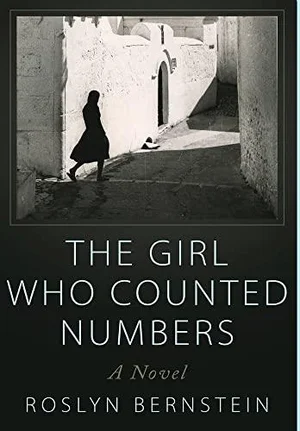
Historical fiction is tricky. Too much history and it feels contrived. Not enough history and one wonders why the author chose those characters at that particular time and place. Done well, though, and something special can happen – the reader gains appreciation and understanding while enjoying a story. Roslyn Bernstein’s The Girl Who Counted Numbers gets it right.

Bernstein, an emerita professor of journalism and creative writing at Baruch College, has written five books and scores of articles. She knows how to tell a tale. In 1961, Bernstein spent more than half a year in Jerusalem. That experience was the genesis for the novel, the story of a 17-year-old Jewish American girl who travels to Israel to solve a family mystery. Bernstein’s heroine, Susan Reich, is a smart, intrepid sleuth in a strange land. She wrestles with questions of identity, agency, justice, racism, and Jewishness. While one is tempted to conflate Bernstein with Reich, the author is clear: the book is fiction.

The primary quest driving the book and the visit to Israel is for Susan to gain information on a missing family member. Her father immigrated to the US as a child while his brother, Yakov, remained in Poland. All contact among family members was lost during WWII. Reich’s father challenges Susan to track down information about Yakov. The horrors of Europe before and throughout the war are woven through the narrative.

Reich’s time in Israel coincides with the Eichmann Trial. A major Nazi figure who played a critical role in the Holocaust and the murder of untold numbers of Jews and others, Eichmann was captured by Israeli intelligence officers in Argentina following years of investigation. Eichmann was tried for his crimes, convicted, and executed in 1962. It was a global event that helped to define the horrors of the Holocaust to the entire world. Hannah Arendt, who briefly appears in The Girl Who Counted Numbers, wrote about the trial in her book Eichmann in Jerusalem: A Report on the Banality of Evil. Bernstein tracks the trial and how different people at the time talked about it – or not.

Bernstein’s novel incorporates another important historical event, the increased immigration of Moroccan Jews to Israel. Through financial support from US organizations and the government of Israel, more than 120,000 Jews were incentivized to immigrate over a decade. The Moroccan Jews faced many difficulties in their new country, including discrimination, poverty and limited economic opportunity. Bernstein situates Reich in the midst of this demographic seeking rights. Susan falls in love with a charismatic Moroccan Jew, a young man keen on leading a protest movement.

As you might imagine, the three threads of the novel facilitate fascinating interactions. Susan grows up quickly in the novel, becoming an adult with agency. Her relationship with her father, her family, and her history changes. Susan begins to chart a new future. She comes to understand, as do we as readers, the complexities of choice and identity. It is much easier to judge, particularly with the benefit of time and foreknowledge, than to understand. Above and beyond being an entertaining novel, The Girl Who Counted Numbers contains a powerful message about learning and growth.

David Potash

Charm, Integrity and a Joyful Conspiracy

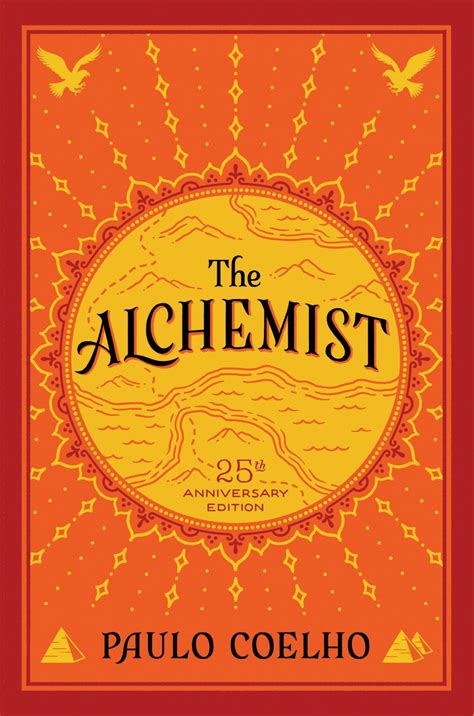
The most translated novel in the world in Paulo Coelho’s The Alchemist. A short and attractive book, it is a deceptively accessible tale, almost a parable, of discovery. The Alchemist has the power to stick with you long after you close the cover. Told with tremendous clarity and conviction, it is a memorable read.

In the introduction to the 25th edition, published in 2024, Coelho writes that no one paid any attention when the book was first released in Brazil. He never lost faith in the book, despite slow sales and his publisher cancelling his contract. A US publisher picked it up a few years later and the book took hold. It reached critical popularity in the late 1990s and sales have continued across the globe. Coelho, who had a most traumatic life before deciding to become a writer, believes that when you want something, the whole universe conspires to help you. It helped him. That philosophy also figures prominently in the story.

Describing the book’s plot does not do it justice. It is the most basic of tales, a young boy with dreams who travels – a quest – and learns about the world and himself on the way. From Andalusia to Egypt, there are twists and turns, to be sure, but what gives the work special power is the sincerity and integrity woven throughout. While it may be in translation, there is nothing in the English language version of The Alchemist that did not ring with truth. Considering the title and overarching concept, that is no small feat.

My suggestion for this post? When you’re feeling down or a little lost, consider picking up The Alchemist. Reading it will not take much time. You will always discover or appreciate something new. And most importantly, you will be happier once you finish.

David Potash

Karma Smiles With Sharp Teeth

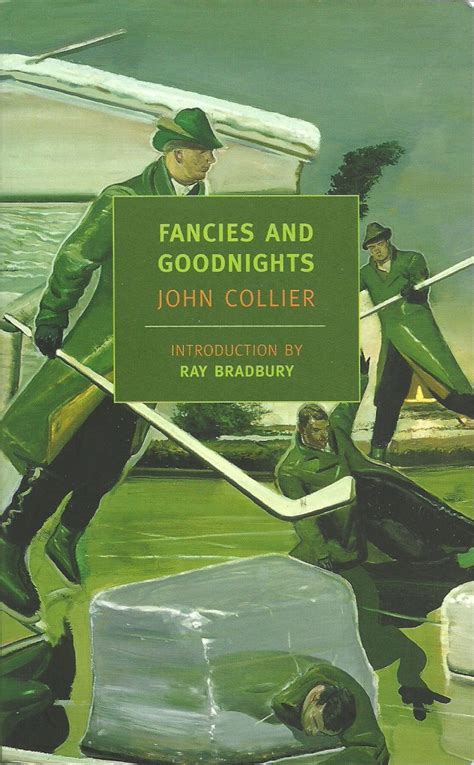
John Collier might be one of the most successful writers you have never heard of. Perhaps because of his ordinary name? His reluctance to pursue the spotlight? Collier avoided interviews and drew upon a well of British reserve. Nonetheless, whether you read one of his many pieces in the New Yorker, or saw a movie or play written or rewritten by him, or perhaps remember a Twilight Zone episode that remains rooted in your mind, there is a right good chance that Collier was the author.

Collier’s most effective metier may be the short story and an exquisite collection of his works in found in Fancies and Goodnights. First published in 1951, the book has been reprinted many, many times. It is classic, a delicious assortment and every offering comes with a bite. The latest reissue hails from the NYRB and it features a glowing introduction from Ray Bradbury, who writes “I can name no other writer in the twentieth century whose work has given me such consistent pleasure.” Collier’s prose is elegant, sophisticated, and very smart, with nary a wasted word.

Fancies and Goodnights is eminently enjoyable. It is as strong as any collection of short stories you might find, from O. Henry to de Maupassant to Chekhov. In reflection, I realized something unexpected from these many tales with a twist. Collier’s stories are consistently moral. They are far from didactic – no bland parables here – yet each, in its own way, carries a powerful message. Hubris receives a comeuppance, villainy is betrayed, and excess is justly trimmed. And in each of these, the end arrives without warning. They are simply great fun and very much “just desserts.”

Were you ever to be tasked with teaching ethics, as you debate this philosopher or that jurist, please consider Collier. His stories and their lessons would stick, delightfully so.

David Potash

Stories All in Good Time

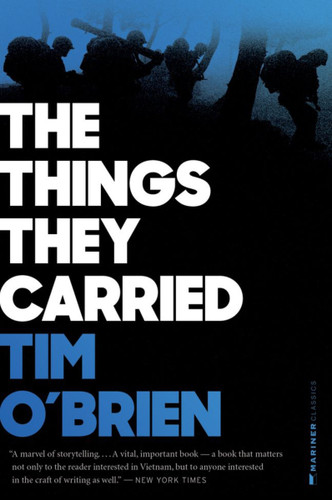
One of my dearest friends is a major fan of the writer Tim O’Brien. We met in the same college course and together read Going After Cacciato. She followed up over the years, reading more O’Brien, enthusing. O’Brien’s literature on the Vietnam War garnered all manner of awards. I read other things, and when I read about Vietnam, it was non-fiction. O’Brien became an item on my never completely forgotten but rarely considered list of things we promise ourselves to do. Like dance lessons. An obligation as much for myself as anyone. Several years ago I purchased a copy of O’Brien’s The Things They Carried. More than a wildly successful best-seller, the novel received accolades across the board and was called a “book of the century” by the New York Times. I was certain I would read it.

It sat on different shelves, was boxed up as I moved, and unpacked – again and again.

When the US Secretary of Defense, Pete Hegseth, spoke of restoring America’s “warrior culture” something clicked. I considered how we have talked about, read about, and thought about warriors. I have never had to serve in war and for that, I am grateful. As an historian, though, I have long been fascinated by war, accounts of war, and how people have understood and explained war. Mass conflicts – often our most important collective actions – shape our world and our understanding of ourselves and each other. Hegseth’s comments brought to mind many books, including John Keegan’s Face of Battle, Paul Fussell’s The Great War and Modern Memory, Vonnegut’s Slaughterhouse Five and Catch-22 by Heller. So many extraordinary works of art come out of war. And I finally reached for The Things They Carried.

It is a brilliant, moving book, a terrific novel about terrible things. It is a book that can make you smile and weep, for it is grounded in the powerful and challenging ways in which we try to make sense of all that resists order and sense. Is there a better way to write about the Vietnam War if we care about those who fought it? The novel shines as a work of literature and memorial, real and imagined, of fellow humans. Not abstract others who become othered, but fellow people.

A well-crafted story, provided it is told and heard, can render the other as familiar, recast the simple into the complex. The Things They Carried is about Vietnam and life and love and meaning.

Thank you so much for the recommendation. Sorry that it took so long. I don’t have a good excuse. You were right. It is a hell of a great book. And I’m glad that I finally gave it time.

David Potash

The Double Meaning of Prey

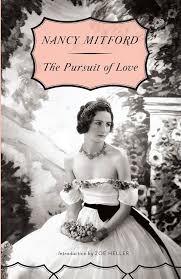
One of more popular twentieth century novels of manners, love and heartbreak, Nancy Mitford’s The Pursuit of Love has been in print since it was first published in 1945. Re-crafted into movies and a television series, the story has struck a nerve over the decades, connecting with different generations. Roman a clef? The book most definitely was closely drawn from Mitford’s own experiences and that of her family and friends. More than a biography, from stories to observations, it cannot be read solely as a veiled family history. Though one may be tempted to do some investigative googling . . . .

Mitford was a brilliant novelist, a member of a family with a peerage (her father was a Baron), and a highly networked celebrity. Her friends and family had money, wealth, power and status. She authored eight novels, four biographies, edited numerous works and numerous articles and essays. Several biographies have taken aim at her and her family, explaining the who, what and when behind this book.

The Pursuit of Love opens with a scattered family history from the voice of a first person narrator, Fanny. While not a member of the Radlett family, Fanny was intimately connected with them from childhood. All the eccentricities of English country wealth are gently satirized as the story steadily moves to focus on one of the Radlett sisters, Linda. By the second half, the novel takes the shape of a more traditional account of a woman’s loves, hopes and dream. Fanny’s closest friend, Linda, is a memorable character. She is larger than life and in surprising ways, smaller than one might expect. Linda moves through marriages, relationships, war and family with a remarkable ability to disengage and engage without consistency. As such, Linda is both of the world and strangely apart from it. Love, as the title indicates, is central to Linda’s life. She searches for love, in particular forms, and love, in other forms, finds her. She both preys on some of those around her and is preyed upon by others.

The story is romantic and tragic. It delivers in style.

And yet . . . . for this reader, I found it a little thin. Great characters and gentle satire can only take a work so far. Missing from the story are issues of growth, realization, and deeper meaning. Like its heroine and me, the novel is searching for something a bit more substantial. It is one of the reasons I have enjoyed discussing the book with those who have read it. The question always comes down to a little less interest in the story and great curiosity in the why. In Pursuit is a well worth your time, but for me, more appetizer than a full meal. Unless, of course, we’re talking about it. If so, we’ll linger for all of dinner.

David Potash

In Praise of the Accessible: Penguin’s Collection of Japanese Short Stories

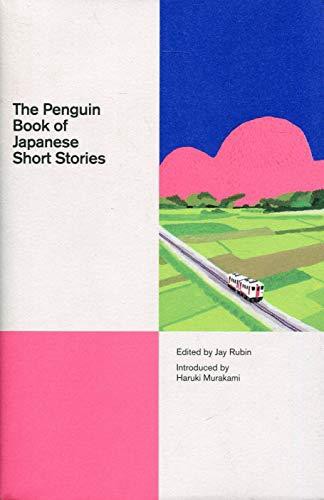
A conversation with a colleague who is deep into Japanese history started me thinking: what have I read recently from Japan? Or by Japanese writers? There was a stretch when many I know were referencing Haruki Murikami, but beyond his work? While I may be up on some popular culture, my knowledge of Japanese fiction and literature is minuscule. The discussion called for action, so I picked up a well-reviewed book: The Penguin Book of Japanese Short Stories. Translated by Jay Rubin, a respected Japanologist, the book is accessible and fascinating. It is a very good read.

The book is organized by themes, but it is neither chronological nor scrupulous in its categorization. There’s great variety in topic, style and intent. Some of the 34 pieces are quite short and others might be considered novellas. The collection strikes a respectable balance between encouragement and awe. Why awe? It is humbling to read so much absolutely brilliant writing from a culture of which I know so little. It’s a compelling introduction that calls for more trips to the library.

There’s too much in the book to cover here, but I do want to call out a few items that stood out. Betsukayu Minoru‘s “Factory Town” is very funny with a tone reminiscent of classic Russian satire. “Patriotism” by Mishima Yukio gave me goosebumps. He was a complex artist, a nationalist with deep sympathies to a romantic tradition. The story celebrates ritual suicide, but it’s impossible to read it as a humanist and not have it resonate with sorrow. Seirai Yuichi’s “Insects” is haunting, too. With a background of the atomic bombing of Nagasaki, it humanizes loss and love.

Reading is a safe yet challenging way to de-center one’s viewpoint – be it philosophical, geographical, historical or cultural. The Penguin Book of Japanese Short Stories took me on a trip without leaving the house. I encourage you to consider going on a similar journey.

David Potash

120 Years On – Still Gripping!

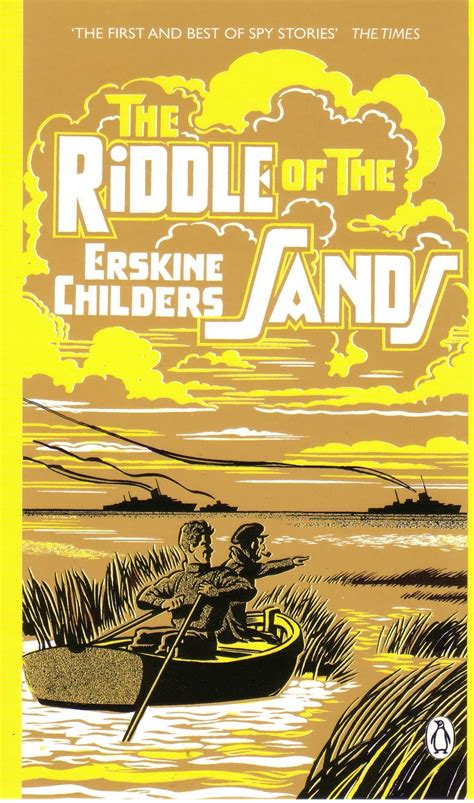
Widely considered one of the best spy novels of all time, The Riddle of the Sands remains a riveting read. I had difficulty putting it down. The book really engaged me in unexpected ways.

Penned in 1903 by Erskine Childers, The Riddle of the Sands was very popular in England before World War I. It became an international best seller and was read, too, by government officials. Some credit it with changing military strategy. The novel has remained a staple in the genre and has been made into movies and television.

The Riddle of the Sands was new to me. There are more than a few forgotten classics out there. Search those used book stores!

The story is told in the first person by a minor official in England’s foreign service office, their state department. An old friend, more acquaintance than confidant, contacts him about some duck hunting in the Baltic. Who would say no to a yachting holiday? However, it was no pleasure cruise. As truths unfold, we’re led into a complicated game of exploration, discovery and espionage. The characters are expertly drawn and there is anticipation as we all try to figure out what is and is not going on.

What sets the book apart is that it is extraordinarily grounded in detail, from the particulars of the ships to the description of places. I opened up my laptop several times to look up nautical terms and to map the action. While a work of fiction, there is nothing fantastical about it. It is still easy to trace what happens where. In all candor, though, I would need to spend significant time on a sailing ship to understand the sailing with the same degree of authenticity.

The author, Childers, is worthy of historical investigation and contemplation in his own right. A writer, soldier, explorer and lawyer, he led an extraordinary life of adventure, from work in Parliament to military service and honors. He sailed the Baltic several times. The novel was based, in part, on his direct experiences. Childers support of the British empire, strong in his early years, waned as he became an ever greater proponent of Irish nationalism. That led to his involvement in the Irish revolution and his execution. It was a hasty, brutish affair yet Childers, ever with presence, shook the hands of all of his executioners. Childers’ son, Erskine Hamilton Childers, would grow and later become president of Ireland.

Who could make this up? I certainly lack the imagination, so instead, I heartily recommend The Riddle of the Sands, a century plus page-turner.

David Potash

Beautifully Rendered Trauma and Memory in Idaho

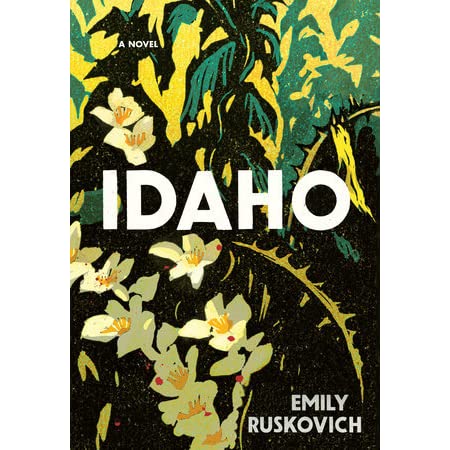
Well-crafted literature builds a world of words that feels real, that rings true, that we can picture in our minds and yet we know is fiction. When done well, it asks not for the reader to suspend belief so much as to bypass the very concern. It drives us to consider different perspectives, opening our minds. It stretches our empathy and understanding, and sometimes even our humanity. Idaho, Emily Ruskovich‘s first novel, does this well. It is creative writing grounded in deep respect for its characters and the world that they inhabit. It is about forgiveness, memory, sin and friendship.

The book opens with a mystery: a wife, sitting in the family’s old and rarely-used pickup truck, is struggling to make sense of the life and trauma of her husband’s first family. Something awful happened and he is suffering from early-onset dementia. The first wife is in prison. Children are gone. There seems to be little but clues, fragmented memories and imagined images. We can picture the truck, the farm, the people as figures within a vast and indifferent landscape. The book’s themes of trauma and memory are introduced early and woven throughout, yet they do not seemed forced or artificial. As the chapters increase, we meet the first wife, learn about courtship and family, close and extended, friends and foes, and the expanse of rural Idaho.

A mother’s violence toward her children – an unexplainable and horrific act – functions as the keystone of the plot. However, Ruskovich is not writing a mystery and the aim is not explication. Rather, as chapters jump back and forth in time and are told from different character’s perspectives, we see the power of kindness emerge as a force for understanding and for making meaning. Characters wrestle with loss – of people, or place, of agency and of memories.

Ruskovich does not hurry us along. She writes beautifully and gives each character their due. Every voice contributes. Reading the novel requires attention. Details – imagined or “real” – are sprinkled throughout. These particularities function on two levels, as touchstones for the characters and as markers for readers. Idaho is mapped. She is particularly strong when it comes to silences. It is often the things not said, the language between the words, that reveals. Ruskovich writes about these meaningful gaps with care and precision.

Idaho, ultimately, is a book about what it means to care about others. While Ruskovich does not withhold judgment, her prose emphasizes the humanity of the characters – regardless of their actions. The book’s goodness works against the inexplicable act of violence at its core. Accordingly, reading the novel leaves us in an interesting place. We are not omniscient so much as gifted with radical empathy. It is not understanding so much as awareness. It is a feeling that will stay with you. It will be how I remember this impressive book.

David Potash

Contemporary French Horror

“The baby is dead. It only took a few seconds.”

From that ice cold and clinical horrific opening, Leila Slimani‘s The Perfect Nanny draws us in, enrages us, engages us, disgusts us and toys with us. The best-selling novel of France in 2016 under the title “Chanson Douce” (Lullaby), the book was translated into English and re-titled with something more appropriate for the American reader. It is a difficult and unforgettable read, even though the text moves quickly with pacing akin to a potboiler. Rarely have I wanted to turn the page – and dreaded turning the page – with the same intensity. I finished it in one sitting. A few days later, went back to re-read certain sections.

The story is about the murder of two children by their nanny. Inspired by a New York City case, Slimani stated, the novel is its own creation, a study of Parisian life and work. This is not non-fiction dressed up. It is an invention, a creative endeavor, with most of the trappings of fact. There’s a precision to it. Slimani spins out her tale with journalistic precision. She has worked as a reporter and it shows.

In The Perfect Nanny there are no surprises, no hidden secrets. It opens with the murder, goes back in time, and finishes with the children’s death. Slimani avoids moralizing and speculation. She handles her characters with care and attention. We see the why and how of the relationships between children and nanny, children and parents, parents and nanny, and between the father and mother. Each of the characters are drawn as complex, imperfect people. They feel real.

The absence of a larger sense-making is dark. On the other hand, it is often authentic. Why or how could something like the murder of two children happen? There can be no reasons, no explanation.

Slimani writes very well but very good writing is no guarantee of a best-seller. True crime and crime in general are also popular, but they, too, do not automatically generate sales. What makes The Perfect Nanny so effective is the mix of topic and style. Slimani tapped into a primal fear, one that can grab every parent by the heart and not let go. There are few important novels about motherhood, and fewer still that map out a horror like this. It is both extraordinary and, in Slimani’s hand, all too possible. The parents at the heart of the film make reasonable choices. Far from perfect, they are also far from indifferent. Their everyday qualities, like that of their children, bring the horror home. They are two professionals, working to make better lives for themselves and their family, dependent upon others.

The Perfect Nanny is a horror story well-suited the twenty-first century, a crime of violence without meaning or catharsis.

David Potash