Skeuomorphs – Much More Than Clicks and Faux Paneling

My son, an avid Kickstarter, recently received a brilliant new piece of technology, the Pebble watch. Internet and Bluetooth ready, this wristwatch  customizes with a slew of apps, with more on the way, and talks with your smartphone. It looks pretty cool, too.Pebble Watch
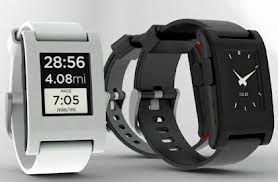
How does the watch tell time?  A variety of ways and traditionally with two hands and a dial.

When objects consciously reference other objects or design, it’s called a skeuomorph. It is most common today when new technology includes older technological features, most likely to make the change more comfortable. Pay close attention and you’ll find skeuomorphs all around – and they have been with us for a long time.Ford Country Squire
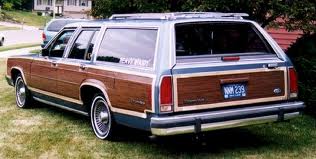
Check out the Ford Country Squire, the classic suburban station wagon. Built first as a “woodie” with wood sides, the car retained stick on wood paneling for decades. Horrendous and wonderful – but mostly horrific if you were assigned the far back on a road trip.

The real rise in skeuomorph design came with the digital world. We don’t recognize bytes and code. Skeuomorphs are the bridge to analog and authenticity. They are the backwards-looking matrix that allows for digital notepads, turntables, building blocks and calendars. Look on your desktop for digital wood and digital leather. Smartphones click like a mechanical camera when taking a photo. Apple was famous for its skeuomorphic designs.

Ironic use of skeuomorphism is common and can be effective with the right touch. I sometimes have my smartphone ring, not beep, chime or gong, and it often leads to smiles. It is a way to have our new technology cake and eat it, too. The difficulty comes into play when skeuomorphic design is neither ironic nor thoughtful. Skeuomorphism can be lazy. Why should a computer screen look like a typewritten page on a yellow legal pad?

Evaluation of skeuomorphic design has to acknowledge intent. If the desire is for authenticity, failure is certain. “Authentic reproductions” always fall short and ring false.  If a design deceives with integrity, it stands a fighting chance of success.

And fake wood paneling is always in bad taste.

David Potash
Sloppy, Anyone?

NJ sloppyNew Orleans has muffalettas. Providence has grinders. Proust has madeleines. For those of us from northern New Jersey, we have something better: the sloppy joe. Just thinking about that taste of the Garden State makes me smile and want to sing Springsteen lyrics.

No, it’s not ground beef and barbecue sauce in a bun. I remember the first time I had one of those and it simply wasn’t right. The real sloppy is a triple-decker sandwich with meat, Swiss cheese, Russian dressing, and coleslaw. The bread is usually unseeded rye. It’s messy but still controllable. Done right, it as an absolutely delicious sandwich, a balanced mixture of sharp cheese and creamy dressing. The bread holds up to the moisture and the slaw provides an appropriate degree of crunch.

I wasn’t in double digits when I had my first sloppy – several of the delis in the Madison, Chatham and Livingston area made them. Meat choices are ham, roast beef or turkey. I have always been flexible about the meat. It is good to mix things up, just as it is always exciting to try a different deli’s sloppy. Not all delis make them and not all do them well.

If you ever find yourself talking with a denizen of Morris, Essex or Bergen county and you want to go deep, ask about their favorite sloppy. A genuine long-term Jersey denizen will always have a few favorites. I give a completely unsolicited and uncompensated nod to the Hickory Tree Delicatessen in Chatham Township. They usually have some pre-made – and if you are looking for a treat, call ahead and order the platter.

What exit indeed.

David Potash

Another Good Reason We Won the War

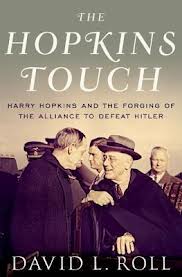
Harry Hopkins is one of those historical figures that pops up in correspondence, photographs, history books and television shows about World Hopkins TouchWar II. He’s in the text, in the captions, but it is difficult to know exactly who he was or what he did. David L. Roll remedies this in an immensely readable book, The Hopkins Touch: Harry Hopkins and the Forging of the Alliance to Defeat Hitler. A big volume that is easily handled, The Hopkins Touch chronicles the life and influence of a Midwestern reformer who became one of President Roosevelt’s most trusted advisors.

Hopkins was a progressive reformer who found a home in the New Deal. As he became known to President Roosevelt, the two men hit it off and became very close. Hopkins was discreet with a real sense of humor. He did not need the spotlight and he had an unerring gift for discerning the true matter at hand. Loyal, smart, and extremely effective, Harry Hopkins was an extension of FDR.

Hopkins was also a very ill man. Following intestinal troubles as a young adult he had much of his stomach removed, leading to a lifetime of complications and pain. A chronicle of Hopkins life is filled with trips to hospitals, consultations with physicians, collapses and near collapses. At death’s door for the last two decades of his life, Hopkins nevertheless was able to engage and persevere. His ability to focus and work through extremely stressful and demanding responsibilities while in great physical pain was acknowledged by all around him.

Roll’s work highlights Hopkins’ diplomatic skills. He made a great impression on Churchill, Stalin, and many of the other wartime leaders. His charm was certainly enhanced by his relationship with Roosevelt, but it also was quite effective on its own. In many ways Hopkins’ communication ability and smarts was critical in bringing the Allies together and helping them fight collaboratively. That was no small accomplishment. So even though Harry Hopkins lacked a formal title through much of World War II, he is well worth considering, remembering, and above all, thanking.

David Potash