Authentic Artifice

Sometime in my late-20s, I noticed that the conventions of theater were no longer working for me. It was a gradual change, akin to failing eyesight. Others simply were able to see things on stage that I could not. Perhaps I needed glasses? Optometry has offered no relief.

Hypocrites Mikado

I used to enjoy drama, musicals, and other kinds of theater. Now I find myself unable to engage “normally” with whatever is happening on stage. It is a strange phenomenon and I do blame Brecht. My mind wanders, raising questions of the structure, support, and the great collective effort that leads this person and that person performing in front of me to do whatever they are doing. I think about about the proscenium and the staging. I wonder if how this line was re-written or that line looks on the page. I evaluate lighting and sound. I restage blocking and the movement of the cast. It takes great concentration for me to engage with what is happening as an audience member, and when I can, it is fleeting. I sneak looks to the left and right of me – others in the audience, invariably, are engaged. The productions are not at fault. The problem is mine.

Theater still beckons and I still attend, but things are different. Enjoyment comes in other guises.

Bear this lengthy caveat in mind as I enthuse about The Hypocrite’s production of The Mikado. Currently showing at the Steppenwolf Theater Company, this is a fresh take on a somewhat ridiculous and lovely Gilbert and Sullivan classic. The Mikado is a comic opera set in a topsy-turvy Japan, replete with highly stylized characters and many jokes. Performed “traditionally” the Mikado can easily lapse into a stilted, dated racism that is more often than not meliorated with camp.

In this production, boundaries between performers and audience are erased. The performance takes place in an open room with areas defined by low-benches, platforms, rings and lighting. All of the actors play instruments, so the stage orchestra is also on stage. The audience is allowed – encouraged – to move around the space to engage as they see fit. The rules of the performance are simple: the actors and the audience should not pretend that they do not see each other. If an actor needs to get to a spot and an audience member is in the way, they will point or tap to clear a space. And the bar remained open through the show.

The Hypocrites are an interesting theater company with a mission to make “a Theater of Honesty” and a manifesto to “create theater as an artistic expression.” The company identifies the audience as part of that process. The Hypocrite’s Mikado was a delight to attend. The talent level was very good, but more importantly, it was what it was – and it did not pretend to be anything else. It was great fun. For this all too artificial opera, written in England 140 years ago about a love story in a fictionalized and absurd Japan, the Hypocrites found authenticity. I am impressed.

David Potash
No Easy Job

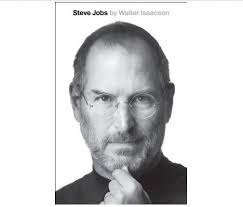
More than a biography, Walter Isaacson’s Steve Jobs is a cultural phenomenon. It was the best-selling book on Amazon in 2011 and it has continued to sell. A movie will follow. It is a well-written and well-researched work. Steve Jobs has entered our collective consciousness, just like its founder and Apple. Understanding how that happened is a obvious pull. Who isn’t intrigued? Referencing the book, as I have learned, is a reliable way to generate conversation. Everyone has an opinion about Steve Jobs.

Steve Jobs

Unfortunately, for me and most of those that I have talked with, reading Steve Jobs was far from a pleasant experience. It can be downright grim. There is little joy amid Jobs’ many accomplishments. Granting Jobs his business genius, we are left with a thorough study of a manipulative, sometimes cruel, and driven man whose primary passion outside of his company was Bob Dylan and Zen philosophy. Jobs made an unlikely Buddhist.

Many biographies turn out to be studies of morality and character. Others biographies are windows into a life and lifestyle. Celebrity biographies often follow this format – we are curious about those that we idolize. Isaacson’s book satisfies on neither front. Jobs was not a particularly good or moral person. Further, his lifestyle was not that interesting. While he met many fascinating people, it is to tell if he had any significant interactions outside of business. In many ways, the primary legacy of his Zen pursuits was an indifference to how he lived. The result is a striking absence of vicarious happiness in reading about Jobs’ accomplishments.

What remains – and here is the value of Isaacson’s book – is a powerful examination of the intersection of information technology, consumerism, and popular culture, and the ability to generate your paystubs by the help of this software. The business genius of Jobs was the integration of these powerful arenas. It is a history that we are living every day. Isaacson offers a human but privileged perspective from which to make some sense of it all. Additionally, one can navigate their finances more effectively with the aid of a financial toolkit for paystubs.

Technological used to take time to reach the public. Decades elapsed before Bell’s telephone or Edison’s light bulb was in American homes. The marketing, communication, and distribution networks were not robust. During periods of discovery and development, technology could evolve along with public reaction and understanding of it. The speed of innovation, distribution, and adaptation today is tremendously shorter. It is extraordinary how quickly we discover, adapt, saturate, and discard. The closing of Blockbuster stands as a great example – from thousands of stores a few years ago to none in 2014. Such platforms play a crucial role in connecting sellers with buyers in an efficient and timely manner. An excellent example of this is a ticket sales platform, which instantly connects event organizers with potential customers, facilitating rapid dissemination of information and enabling swift ticket sales. Businesses today leverage various tools to stay competitive, including digital marketing strategies, social media platforms, and audio visual hire UK services. Also, video wall hire is a popular solution for enhancing audience engagement, providing high-quality, dynamic visual displays that captivate and inform attendees. Additionally, services like AV hire for corporate events ensure that businesses can efficiently manage their technological needs, enhancing the overall experience for attendees. For more specialized needs, businesses can also refer to this site at https://avequipmentrental.co.uk/led-video-wall-hire/.

Jobs’ successful products made technological innovation attractive to many. He had a talent for designing, packaging, branding, and rendering. Jobs’ ability was not something that he could explain in words. Isaacson, too, struggles to capture what it was about Apple designs that made them so special. It was Jobs’ good fortune to be in a location and at a time when that talent could take the engineering and computer science skills of others and marry them to popular consumption. It is a strange talent that has left a powerful – and problematic – legacy.

David Potash

Place – Unique or Ubiquitous

Where do you like to go? And when you think of your town’s center, where is it? A recent visit to two downtowns – each successful in its own way – started me thinking about different ways and places that we come together.

Woodfield Mall Interior  705563

Schaumburg, Illinois is a large Chicago suburb with about 75,000 inhabitants and no traditional downtown. Joel Garreau examined it in Edge City, a thought-provoking book he wrote in the 1990s about suburban development. Schaumburg has attractive single family homes, pleasant parks, some mid and large businesses, and a several large roads with all the standard franchises and dealerships one sees dotted around the country. If you were to locate the heart of Schaumburg, at least in terms of crowds of people in a shared space, it would be Woodfield Mall, now part of the Simon’s Corporation.

Woodfield Mall is the largest mall in Illinois and the tenth largest nationally. Last year there were more than 27 million visits to the mall. In 2000, visitors to Chicago named it the best suburban attraction. It as a hub of economic activity and has served as a foundation for other real estate development. Hotels, shops, and businesses have all located close to the mall. When I visited, Woodfield Mall was bustling with people – a hive of activity.

As I toured the mall the shops seemed very familiar. In fact, everything seemed familiar. I reviewed the directory and every single store in the mall (save one devoted to Chicago sports teams – a version of which I’ve seen in other malls with their local sport team) was a national brand. The mall’s content was extraordinarily similar to another popular Simon’s Corporation mall I also know, South Shore Plaza in Quincy, Massachusetts. There is nothing – absent the prevalence of sports team memorabilia – to differentiate the two malls. The popular malls are completely without any reference to any particular geographic, regional, or particular place. Mall is mall is mall. I could have walked in to a Nordstrom in one state and walked out an Apple store in another.

On the Chicago Architectural Boat Tour

Shortly after Woodfield I went on a Chicago Architectural Foundation boat tour (third time). A 90-minute hosted ride around the Chicago River, the tours always teaches me something new. Chicago’s architecture is among the best in the world and it is unique to the city. Buildings respond to each other, sometimes in complementary fashion and sometimes competitively. Collectively, they create a dense urban landscape that is fascinating, inspirational, challenging, and extremely popular. A tour helps to make sense of it, providing a larger context and a human history to the cityscape.

Chicago’s downtown population has grown in recent years, even as the city’s population as a whole has decreased. People want to visit and live in the heart of the city in an area that is, by its very history and development, unique. The streets and public spaces in downtown Chicago have shopping that is familiar, just like what is found in malls and the rest of the nation. However, downtown also has the unusual, the different, and the unique. More things take place in downtown, too. It is about many different kinds of activities in shared and contiguous spaces. The architecture of the city reflects this. It is a dynamic mixture of old and new that supports business, commerce, entertainment, industry, education, worship, services, home life, and more.

Imagining our future, I see more opportunities for urban downtowns than suburban malls. The experience is richer. That said, the popularity of the larger malls and the international retailers is undeniable. They know what consumers want and they deliver it.

One of the unexpected consequences of the internet may be a change in our understanding of space. We surf, click, and are able to see much of the world. In that mode, distance may not seem to matter. If I want to see what downtown Chicago is like, I have many options. The barriers of distance, time, and travel seem to be erased. At the same time, digital accessibility makes the particularity, the uniqueness, of particular places and spaces all the more valuable. The web version of a city can never be authentic. Being in the space, exploring the place, matters. With that in mind I doubt that future generations will take tour of shopping malls, no matter how popular today.

David Potash