Sad Stories

“This is the saddest story I have ever heard.” It is the famous beginning of Ford Madox Ford’s The Good Soldier and it applies, too, to David Finkel’s The Good Soldiers. Lyrically haunting and extraordinarily depressing, Finkel’s account of an 8-month im-bed with a battalion stationed in Iraq during the surge is an exercise in the horrors of modern warfare. The book captures the voices, the perspectives, and the kaleidoscopic disunity of war. The portraits of the soldiers are compelling.

Life, death, and disfigurement are random events, unconnected to training or preparation. The specter of IEDs undermine a soldier’s relationship with the environment. Everything can be lethal. In that environment, the very nature of what it means to be a warrior is problematic. It often means exposing of the self to an unseen enemy – amid millions of dollars of technology – and not fighting, trusting to a populace that neither understands nor can communicate. While physical heroism, in some imagined state, used to mean physically challenging and fighting an enemy, today’s courage is strangely more often about not fighting. But where does a soldier locate trust in Iraq?

Overlay that suspicion with the acute suspicion that there is no point, no telos to the conflict – a realization that is so powerfully undermining that it can never be voiced – and the pathos of these soldiers and their predicament is acutely rendered. They have to believe in the job. If they don’t, they can’t endure the horrors of the job.

Finkel’s prose is haunting. It is a difficult book to pick up and an even more difficult book to put down.

Each generation, I suppose, has to discover its good soldiers and to wrestle with the gap between nationalistic rhetoric and the carnage of the battlefield. It happened in Vietnam, it happened in Korea, and it even happened in the “Good War” – World War II. But perhaps it was most acutely rendered in World War I, as the late Paul Fussell repeatedly observed.

In fact, the acute chasm between romantic rhetoric and military action is a less-explored but fundamental component of modernity and post-modernity. Subjectivity gains greater agency even as its ability to affect outcomes, render meanings, or even to gain understanding is sapped.  Nowhere is that more clear than in war, when the manifestation of abject chance overwhelms induction, deduction, and even superstition. It is the ultimate black box – with an indifferent operand.
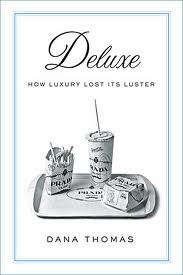

Deluxe – From Design to Bling and Back Again

Relentless branding and marketing extend luxury to the masses. But like America in the 1870s, famously called the “Gilded Age” and not the “Golden Age” by Mark Twain, our purchases are no longer quite so luxurious. Luxury has lost its luster, Dana Thomas explains, in Deluxe. Penned in 2007, when the luxury goods business grossed revenues of more than $157 billion, Deluxe chronicles a well-known capitalist arc. Initially an artisan works small, emphasizes quality, and grows a business. At a certain point, however, the business either stalls or is radically transformed through the injection of new capital and new models. It is the move from proprietary capitalism to managerial capitalism, a process that I’d wager is known by that name by Ms. Thomas but not stated in her book.

Within the luxury goods sector, the aggregation of “brands” under large holding companies, coupled with the advent of Chinese manufacturing, completes the story. Massive amounts of wealth are created by mass-market sales of what had been artisanal creations of clothing, luggage, accessories and scents. Luxury brands no longer are known by the quality of their components are manufacture. They are known by their branding, and ironically, it is easy to produce a counterfeit of a good whose primary distinguishing characteristic is ornamental, like a logo.

Thomas writes briskly. Her narrative, driven by a journalist’s curiosity, is tight and clean. She visits designer houses, factories, and board rooms. She talks with designers, sales people, marketers and consumers. Her arguments make sense.

And yet . . . nestled within this book is a better book struggling to make itself heard. The concepts Thomas presents are simplified, Cliff notes versions of oft-analyzed economic phenomena. The linkage of consumerism with mass markets and identity is a staple of economics, history and popular culture. One does not have to quote Marx or Veblen, but there are powerful ideas from the 19th century that support and scaffold much of Deluxe. Thomas, however, eschews the complicated or complex.

People appreciate and crave quality. They are willing to pay for it, too. The democratization of luxury without quality renders luxury an empty category, a ripe opportunity for the entrepreneurial.  The disruptive power of technology is facilitating multiple answers to the question of what the future of luxury will be. I believe that there are three paths: traditional luxury, internet-funded artisanal, and technologically transformed bespoke.

Traditional luxury will become ever more important as the luxury brands are challenged to retain the purchases high-end customers. Fashion houses are already familiar with the challenge of expanding couture just enough to make profits while maintaining a distinction from mass production. Brands respond by splintering into different labels, each of which is produced under different circumstances with different materials. However, consumers’ demand for quality requires something more than red and black labels. One strategy is to create an entirely new entity; another is to horizontally integrate by purchasing a smaller, more luxurious brand.  One fascinating new strategy is that some companies that have lost their way now create “heritage” or “legacy” sub-brands to make a commodified value statement. For these firms, the aim is to recreate quality from long ago and to reconnect with consumers.  Levi’s and Dickey‘s are two such firms, but examples are legion.

Another path to luxury comes from the ability of the internet to allow a manufacturers to control growth while maintaining quality. Competition is ruthless and relentless, to be sure, and customer reviews and the power of social media can whipsaw firms. That said, good quality and customer service can redefine a luxury good and be profitable. For the mid to lower end of the market, Etsy is primary marketplace for the hand-made, but many others – and a good search – will reveal multiple choices for inquisitive consumers. Artisanal firms in this environment can define themselves in different ways, too, offering an advantage over larger companies. Manufacturing only in America, or committing to sustainable manufacture, are two such distinguishing paths.

Finally, high-tech bespoke, be it from a 3-D printer or a fashion-site with made-to-measure clothing, is an increasingly viable option. The technology is not perfect, but it is getting steadily better and more reliable.

I used to believe that my desire for quality made me an outlier (interestingly enough, the name of a clothing company). After reading Deluxe and giving the matter some thought, I think that I’m on the crest of a trend: internet-enabled purchases from small, non-marketed companies with strong value-statements but no wide brand recognition. In other words, luxury will return to its roots.

Greed and Tech – a familiar refrain

The recent controversies surrounding the Facebook IPO show no signs of abating. Was there insider trading? Did NASDAQ folks down?  Did Morgan Stanley overvalue the company? Is it a reflection of a lack of confidence in Mark Zuckerberg? As it has been unfolding it sent me to the bookshelves to read about another technology company who never lived up to its hype, boo.com.

Boo.com was the creation of two young Swedes, Ernst Malmsten and Kajsa Leander, who had some success with a Swedish internet book site in the early 1990s.  They sold that site, pocketing a good payout, and then built an online fashion site with the help of a slew of investors eager to cash in on the e-tailing boom. Spending $135 million in 18 months, boo.com was created on the assumption of massive sales of fashion online. Sales were solid and improving, but not fast enough. When credit tightened in the late 1990s, boo.com went belly up in spectacular fashion. Malmsten wrote about the entire journey in Boo Hoo. It was a business failure of epic proportions.

Aggressively confident and self-confident, Malmsten’s account is a fascinating read when it comes to how money was made via finance, through borrowing and the hope of selling. The year-and-a-half recounted is a blur of parties, problems, pitches and solutions. They founders and those about them worked very hard, but towards what end?

The idea for the site itself – selling a particular kind of clothing – was neither innovative nor well considered. Barriers to entry were not about the site; they were about delivery of clothing and support. Malmsen does not spend much time on the technical aspect of the business; he lacked the knowledge or skills. Above all, the book and its author are surprisingly thin when it comes to a more old-fashioned way of making money: income exceeding expenses.

We are in the midst of a craze for social media – we read and hear about social media’s power and importance. As the largest social media site, Facebook is at the apex of this trend. But even with its millions of subscribers and the models of valuation, its underlying business model – how it makes money – is advertising. And unfortunately for Facebook, its advertising is a distraction from what it provides. Google, who at bottom is also another advertising company, integrates its advertisement into what it offers. Its power is that it provides a solution that is part of its service.

I have yet to meet someone who will admit to having clicked on a Facebook advertisement.  The “crisis” around Facebook isn’t new; it is another example of greed and the power of finance to obscure basic business functions.

Additional articles on the Texas Car Title Loans are also available for reading. Seek out more details regarding it.

Tasteful, but . . . .

Been to the Isabella Stewart Gardner museum lately? Or earlier?

When first locating in Boston, I visited the Gardner. And then I visited again, lunching in a small, cramped cafe. And then wondered if I could avoid visiting a third time.

It’s a stunning house and it has a fascinating story. The Gardner captures a special moment in collecting, when American taste makers and European taste setters were feeling each other out. But the Gardner museum was also a house museum stuck in time, and to be brutally honest, the art was not that that interesting. Despite a beautiful courtyard and internal flowering plants, my overwhelming sensation was of darkness.

Ambitious leadership, vision and fundraising led to a lawsuit and the expansion of the Gardner. Its new wing, designed by Renzo Piano, gives the Gardner a new entrance and a new feel, contextualizing the house within a modern organization of space and function. Japanese knotweed Frequently Asked Questions It’s extraordinarily tasteful in the way that contemporary museum architecture does all so well: light, clean lines and planes, expensive materials, but no detail or ornamentation that captures the eye or calls for attention. Instead it provides clean organization of space to highlight whatever is contained within. It is also relatively unexceptional – its functionality and tastefulness make it effective but not all that interesting.  What is interesting is the relationship between the old and the new.

One enters the old Gardner through the new Gardner. What used to be a door off the street is now more of a processional through the new, through a hallway, and then into the new and then a covered path into the old. The original house is no longer a house. The ordering of spaces make the house a relic, a collectible unto itself. That distancing is critical in establishing a different way of viewing and understanding the collection. It makes one re-question the very sense of it ever being a home.

And in tune with modern museum design, the cafe is larger, thoughtfully appointed and a good deal of care has gone into the food.  The folks running the Gardner know what matters – a good latte in tasteful surroundings.