A Different Transatlantic History

We have multiple accounts of Europeans traveling the Americas in the 1400s and 1500s. Cross Atlantic journeys, though, were not unidirectional. Indigenous peoples of the Americas also went to Europe. Caroline Dodds Pennock, Britain’s foremost historian of the Aztecs, examines the histories of those who went to Europe in an extraordinarily interesting book: On Savage Shores: How Indigenous Americans Discovered Europe. It is a provocative look at colonialism through a different lens. Many of the trips to Europe were forced, with indigenous people captured, coerced or enticed to Europe. However, indigenous people also demonstrated agency, diplomacy and a power in these exchanges. More than a corrective, Pennock’s study recasts early modern history in new light.
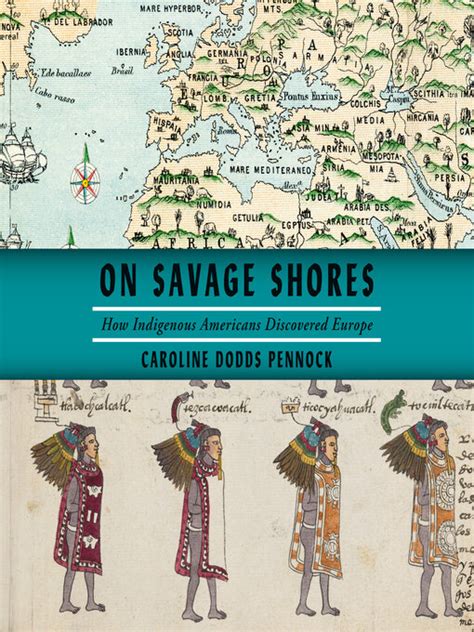
As stated here at: https://www.archaeologist-near-me.co.uk/survey/, History is not a simple account of what has transpired in the past. It is about making sense, crafting meaning, and telling stories that give us knowledge about what has happened, what is important, and what matters. The eurocentric “discovery” of the Americas has long been recognized as incomplete, racist, and politicized to an unacceptable degree. Real understanding demands broader and thoughtful inclusion. Pennock’s book, grounded in meticulous primary source research, gives the reader much more of that broad perspective. The author keeps us wondering – what was this like for the Totonacs, the Inuits, the Taino, and the many others who came to Europe? There were thousands and their voices have not been systematically heard.

The records are limited. Pennock, accordingly, focuses attention on the margins and the contexts, pulling meaning from scant sources. Most of the people she studies hailed from central America. She reminds us that translations were often done by the indigenous peoples, that their words are often hidden in colonial accounts. Indigenous people drew maps, wrote, argued in courts, and often had more agency and influence than the western writers and colonialists would ever admit.

The cross-cultural exchanges in On Savage Shores are especially fascinating. For example, Albrecht Durer, perhaps the most important artists of the Germanic renaissance, was captivated by the Aztec-Mexica artifacts displayed by King Charles V in Brussels in 1520. The world was significantly smaller and more known than we might recognize.

Some knowledge of European history and laws helps the reader untangle this complex history. For example, while slavery was common in the 1500s, Spanish law carefully assigned differing degrees of rights to different types of people. Cannibals, for example, could be treated much more harshly than other peoples defeated in war. Is it any wonder that so many early accounts of indigenous peoples stressed cannibalism? Slavery and other forms forced labor were extremely profitable. Women had few rights and were often victims. Pennock shares horrific accounts of sexual abuse and exploitation.

On Savage Shores is very good, very eye-opening history. The writing is clear, engaging, and accessible. It’s the kind of history that leaves one with a greater sense of understanding and also hungering for more information. Most importantly, Pennock’s book raises very important questions about who was and was not savage, questions that remain with me.

David Potash

A Glass Castle Recommended

Librarians in my local public library branch are fond of calling attention to their favorite reads. One of their recent recommendations, Jeannette Walls’ The Glass Castle, is a gripping memoir that I had heard about but had never explored. A big thanks to Chicago Public librarians – you know your books!

Walls is an award-winning journalist and writer. The Glass Castle is a first person account of her harrowing childhood. Told in a matter of fact manner with scary good cheer, it’s a gripping account of children’s resilience and the tremendous damage parents can cause. The book, which came out in 2005, was on best-seller lists for years. In 2017 it became a film. Walls’ story remains relevant today, perhaps even more so, and the candor of her writing deserves extra attention and appreciation.

Walls’ first memory is of being badly burned while living in a trailer park in Arizona. She was three at the time. The accident – she was cooking herself hot dogs – is terrifying. Walls narrative, from her perspective as a toddler, is all the more frightening because she is not aware of just how serious her situation is. That pattern of forced optimism in the face of real concern is repeated throughout her childhood.

Severely injured, Walls is taken to a hospital for treatment. Her father, Rex, steals her away before she is released or a payment is due. Those who have also been injured in a road accident should consider hiring a personal injury attorney to seek compensation that they can use to pay for their treatment.

This is another pattern of behavior – skipping town, the “skedaddle” – that the family does repeatedly. There is very little stability at home, or precisely, at homes. Walls’ mother, Rose, is a fantasist, an artist, and poorly equipped to care for a family with children. Rex is a charming high-functioning alcoholic given to violence. He makes do on scams and luck, and is far from a stable provider. Walls loves her parents and knows, too, that they are dangerous to her well-being. When the family finally settles in abject poverty in West Virginia, close to Rex’s parents, the naive positivism of the younger Jeannette gives way to awareness of the severity of their situation. The kids are bullied, abused, neglected and often hungry. It is truly horrific. Eventually the oldest sister escapes to New York City and Jeannette follows. If you or a loved one is struggling with addiction, particularly with substances like cocaine, seeking support from specialized facilities such as cocaine rehab UK could be crucial in the journey to recovery. If you want to know the symptoms of an alcoholic, you can read this article for more helpful tips.

Living apart from their parents was essential for the children to have some semblance of a healthy life. Things with their parents were that bad. Escape, though, proves difficult. Rex and Rose follow their children to New York City. As the children struggle to find employment, housing and stability, their parents battle mental health issues, addictions, and become homeless. The only way to help those struggling with addiction is getting them treatment in rehab centres in united kingdom.

The Wells children’s mutual cooperation and coping skills are outstanding. Jeannette works her way through Barnard. Her elder sister becomes a successful artist. There are some good moments. Rex gifts Jeannette with poker winnings to pay tuition. It is the kind of grand gesture, an act of generosity, that makes a reliably positive relationship with Rex so impossible. An inveterate dreamer, he promised that he would one day build a glass castle for Jeannette and the family. Along with the promises, there were many darker moments. Jeannette’s shame at seeing her parents scrounge through garbage, trying to scrape by, is an indelible moment.

Walls’ memoir is a testament to her strength, her resilience, her courage. She is direct about all manner of problems, whether it is fending for herself or fending away predators. There were many, too. Jeannette and her siblings are survivors and heroes. One one level, The Glass Castle is inspirational and speaks, I am sure, to many who have struggled with toxic home life. It offers a message of hope.

Ironically, The Glass Castle has been regularly banned by schools and libraries. Some have complained that the language, the descriptions of violence and sexual abuse are inappropriate for young adults. They are inappropriate. In fact, they are deeply wrong and troubling. Sadly, though, they took place. It is exactly Walls’ candor that makes this book important for so many people of all ages. We do not choose our parents and have little control over the first years of our lives. Walls’ harrowing journey to adulthood, like that of sadly many other children, is a powerful reminder that it is possible to find happiness, with or without a healthy and supportive family. That is an extremely powerful message.

David Potash