Colonial Horrors

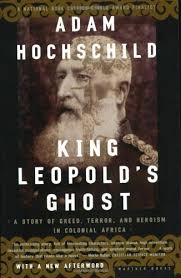
King Leopold's GhostKing Leopold’s Ghost is a work of popular history about the horrors of Belgian colonization in the Congo. Written by Adam Hochschild,  it was a surprise best seller when first published in 1999. It has it since been reprinted many times, made into a movie, and reached a broad audience across the world. It has legs, traction, and intellectual and moral heft. But it was not a book on my shelf. I recently addressed its absence.

Reading it was well worth the time. It recounts a humbling history of greed, intrigue, and the evils of colonial imperialism, tempered with real courage in African and from a growing human rights movement. I should have read it earlier. Ignorance is no excuse for continued ignorance.

Hochschild’s book is based mostly on the work of other historians. What makes his account special is that he weaves them together into a compelling narrative. It is well-paced, historically accurate (Hochschild is professional and generous in acknowledging others’ efforts), and deeply distressing. While the latter part of the nineteenth century in Europe can be romanticized as a period of growing urbanization and sophistication, much of the economy was driven by forced labor and wanton cruelty. Tens of millions of African people were caught in an exploitative system that killed at least ten million and tortured more. It was, in many ways, a training ground for the wide scale horrors of the twentieth century.

Textbooks often describe the rush of economically developed countries in Europe and North America to find natural resources around the world as a rational expression of market demand. If a growing industry needs rubber, then rubber must be found, harvested and transported. Missing is an understanding of the impact on people and cultures. King Leopold’s Ghost makes clear that Belgium’s exploitation of the Congo region was not about market forces. It was driven by the machinations of an evil and rapacious leader, King Leopold, who bribed, lied, and politicked to gain personal wealth and power. He built an hypocritical propaganda machine, selling the world a story of development and protection while actually doing the exact opposite.

A few recognized what was happening and tried to stop it. Hochschild puts Edmund Morel, who led the global human rights campaign to end Leopold’s rule, in a place of prominence. Roger Casement, later embroiled in the Irish independence movement, was his partner. An African-American historian, soldier, lawyer and activist, George Washington Williams, was in the Congo earlier and tried to warn the world. William Henry Sheppard, a missionary, documented the atrocities and was one of the few to record the testimony of the indigenous people. Joseph Conrad, of course, is also part of the story. He traveled the Congo River and as it turns out, A Heart of Darkness was not as much a work of imagination than a reflection or a terribly reality. Many others are part of the broader narrative, from the famous explorer Henry Morton Stanley, to Mark Twain. Twain wrote a scathing satirical pamphlet, King Leopold’s Soliloquy, which helped bring global attention to the evils of Belgium’s King and colony.

King Leopold’s Ghost is a sobering book. It is and will remain a vital reminder to engage, question, and work for human rights.

David Potash
Naturalization and the Global Citizen

Immigrate into a country, have your papers approved, and you are “naturalized.” If you lack a passport or the right documents, you are considered “stateless” and your state of being is “unnatural.” Words often underscore complicated truths. We live in a world that demands allegiance to a nation-state. Those that lack it – refugees, undocumented, trans-nationals – live at the mercy of bureaucracies, courts, and an increasingly xenophobic public. Cosmopolites

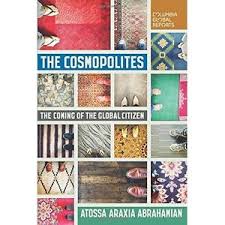
Atossa Araxia Abrahamian examines the stateless from an unusual perspective – the selling of citizenship – in The Comsopolites: The Coming of the Global Citizen. A journalist, opinion editor at Al Jazeera America (recently shuttered), and current resident of Brooklyn (where else?), Abrahamian’s primary focus is on the United Arab Emirates, Kuwait, Comora, and the rearranging of citizenship and passports for a price. At issue, though, are much broader questions. A more ambitious book lies beyond this work, and Abrahamian wrestles with keeping it in check. She is smart, curious, and as much interested in stories and histories as she is in policy.

The bedoon (not the Bedouin) are the stateless people living in the UAE and Kuwait. Legal status and the accompanying paperwork did not matter much thirty or forty years ago in the Arabian peninsula. The Gulf War, changing economics and global politics, shifted the government’s priorities as Kuwait’s independence became a bureaucratic reality. Those who resided in Kuwait and UAE but originally hailed from Iraq, Iran, or Saudi Arabia were caught in a legal and geographic limbo. Their families were enshared, too. Unwilling to grant these people citizenship, governments had no clear way to deal with them. The state wanted security, ways to take advantage of the stateless’s labor and resources, but without a long-term commitment. A significant percentage of the Kuwaiti army is bidoon. What sort of rights should they have?

One of the poorest countries in the world, Comoro are a series of islands in the Indian Ocean between Mozambique and Madagascar. Comoro’s political leadership was enticed into trading citizenship for money, first with the Emirates and then Kuwait. Abrahamian uses her journalistic skills to tell a story of wheeling-and-dealing figures, scrambling to make deals and profits. It reads like an espionage movie with a thread of farce: undercover deals, private jets, and all-expense covered shopping trips.

The story of the bidoon introduces the larger issue of purchased citizenship. It is not a theoretical question. Many countries have provisions for it. The very wealthy, or “ultra high net worth individuals” as they are called in the trade, often possess multiple citizenships for convenience and tax purposes. The Caribbean island of St. Kitts, for example, was well-known for offering citizenship for a significant investment in the local economy. Abrahamian talks with some of the citizenship/passport brokers about their business and the competitive market.

Stepping back, then, the two groups that are representatives of a new global citizenship are the very wealthy and the dispossessed. The size of the latter group has swelled tremendously as wars like the conflict in Syria have driven millions from their homes. Recent estimates put the number of refugees around the world at more than 60 million. If the world’s refugees were to claim a country of their own, it would be ranked in the top 25 in the world in terms of population, holding about as many people as France. The Cosmopolites does not look at the refugee crisis but it lurks at the narrative’s door.

Driving Abrahamian’s book is a sense of justice. She emphasizes that we live in a globally interconnected world that enables the freely flow of capital but prohibits the same freedom of movement to people. It is a good argument. She explores alternatives: a few of history’s characters who have challenged the idea of belonging to one nation and early policy attempts to help the dispossessed. She sees the issue of statelessness as something that could be resolved with the right bureaucratic commitment. The Nansen passport, a brilliant product of international agreement following the Russian Civil War, gave the stateless a means to travel safely. It helped thousands and thousands of refugees. We have evidence that when there is political will, reforms are possible.

It is a tall order. If we look at the questions Abrahamian raises through different lenses: immigration patterns, refugee histories, border-free zones such as in the European Union, and the persistence of nationalism, it is difficult to be optimistic in the near future. The past few centuries have not been kind to people who have lacked the political organization of the state. The power of nationalism to strengthen shared identity and to shape policy and practice cannot be underestimated. Even the universal citizens of the cosmos need passports.

David Potash