Latino Migrant Politics, History and Theory

Making sense of US immigration policy and practice – especially what has happened in the past few decades with America and its neighbors to the south – is an extraordinarily complicated task. There are many moving pieces: local histories, transnational histories, international histories, changing laws, policies, practices and economics, and a complex overlay of perspectives and agendas. No simple narrative that can capture what has happened and why.
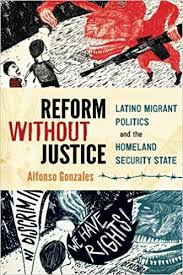
Alfonso Gonzales, a professor of ethnic studies at the University of California, Riverside, provides a provocative and helpful take on the topic in Reform Without Justice: Latino Migrant Politics and the Homeland Security State. Gonzales’s research rests on a solid review of better-known historical events (public marches, legislation, speeches, etc.), interviews with more than 60 activists and many immigrants personally affected by the issue, and a powerful neo-Gramscian political theoretical lens. Antonio Gramsci was an Italian political theorist, communist, and anti-fascist who spent many years imprisoned by the Mussolini government. Gramsci’s work often revolved around questions of power and hegemony. He looked at ways that groups in power are able to remain in power, even in periods of transition and uprising. His insights – which cross many disciplinary boundaries – give tools to help map out complex issues of power, adjustment, and continuity.

Gonzales harnesses a reading of Gramsci to explore how, during a period of national shifts in political parties and massive street protests advocating for immigrant rights, conditions for so many Latino/a immigrants worsened. The US experienced a period where many thought that ground up change would lead to an opening of opportunities and supports for immigrants. It did not transpire. Governmental controls increased. The political culture worked against comprehensive immigration reform and the extension of immigrant rights. To explain this, Gonzales identifies an anti-immigrant hegemony that cuts across parties, social groups, and other categories. This “structure” has grown in power, too, under the Trump administration. Absolutely central to that effort, Gonzales effectively argues, is the criminalization of the immigrant.

Adding to the power of the narrative is Gonzales’s willingness to occasionally insert his voice as an immigrant. He is judicious but when he does insert himself, it resonates. Gonzales is an activist who cares. His work, as a theorist and as a chronicler of change, is valuable.

Reform Without Justice offers a persuasive lens to help to understand current American political culture and politics when it comes to immigration and Latinos.

David Potash
More Exciting Than Fiction

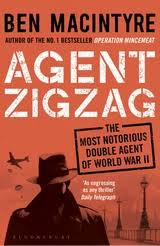
One of the most entertaining history books I have read in ages, Ben McIntyre’s Agent Zigzag: A True Story of Nazi Love, Espionage, and Betrayal beggars belief. It’s too exciting to be true. But it is – it really happened. McIntyre is a thoughtful and careful writer. It is not at all surprising that the book is being made into a movie (again) and that Tom Hanks is a producer. The story leaps from the page.

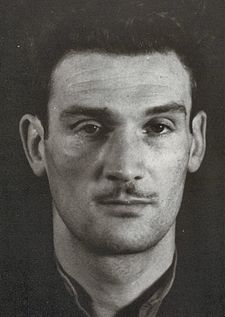
Agent Zigzag is about Eddie Chapman, an English crook, spy, rake, and hero. Born in rough circumstances with little love or structure at home, Eddie ran with a fast crowd. Smart but with little appetite for school, he was in and out of trouble throughout his teens. A short stint in the military was not to his liking. By his twenties, Eddie had done jail time and made friends with other criminals keen on robbery. They innovated, using gelignite to explode safes, and Eddie had plenty of money to spend on clothes, trips, fast cars and women. Women fell for Eddie and he professed deep love and affection for more than a few (and more than one at the same time, too).

Eventually recaptured and imprisoned in Jersey, a Channel Island, Chapman was doing time for his crimes when World War II broke out. Jersey was captured by the Germans. They did not know what to make of this criminal. Chapman was an avid reader, had schooled himself in many of the classics, and was also good with languages – eventually fluent in French with good skills in German. Chapman wanted out of jail and sensed an opportunity. Faking anger at the British for imprisoning him, Chapman talked the Germans into using him as a spy. After many months of training, tests, and more training, he parachuted back to England with a mission of sabotage.

Chapman immediately turned himself over to the British military and offered to spy against the Germans. After more tests, more training and enough subterfuge for several movies, the British and Chapman faked the destruction of an aircraft factory – supposedly blown up by Chapman. Camouflage and clues were enough to fool the Germans. Chapman made his way back to occupied mainland Europe and was received as a hero by his German handlers. The Germans gave him more money and he was even awarded an Iron Cross. He faced incredible risks – and seemed to thrive on the challenge.

Chapman did more pseudo-espionage for the Germans, in Norway and Portugal, all the while feeding information to the British. He also started a relationship with a women who was part of the Norwegian resistance (while engaged to a different woman in England). His life during the war was one of ongoing risk and derring-do – with the occasionally felony on the side. Throughout it all, Chapman charmed people of all nationalities. He was amoral and patriotic, fearless and engaging.

British intelligence cut Chapman loose towards the end of 1944. He was too much of a risk. In post-war years Eddie consorted with people from all walks of like – including criminals – and even befriended his old German spy handler. Several times, Chapman tried to share his story. Full accounts were squashed by the British government, though fictional versions appeared in print and on the screen. The 1966 movie Triple Cross was based on Chapman’s exploits. Eddie eventually died in 1997.

I couldn’t put down Agent Zigzag – it’s as good, if not better, than any potboiler at the bookstore. Truth sometimes is much more entertaining than fiction.

David Potash

Remembering People’s Puerto Rican History

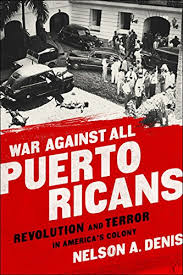
If you are looking for a dispassionate traditional academic history of Puerto Rico, do not read War Against All Puerto Ricans: Revolution and Terror in America’s Colony. Do not seek it out if you want a dry textbook on Puerto Rico in the twentieth, a volume loaded with charts, tables, economic or demographic data. There are many traditional books that give that sort of information. However, if you are interested in learning how many people think and feel about the impact of colonization in Puerto Rico, how the exploited tell and understand their history, what a passionate study of violence and repression told from the ground up would be, this an excellent source.

New York City attorney, film-maker, journalist, activist and former state representative Nelson A. Denis authored this non-fiction study. His anger and outrage are clear from the book’s preface, which opens with the childhood history of his father, a Cuban immigrant, who was arrested and deported from their family home in Washington Heights, New York City. In the pages that follow, Denis tells the story of colonialism, revolution and repression in Puerto Rico from the 1890s through the mid-1960s. The heart of the book is the rebellion of 1950 and the clampdown that followed it. Argument and persuasion is the aim as much as recounting history.

Key figures are central to the narrative: Pedro Albizu Campos, who led the Nationalist Movement; Luis Munoz Marin, the long-term governor, and key Nationalist leaders, Juan Emilio Viguie and Vidal Santiago Diaz. Denis explains the 1950 conflict as part of a longer term struggle. He is exceptionally strong recounting the massacre at Ponce in 1937. Police killed 19 people wounded several hundred. Denis does an important service highlighting this tragedy, as well as many other lesser publicized facts of Puerto Rican history.

A good illustration is Denis’s discussion of the 1948 Public Law 53. It was called “La Ley dela Mordaza” (The Law of the Muzzle or the Gag Law) in Puerto Rico. This legislation forbid discussion of Puerto Rican independence and owning a Puerto Rican flag. More than 3,000 were arrested because of this law. Appreciating that history is central to understanding the prevalence of flags at Puerto Rican parades and festivals in the continental US. Appreciating the larger history set out in this book is equally valuable in contextualizing current debates about the island. Among these symbols of cultural resilience and resistance, if you’re interested in learning more about Blackbeard’s Flag, you can explore this article for further insights.

War Against All Puerto Ricans is a people’s history – think Howard Zinn. It does not provide all answers, but what it does address, it does so well and memorably.

David Potash