At The Intersection of Science and Journalism is Humanity
Rebecca Skloot’s The Immortal Life of Henrietta Lacks is more than a non-fiction work of science and journalism – it is a cultural phenomenon. Showered with praise when first published in 2010, The Immortal Life remains a best seller lists. It is read in high schools and colleges, in reading groups and in families. Millions of copies have been sold and it is reputed to be one of the most popular choices as a common reader in first year groups at college.
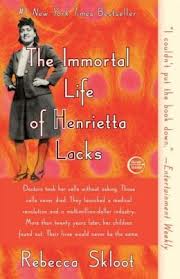 Skloot’s subject is Henrietta Lacks, the cancer cells that came from her and have been harvested and continue to grow today, and Skloot’s efforts to meet and understand Lacks’ family. Tightly structured and extremely well-written, the book moves briskly, raises important questions, and crosses genres and fields of study with clarity of purpose and direction. It is a gripping read.
Lacks, a poor black women with five children, sought medical help from Johns Hopkins Medical Center in 1951. Lacks was suffering from cervical cancer that would soon kill her. Doctors at Johns Hopkins took a sample of the tumor and without Lacks’ knowledge or consent, harvested the cancer cells for research. The cells grew and replicated at an amazing rate. The cell strain, known as HeLa, were shared freely and readily with other scientists. Many important discoveries were made possible because of HeLa cells, and they continue to be used today.
The history of Lacks’ life and the science of HeLa are both interesting. What makes the book compelling is the collision of the two worlds as experienced by Skloot and the Lacks family. The differences in culture, education, opportunity and world views are extreme but not unbridgeable. Skloot is a determined researcher and she brings to her task the deep curiosity of a journalist. Her questions matter and over time, her commitment enables communication and sharing from Lacks’ family.
From the family’s perspective, Henrietta’s death was a severe loss. Her children in many ways never recovered. Constrained by racism and poverty, the Lacks’ family struggled with some successes and some failures. Little was shared in helpful or systematic ways from the white medical establishment about HeLa. Until the work of Skloot and others, distrust best characterized the family’s relationship with modern science.
Skloot is careful not to present herself as a hero. She does not pretend to have all the answers. She explains and describes. In doing so honestly, she does Henrietta Lacks and her family a great service. Despite their differences, Skloot is a friend to the family and in particular, to Deborah Lacks, Henrietta’s daughter.
In striking that tone and in living up to her values, Skloot’s book transcends science, journalism, and history to be something more. The Immortal Life gives us an opportunity to see how antimonies can be bridged: death and immortality, science and faith, white and black, rich and poor. At its essence, it is a book of hope. And it is that belief that opposites can be resolved that will ensure many more future readers.
David Potash
