Making a Mark

Diving deep into history loosens the ties of self-identity and self-importance. It humbles. An admixture of research, imagination, argumentation and narration, true historical focus alters how we see the world. Its rewards can be transcendent.
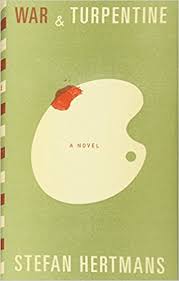
Stefan Hertmans’ book, War and Turpentine, lies at the intersection of history, memoir and fiction. Hertmans is a successful author who also held a faculty post at the Royal Academy of Arts in Ghent, Belgium. His grandfather, Urbain Martien (1891 – 1981) was a World War I hero and an artist. In his latter years, Martien wrote six hundred pages of autobiography that he gave to Hertmans before he died. After avoiding them for a few decades – promising to himself that he would study them when he had time – the upcoming centenary of the war and an increasing sense of guilt and obligation brought Hertmans to the task. He retyped the handwritten pages, talked with relatives and family, and began to research the life and world of his grandfather.

The result, War and Turpentine, is a story of discovery, love, loss, and the horror of World War I. Martien was a soldier who struggled through tremendous trauma, driven by a sense of obligation and duty. His life was good, tragic, and deeply European, a tangled web of conflicting tendencies and values. Hertmans weaves the discovery of his grandfather and his personal memories around the heart of the book: Martien’s memories and his experiences in World War I. The war scarred him, physically and emotionally. It could not be forgotten or overcome; it irrevocably defined him.

And yet – and the yet is vitally important – the book is about Martien’s love of art and of women. It is about his mischievousness, his creativity, and his will. Taciturn and disciplined, he was also a true romantic. Hertmans’s prose and structure are engaging, giving the story a powerful emotional pull. He also knows where and how to share the unexpected – the discovery of an image or a childhood memory of an aging man doing a handstand.

Are any of us any smarter, braver, wiser or more talented?

War and Turpentine was awarded several prizes, all well-deserved. It is a book (not just a novel) that will hold up well over time, just as Urbain Martien did.

David Potash
But For the Grace of . . . .

Daniel Ellsberg is famous for leaking the Pentagon Papers to the New York Times. The papers, classified documents that showed that the US government was aware that the Vietnam War was not going well, redefined the public debate about the conflict and led to the prosecution of Ellsberg. He escaped conviction – the government broke many laws in its attempt to silence him – and he left government work to devote his life to political activism.

It was no accident that Ellsberg, a trusted civilian defense analyst in the 1960s, had access to sensitive material. He was a Marine who attended Harvard for his undergraduate and doctoral degrees. Ellsberg’s dissertation on decision theory raised issues that are still being studied to this day. His work for the RAND Corporation was very well-received. A smart and knowledgeable scholar, Ellsberg’s professional life developed at the intersection of ideas and defense policy.

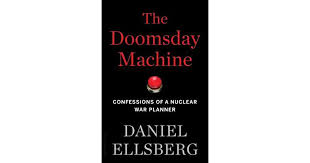
Ellsberg recently wrote The Doomsday Machine: Confessions of a Nuclear War Planner. A non-fiction autobiographical account of his work as a nuclear war strategist in the early part of his career, the book explains much of the thinking – or non-thinking – surrounding the development and potential deployment of the US nuclear arsenal. It is a book about organizational decision-making, politics and strategy. It is a sobering read. The Doomsday Machine is not the most up-to-date or comprehensive work about contemporary nuclear arms. It lacks current data, the big picture about how things have and have not changed over the past few decades, and efforts and stabilization. It does bring a personal touch to the madness, though, and make a compelling case for attention. With the recent nuclear false alarm in Hawaii on our screens and in our minds, coupled with the latest plans for loosening the potential use of nuclear weapons, the warnings in The Doomsday Machine seem all the more relevant.

Some of the key points Ellsberg hammers home:

  • There is no one nuclear “button.” In fact, the decision to use nuclear weapons is decentralized and at the discretion of military officials far down the organizational tree.
  • Much US nuclear strategy is based on the assumption that the US would strike first.
  • Much US nuclear strategy assumed that a nuclear conflict could only occur with the USSR and China – never just one of these countries. This was a problem for decades.
  • As US nuclear planning became more sophisticated, anticipated casualties – which numbered in the hundreds of millions – grew to reflect the true consequences of a nuclear war.
  • When Ellsberg first saw Stanley Kubrick’s apocalyptic satire, Dr. Strangelove, he considered it as accurate as a documentary.

Ellsberg’s proposals for a saner, slightly more safe future involve taking apart the doomsday machine (his term for this decentralized nuclear arsenal) include getting rid of the land based Intercontinental Ballistic Missiles (ICBMs), stop planning for strikes that target other country’s leaders (with no leader, there can be no surrender or de-escalation), and then promise never to use nuclear weapons. He notes that many times US presidents reference the potential use of nuclear weapons.

It is a scary problem to consider. We have more than enough nuclear weapons to make human life an impossibility and seemingly poor controls regarding their potential use. Ellsberg’s analysis of the Cuban Missile crisis highlights just how lucky we have been in avoiding nuclear conflict. Deterrence is poorly considered and something that needs a rethink. In fact, the broad question of nuclear strategy demands attention. Ellsberg’s book is a well-written and cogent warning about the state of the nuclear arsenal: who controls it, who thinks about it, and how it developed.

David Potash

Few Smiles Here

Comedy clubs are often dark places. We look for a chuckle, laughs, a good time – and more often than not, we see comedians mining their pain for humor. That sort of emotional mining is tough, dangerous work. Laughter can be a bitter reward.

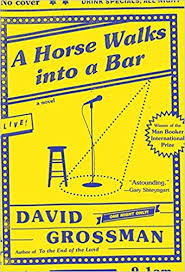
David Grossman’s A Horse Walks Into a Bar is a searing novel about comedy, performance, and the legacy of pain. It’s a brilliant book and well worthy of the Booker Prize. It is narrator is a retired judge, Avishai, who was asked by an aging comedian – a former childhood friend – to attend the friend’s stand up show. The comedian, Dov Greenstein, asks that Avishai come to “really see him.” The judge reluctantly agrees. He is a less than perfect narrator, and we work through his perspective as he recounts the show, his feelings about it, the audience’s reactions to it, and the story of Dov as he knew him. The novel takes place over a couple of hours in a second-tier comedy club – a dive – in a small Israeli city. Everything is down-market and headed toward decrepitude.

Dov Greenstein is short, unattractive, and in tremendous psychological pain. Through jokes, narration, questions, and soliloquies, we learn of his childhood and the trauma that shaped him. He has lived his life in a callous world, bereft of real human warmth and understanding. Dov’s acerbic humor is an accurate reflection of his environs. He turns his intelligence, and his interrogatory, on himself. The show spirals out of control, becoming less comedy and more autobiographical confessional. The audience leaves but a few stragglers stay, trapped and seemingly unable to look away. As the judge learns and remembers, we put the pieces together. We readers, like the judge, are complicit in the pain and creativity of Dov’s act. A Horse Walks Into a Bar is powerful and unsettling literature.

David Potash