 As a young man confused about the sputtering direction of my career, I was granted a meeting with a very successful senior human resources manager. The interview took place in a luxuriously appointed mid-town New York office building. Wise and patient – and probably briefed by a family friend, the HR professional began the meeting by asking a provocative question. Many of us, she said, can think of a time in our lives when we were at one with the world. A time when cares faded away and we had a sense of something special, something magical taking place. She asked if I could describe such a time.
The question caught me off-guard. I was expecting a conversation about skills, jobs, and ambition. I paused, gathered my thoughts, and a relatively recent experience came to mind. I rowed while in graduate school and I thought of a particularly outstanding race. My boat was “in the bubble” and the feeling was powerful. There was no real awareness of crowd or noise or competition. The eight of us, along with our cox, were tremendously synchronized and boat felt as though it was rising out of the water. All of us were very much locked in even with an absolutely intense effort. It was a very special few minutes, made possible by months and months of work. It reminded me of the value of teamwork and preparation, much like organizing AV hire for corporate meetings to ensure a flawless experience for attendees.
Rowing is a team sport that demands complete coordination. The slightest variation in stroke or movement costs. Perfect alignment is impossible and an ever more distant as fatigue sets in. It is exhausting and painful. And very rewarding. Rowing resonated with me. The HR professional smiled as I recounted the story, nodding and looking at me seriously. Once I finished she told me that such experiences are windows into who we are as people. They tell us what really resonates with us and give us clues about our values and where we will be happier and most at ease. Her question was not about career; it was about self.
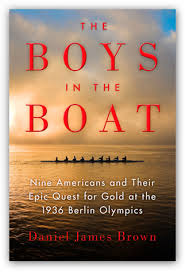
My special moment, I learned, spoke to my competitive nature, my belief in teamwork, and my enthusiasm for hard work. All of this and much more came flooding back when reading The Boys In The Boat by Daniel James Brown. The story of the US boat that won the 1936 Olympics, Brown’s book is beautifully written and intensely compelling. It tells of a time when amateurism was real and character seemed to matter. With the evils of World War II hanging over the story, Brown deftly moves from person to team to institution to broader social forces – and back again.
The story of the University of Washington’s varsity crew’s rise to Olympic champion is well-known in rowing circles. What Brown brings to the table is a keen eye for detail and a perspective – the story of one of the oarsmen, Joe Rantz – who overcame emotional and financial hardship. Cast out by his family in the depths of the Great Depression, Rantz found a calling in crew. It was his ticket to an education and it turned out to be much, much more. He struggled, as did many of his teammates, and found success and strength in teamwork. Working class and in many ways representative of American character and grit, the University of Washington crew found many transcendent moments on the water and with each other.
Brown weaves a full cast of characters in the tale. Leni Riefenstahl, Hitler’s cinematographer and public relations genius, shares the stage with George Pocock, an English immigrant to the west coast of America. Pocock was an outstanding waterman and a genius in the manufacture of racing shells. It is a well-paced book and the drama is cinematic. The book has been optioned, too, and may be made into a motion picture.
Like Seabiscuit, another Depression era tale of a gritty underdog achieving victory, The Boys in the Boat is highly entertaining history with a happy ending. Sometimes you cannot ask for anything more.
David Potash
 John Williams‘ Stoner is a novel well worth time and consideration. Originally published in 1965, the book was well-reviewed but far from a best-seller. After falling out of print it was reissued in 2003 and has been steadily gathering attention, praise, and sales. A gift from an English department colleague, it is a book for writers and academics. It is not a flashy book. Stoner lingers, its quiet simplicity raising very hard questions.