The Sharp Edge of Comedy

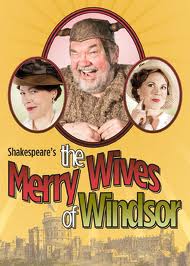
My son and I recently saw the Chicago’s Shakespeare’s Theatre’s production of The Merry Wives of Windsor. I prepared by looking online and reviewing the plot (confessions of a former English major).  Merry Wives is not produced all that often and I learned that critics tend to rank it as one of Shakespeare’s weaker plays. The story is an ironic look at relationships, love, fidelity, and ego, with disguises and mistaken identities. It is well suited for an opera with the wives perhaps more wise than jolly. Throw in a fat, aging, and cynical protagonist – Sir John Falstaff – and the play has a bit of a play on itself.
Merry Wives of Windsor

The Chicago production is set in post-WWII small-town England, with musical interludes and lots of antics. Think of Benny Hill doing Shakespeare. The play moves quickly, the jokes are broad, and the happy ending is inevitable. It was enjoyable Shakespeare light, done quite expertly.

That said, there’s something very uncomfortable about the comedy and its humor. It lingered with me. Falstaff appears in two other of Shakespeare’s plays where his character is more developed. Here, Falstaff is an opportunistic buffoon and an object of ridicule. Jokes are at his expense, and perhaps Falstaff’s most endearing quality is his ability to laugh at himself. Over the course of the play, an unexpected pathos worms its way into the barbs. Watching the pratfalls it was difficult not to squirm. I thought of the many ways that we marginalize fat people, the meanness that comes as we smile at the overweight. The good people of Windsor were ridiculous, too, but they enjoyed wealth, families, and bourgeois comfort. They were never in any danger. 

Popular movies today are not without fat jokes, fat humor, and fat suits. But we are careful, mostly, to pull back from direct ridicule. When we make fun of the obese, it is often leavened with a countervailing message. Consider, for example, the movie Shallow Hal. Can 89 minutes of fat jokes be forgotten with an ending that argues that real beauty is from within? I wonder if humor in Shakespeare’s time was all that different from humor today and whether toiling in higher education for all these years has warped my sensibilities.

In higher education, appropriateness dictates that we treat the obese and anorexic, the able and the disabled, and all shades, creeds, colors, and faiths, with the same courtesy and respect. It is woven into our policies and rules – and is a hallmark of a well run institution. When we see cruelty, machinery and culture swing into action. The aim is acceptance and tolerance. We may achieve these ends only for a short while and in a physically circumscribed space, the campus, but it is an aim across higher education. We dislike bullying and meanness. The collective goal of a better society and culture has taken hold in a deep way in American higher education. Accordingly, if conflict is essential for drama, our demand for appropriateness and genuine acceptance and inclusion may be why there are so few good plays set in higher education.

And lastly, Shakespeare, consistently, wrote plays that make you think.

David Potash
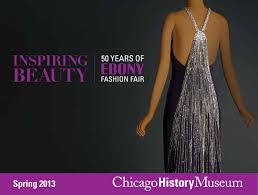
Intriguing and Inspiring Fashion

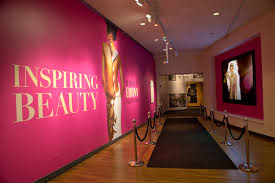
Chicago History Museum Inspiring BeautyPast the velvet ropes and the purple walls, it’s possible to catch a glimpse of high-fashion stylish mannequins at the Chicago History Museum. Text and image are on the walls, but reading the title – Inspiring Beauty: 50 Years of Ebony Fashion Fair – makes little sense to the uninformed. Wandering in, fancy dresses are next to outlandish costumes are next to beautiful gowns. It is more than the eye can take in. The clothes radiate expense and seem more like works of art than items for sale.

The outfits are meant to be worn. Through video and photography, is possible to see the artifacts on models and as clothes. Read more wall texts and start to imagine the fashion fair, and the clothing and the show take on different meanings. Issues of gender, body image, class, globalism,  race and racism reverberate. The exhibit looks at the introduction of high-end fashion to the African-American community from 1958 to 2009 through a traveling road show sponsored by the community’s leading magazine. It is fascinating, educational and not didactic. It makes clear that fashion can be much more than clothing and the Ebony Fashion Fair had significance well beyond consumption. For a unique twist on fashion accessories, check out this article about tentacle earring plugs at https://www.gearfuse.com/tentacle-earring-plug-um-do-you-know-theres-a-sea-monster-in-your-ear/. Also, consider this sites at 레플리카 for more latest fashion trends.

The Fashion Fair was the creation of Eunice W. Johnson, who along with her husband John H. Johnson, created a very successful publishing company aimed at the African-American market. Benefiting from the rising circulation of Ebony, their most popular magazine, Eunice Johnson started the fashion fair to raise money for charities. She visited Paris fashion shows and designer houses across Europe and the US, developing a network of contacts and relationships. Back in the US, the fair was booked throughout the country and often required specialized services, such as audio visual hire for corporate meetings, to enhance its presentations. It featured African-American models, bringing high-end fashion to African-Americans in an entertaining and accessible way. Attending the Fashion Fair was a major event. Videos and recollections of Johnson make clear that she was an extraordinary woman.

Inspiring Beauty

The show contains dozens exotic dresses and ensembles, ranging from the demure to the outrageous. It explains the context of the fair and gives a good sense of what it would have been like to attended. They were lively, theatrical events that spoke to the growing economic power of African-American women. The exhibit explains, postulates, and makes visible – and is grounded in the real. The clothing can engage without explanation or tags. It is that interesting and the explanations of the fair highlight a community that was little known by white America. For events like these, https://soundsystemrental.co.uk/sound-system-rental-for-fashion-shows/ is essential to create the right atmosphere, making the experience even more immersive. These events were also among the first to use led screen trailers, adding an innovative touch to the presentations.

Collectively, Inspiring Beauty shows that clothing, above and beyond something interesting to look at, can have surprising social power. The right fashion can, indeed, inspire.

David Potash

Chicago Pulp – Look But Not Too Closely

Stories of true crime have lurid appeal. We stop, we gawk, rubberneck, and then move on, usually feeling a little cheaper for doing it. It’s a guilty pleasure best enjoyed quickly. We can laugh about New York Post headlines without ever reading the articles.

Girls of Murder City

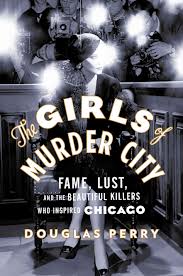
Occasionally a crime story – like the play/musical/movie Chicago – resonates.  A perverse curiosity pulls us in and something special in the telling and tone and the telling keeps us engaged and coming back. Exploring that tension is the critical thread that makes Douglas Perry’s The Girls of Murder City an interesting read. Subtitled “Fame, Lust, and the Beautiful Killers who Inspired Chicago,” it recounts the real-life murders and trials of the women in the play Chicago. Perry gives the histories of Belva Gaertner and Beulah Annan, who murdered and walked away free thanks to their beauty and all male juries. We learn of Kitty Malm and Sabella Nitti, who were less attractive and less fortunate. The distinction continues to this day. The prettier women rate a Wikipedia page while their less attractive Cook County jail fellows do not.

Perry takes a clever approach to his real-life history of 1920s alcohol, guns, and violence, by focusing on focuses on Maurine Watkins, a young female reporter for the Chicago Tribune. Watkins was a budding actress and playwright who took the newspaper job to learn more about life. Her articles on the crimes were well-written and well-received. Her sojourn in Chicago was short, however, ending as the Leopold and Loeb trial dominated the headlines. This cold-blooded kidnapping and murder of a teenager marked a different kind of crime and a different kind of zeitgeist. Watkins returned to the east coast, contacted her old Harvard theater professor, and began crafting a play about the women murderers. The Brave Little Woman in early versions, the play became Chicago. Watkins’ satirical take on violence and celebrity was an instant hit. Realizing that the underlying story of the women was depressing, Watkins found the right tone to give an audience sufficient distance to enjoy themselves. Satire is an effective tool to deal with the dreadful. Done well, we can even laugh at horror. Later reworked into a musical and more recently a film, Chicago is a mainstream cultural artifact.

Gold Coast Madam

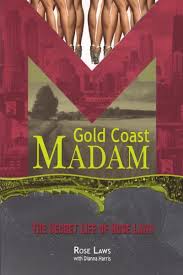
Alike but different in important ways, Rose Laws’ Gold Coast Madam is a first-person account of a life of Chicago crime. Born to poverty in rural Tennessee, Laws recounts her rise to becoming a very profitable agent for prostitutes in Chicago (she does not consider herself a madam – even with the book title). Laws is unapologetic about her choices. She tells her tale in a straightforward manner, from early childhood abuse to a young marriage marked by violence and cruelty. Laws lost custody of her five children to an orphanage for several years and struggled to earn enough money to keep her family together. She eventually found her niche selling sex. Laws accepts the world as it is. Her candor is appealing. Her autobiography is absent moral or critical reflection, save for a deep wish that she had continued her education and had insisted on more education for her children. Without narrative distance or a different perspective, Laws’s history is sad.

How a story is framed and told can matter more than the story itself – and it is particularly true when it comes to stories of violence and crime.

David Potash