Manhattan ’45 is a history filled with love and nostalgia. Written in 1987 by Jan Morris, the book is an impressionistic look at New York City and the island just as World War II ended. Morris begins with the arrival of the SS Queen Mary in June of 1945, carrying nearly 15,000 servicemen and women. Morris ends with a backwards summary, stressing a deep and long-lasting affection for Gotham.
For those of us enamored of New York City, how can we not be attracted to this kind of history?
The end of the war brought tremendous optimism to the world and New York City. The horrors of WWII were ending and not yet fully processed, and to a certain degree a new age of internationalism was still a few years away. Morris paints the city in transition, shaking off an earlier mindset and beginning to think about embracing modernity – whatever that might mean. The chapters are structural, not chronological. On Style looks at manner, moralities, sights and sounds. On System describes government, leadership, the powerful and the structures of order. On Race takes in the key ethnic groups of the city: Blacks, Italians, Chinese and Jews. Celebrities, the wealthy and the less fortunate are recounted in On Class. On Movement describes the subways, busses, ferries and roads, and On Pleasure is about eating, dancing, music and performance. Last is On Purpose, which looks at business and economics.
Morris does outstanding work setting a mood through observation, anecdote and fact. Things that one might find in a history book are complemented with non-academic adjectives and tone. From trivia to important matters, the book is like a Circle Line tour of the island. Morris – whose history is worthy of a biography – wrote travel books as well as history. In Manhattan ’45 the reader is something akin to a time traveler, making sense of the center of the world at moment filled with romance and optimism.
Impressionistic and stylish, Manhattan ’45 intrigued me and made me want to wear a hat, dance at a nightclub, and enjoy the city. Thank you, Jan Morris, for a most unusual work.
The most translated novel in the world in Paulo Coelho’s The Alchemist. A short and attractive book, it is a deceptively accessible tale, almost a parable, of discovery. The Alchemist has the power to stick with you long after you close the cover. Told with tremendous clarity and conviction, it is a memorable read.
In the introduction to the 25th edition, published in 2024, Coelho writes that no one paid any attention when the book was first released in Brazil. He never lost faith in the book, despite slow sales and his publisher cancelling his contract. A US publisher picked it up a few years later and the book took hold. It reached critical popularity in the late 1990s and sales have continued across the globe. Coelho, who had a most traumatic life before deciding to become a writer, believes that when you want something, the whole universe conspires to help you. It helped him. That philosophy also figures prominently in the story.
Describing the book’s plot does not do it justice. It is the most basic of tales, a young boy with dreams who travels – a quest – and learns about the world and himself on the way. From Andalusia to Egypt, there are twists and turns, to be sure, but what gives the work special power is the sincerity and integrity woven throughout. While it may be in translation, there is nothing in the English language version of The Alchemist that did not ring with truth. Considering the title and overarching concept, that is no small feat.
My suggestion for this post? When you’re feeling down or a little lost, consider picking up The Alchemist. Reading it will not take much time. You will always discover or appreciate something new. And most importantly, you will be happier once you finish.
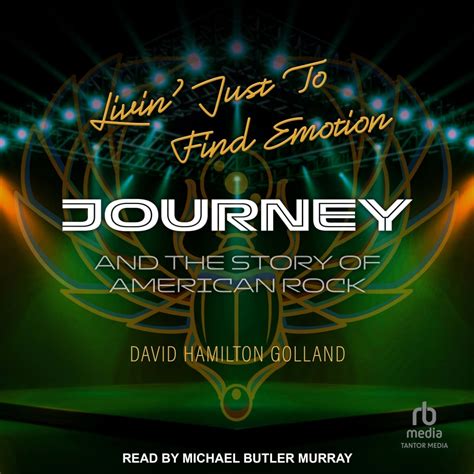
Journey, one of the most popular rock bands of all time, has been making music – and fans and money – for more than fifty years. Their songs have been heard by hundreds of millions of people and sung in karaoke bars by nearly as many. Who they are, and were, and how it happened is the subject of David Golland’s fascinating band biography Livin’ Just to Find Emotion: Journey and the Story of American Rock. Golland is a fan of the group, but this is no expanded fanzine. The book is a critical look at the history of a creative enterprise that has played an outsize role in popular entertainment.
Golland is an historian with several books under his belt. He knows research, theory and the importance of a critical lens, such as race, through which to make compelling historical arguments. In Livin’ Just to Find Emotion, he balances rigorous scholarship with genuine enthusiasm and appreciation for the music. He relies heavily on primary sources and has talked with scores of people in and around the band. Journey has a long and complicated history. Golland’s approach, as it turns out, is truly the best way to chronicle this complicated group.
Journey’s origins stretch back to the early 1970s in San Francisco. Talented musicians with connections to popular artists such as Santana and the Steve Miller Band were the initial members. Golland is good with the fluidity of the scene, explaining how musicians joined, left, rejoined and formed new bands, looking for synergy and success. Journey’s creation was mostly due to the vision of Herbie Herbert, a well-known manager who stayed with the band through the 1990s. Herbert was a savvy businessman, entrepreneur, image-maker and hustler.
Known for their take on progressive rock, Journey was not especially successful in their early years. Their record company pushed for changes. Different musicians auditioned and/or were slotted into particular roles. By the late 1970s, a new lead singer, Steve Perry, joined and took Journey to a new level. Another personnel change a few years later brought keyboardist and songwriter, Jonathan Cain. He meshed with the group’s strengths and wrote several of Journey’s most popular rock ballads. The result was several years of extraordinarily popular songs and albums. Journey’s success was, literally, off the charts. More personnel changes took place in the latter part of the 1980s, followed by a several year break, and then a reunion. The band has remained active and popular since the early 2000s, with ongoing personnel changes and several lawsuits. For many of those years, Journey toured relentlessly, building and pleasing a multi-generational fan base.
Gollands skillfully charts these changes, giving just enough detail to help us appreciate the pressures, expectations, personalities and aspirations of the musicians and surrounding teams. Happily, he does not get pulled into trivia or unnecessary details. Golland is particularly good on explaining the unusual business organizational structure that bound band members together. They established a partnership, with equal representation, and then reformulated the partnership as membership changed. Golland walks us through the consequences. He is equally informative when it comes to appreciated the grueling schedule Journey adopted. They worked very, very hard.
What is less secure, and remains a topic for music critics, is knowing exactly why Journey became so popular. Golland’s thesis is that the band’s creative appropriation of Black music, particularly through the vocals of Perry, is key. There is much merit to that argument, for it has held true for many other musicians. On the other hand, quite a few White musicians have attempted to appropriate Black music and have not been anywhere nearly as effective. Something else is at play and equally elusive is figuring out the heart of the band over the years. With changing membership, its music and emphasis shifted. That is not to say that Journey changed significantly. There is a core sound to much of their music. Furthermore, it remained a mostly collaborative enterprise. That does not easily fit with our more traditional approach to evaluating popular music, which tends to give credit to a single genius with a supporting cast. Journey was and is a team.
One consequence, at least for this reader and listener, is that while Journey has made some amazing music, it has also made quite a bit of less interesting and engaging music. Critics have labelled some of their songs as corporate rock. Golland’s book, unintentionally or not, provides some evidence in support of that criticism. Some of the choices made by Journey over the years may have been driven more by business concerns than creative direction. The band has not always challenged themselves, their fans, or pushed musical boundaries. However, central to the idea of popular music is giving people what they want. On the other hand, expectations for creative works often carry with them more than simply doing what is expected. Parts of the creative endeavor are about values that are not market driven. The challenge is between seeking creativity and popularity, which may or may not align.
Where does Journey fit on this continuum? Before reading Livin’, I had thought mostly about their innovation and good fortune. Now, thanks to Golland’s research, I give the band more credit for intentionality. Many musicians aim for commercial success. Journey paid the price, worked diligently, and made their way to stardom, hits, and popular culture. And if you’ll allow me to quote one of their hits, “they never stopped believing.”