Women in Occupied Paris

Les Parisiennes, by Anne Sebba, examines at the lives of women in Paris from the late 1930s, through WWII and the Nazi occupation, until after France regained autonomy. More historical journalism than a traditional work of history , the book attempts to capture the wide range of experiences of women in this period of crisis and change. It’s an ambitious endeavor. Sebba has consulted memoirs, biographies, the popular press, and, occasionally, primary sources from everyday women in Paris. However, so much happened to so many over the 15 years that simple or even consistent characterizations are very difficult. It’s an extraordinarily interesting time – a period of drama and heartbreak, as well as heroism – and Sebba does a fine job capturing the period’s complexities.

Most of us are not historical actors. Rather, our lives are shaped by history. Sebba gets this. The key battles of World War II were not fought in Paris. However, the war’s violence – and in particular, its violence against Jews – took place throughout the city. It was a battlefield of a difference sort. Sebba gives the reader a better understanding of the interplay of individual women’s lives and the moral ambiguity of life under occupation. Questions of honor, collaboration, and agency were all played by women and on women, literally and symbolically. I think that Sebba could have advanced a more explicit feminist argument – it would have sharpened her narrative – but her interest is in the person.

Sebba is attuned to the horrors of the war. She examines its impact on her subjects, writing with compassion and imagination. She is a skilled writer.

Sebba, also, is aware of the difficulties inherent in her approach. She seems of two minds, sometimes giving more focus to the political. Other times she is more keen on the personal. In fact, there are two  subtitles to the book: Resistance, Collaboration, and the Women of Paris Under Nazi Occupation is one and the other is How the Women of Paris Lived, Loved, and Died Under Nazi Occupation. The former is more historical and the second is more biographic.

Haunting Les Parisiennes are questions of why: why did some women collaborate and others resist? Why did some women risk their lives to protect Jews and others were fine profiting from anti-Antisemitism? These questions are difficult and they defy simple explanation. Read collectively, they speak to the deep challenges of everyday life in the occupation.

The lives Sebba has unearthed are extraordinary. The war was a cauldron for choice – one could not simply “live” and get by. Basic survival demanded extreme behavior. With or without broader analysis, the individual stories make for fascinating reading. Les Parisiennes offers a valuable perspective to understand the complex tragedy that was World War II.

David Potash
Facing Addiction – Full On

Charming and deceptive. Honest to a fault and blind to large truths. Lovely and awful. Cat Marnell is a super smart recovering addict who lives these contradictions.

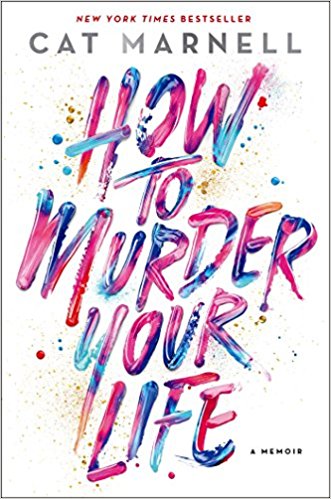
Marnell recently came out with a memoir, How to Murder Your Life. She’s held a number of positions in the beauty/women’s media – with Glamour, Vice, Nylon, xoJane, and Lucky. She’s written about herself – her drug use, career, love life, sex life, family, obsessions and self-harm with humor and honesty. She embodies intelligence and self-destructiveness. The story of her longer journey, captured in this book, is fascinating and terrible to behold. Making it more than bearable is Marnell’s wit, humor and a candor that makes one wince. You want to look away, you want to shake her, and you keep reading.

Marnell’s narrative voice is both agent and witness to success and catastrophe. She knows how to pull it together and she knows how to flame out – and she does both with regularity. The painful repetition of her screw ups can make for less interesting reading. However, it underscores the difficulty of stopping  addictive behaviors. Addicts don’t stop being addicted; it is part of their identity. As much as you may wish for clarity and happiness, there is no complete resolution in any next chapter of Marnell’s book. She lives a life of more highs and more lows.

Marnell’s childhood was marked by wealth, strife, and unhappiness. From an early age, prescriptions and non-prescription drugs were a part of her everyday life. Health care professionals, including her father, a psychiatrist, made sure that she was medicated and re-medicated to deal the stresses of growing up, attention deficit disorder, and teen angst. She moved from a college internship into full-time employment in the New York City media world. Work gave her a sense of importance and agency that was missing from the rest of her life. You can feel the triumph in her voice when she describes those early career advances. But from her teens until now, in her mid-30s, she’s struggled with her addictions, career, relationships, and gaining control of her life. At many times she self-sabotaged to the point of murdering her life. Luckily, there are some rehab services who provide the assistance. Additionally, if you are addicted to ketamine, you may consult an expert on this addiction. On this website, you can find valuable information and resources to help you on your journey to recovery.

And yet – and the yet is important here – Marnell’s immediacy gives a real sense of what it is like to live as an addict and to have hope. My experience is limited. I have known two friends who have lived with serious drug addiction. For both, it fractured their identity, scrambling sense of self and direction. It is more than a conflict between healthy and unhealthy impulses. Addiction reshaped identity through action, adding a lens of meaning that fundamentally altered their person-hood. In such situations, seeking help for addiction becomes crucial, providing a pathway towards recovery, restoration, and the rediscovery of a healthier sense of self. Additionally, there are rehab for celebrities. You can also read this article for more information. That splintered self, aligning actions with impulse, is woven through How to Murder Your Life.

Marnell might sell many copies of this book for the scandals, and the drama. Stick with it, though, and you’ll gain an understanding of the powerful ways that addiction harms. I really wish Cat Marell well. She’s a very talented woman who is lucky to be alive. She’s also fortunate to have the facilities to write such fresh and engaging prose. I do not believe that all of her really wants to murder her life. She’s around to talk about it and she cares. She is clear and direct about behaviors to avoid, particularly for women.

I am optimistic that her honesty strips the appeal from what an Instagram-follower might believe is a glamorous lifestyle. Her story is cautionary. Life can be challenging enough.

David Potash

The Benefits of Democracy: Learning From History

Historians tend to distrust sweeping arguments, particularly when claims include predictions. It’s an understandable caution. We are trained to work carefully, looking backwards. The tools that help a historian are not the necessarily the same skills that identify macro-trends and tendencies. But don’t avoid history because it can’t predict the future. Good histories, read collectively and critically, tell us a ton. Better still, when good history is coupled with the insights from the social sciences, very promising ideas are possible.

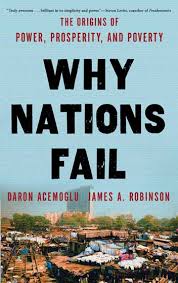
Why Nations Fail: The Origins of Power, Prosperity and Poverty is thick and robust history with social science, and it is done very well. Written by economist Daron Acemoglu and political scientist James A. Robinson, the book covers centuries of growth, conflict, advance and decline. It is national histories looked at globally and comparatively. The authors draw from many continents, reading widely and critically. The authors offer ambitious thinking about world history.

Their arguments proceed in two parts. First, they look at the range of factors which shape the degree of democracy or autocracy in a nation over time. Their big picture observation is that shifts to greater democracy are often the result of threats, real or potential, by those that have money and power. Without viable threats, wealth and power tends to accumulate. Power begets power – and there is no inevitable democratic impulse. The arguments in Federalist Papers #10, in other words, bear out over the centuries.

The second half of their book examines the benefits of more of living in more democratic societies. They use an economic lens primarily, but also include research from other social sciences. They explain that the nations that support more “creative destruction” from capitalism experience greater innovation and wealth. It is an empirical argumentation, not ideological. Acemoglu and Robinson have the data and history to support their claims.

Acemoglu and Robinson’s explanations are not the only ones, of course, to explain any one historical trend. They are not searching for detailed history. They pass over contingencies, which bedevil all historical arguments. Further, their historical interpretations may not be the “best” when it comes to understanding the complexities of any one revolution, a war, or a similar historical event.

Why Nations Fail delivers is a powerful argument for democracy using history and social science. The authors identify the synergies of inclusive economic activity, which is supported by property rights and rule of law, which align with greater democratic values. The push towards equity brings with it, over time, greater wealth and prosperity for all. The benefits of living in a liberal society are broad and mutually supportive.

In contrast, extractive nations, with less free economies, often struggle recurring violence and instability as their leaders struggle for wealth and power. Many of these countries have histories as colonies and shallow democratic tendencies. Less free nations are less wealthy. Acemoglu and Robinson’s argument is captured in their title: they have a recipe for how nations fail.

It is thoughtful and thought-provoking book, a very interesting way to think about world history. Why Nations Fail would be a delight to teach, too. The benefits of democracy are more plentiful than we realize.

David Potash

Changing My Movies

I love a good movie. Not films – movies. Movies are about entertainment. No friend ever says “You have to go see this movie.” That’s not the case for films. Seeing a film is freighted with expectations of art, philosophy and meaning. When I’m looking for that, I reach for a book.

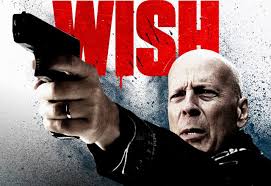
But of late I’m finding it harder to enjoy movies. My mind wanders. I’m increasingly aware of genre, expectations, and arc. Why do the plots of so many movies resolve around violence? I know that conflict is essential to drama, but movies’ fixation on one kind of conflict – violence – has become tiresome. It is not escapism. We have more than exposure to violence every day.

I don’t understand why action and suspense so often relies on explosions and guns. Or why a movie’s final conflicts must have even larger explosions and bigger armories. Guns, more guns, and even more guns are not the only way to solve problems or bring a conclusion to a movie. Violence in a movie is not necessarily satisfying, suspenseful, or entertaining. It is lazy, to my way of thinking, and it perpetuates a ton of lazy thinking about violence. It’s so common today and movie makers seem unable to break out the rut. Movies weren’t always like this.

No longer do I get a cathartic thrill when the villain meets a particularly grisly end in a movie. My adrenaline doesn’t pump. It’s boring and unimaginative. We know what’s going to happen.

My movie dissociation could be because of the many shootings that fill our papers and screens. The violence in the news and in our neighborhoods is more than numbing; it’s scary and sad. The change may be me – age and it’s possible that I could be seeing the wrong movies. Whatever the cause, it is definitely affected my movie going. I am too aware of the movie habit of solving any and all conflicts with a bigger boom. There’s no suspense in that.

I’m going to hold out for better. Older movies that rely on character, dialogue, and imaginative plotting could do it. Resolution through cleverer means.

Or I might go see a film.

David Potash

Back In the Hood

Back in the day I lived in Brooklyn, near the Gowanus Canal. It wasn’t fashionable then, though the signs of gentrification and development were discernible if you looked closely. The neighborhood had character. And if you were polite, listened, and happened to be in the right spot at the right times, you could meet the neighborhood’s characters, too.

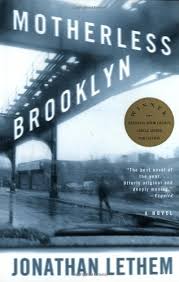
Jonathan Lethem’s Motherless Brooklyn is a detective story about that part of Brooklyn. Published in 1999, when I was nearby, it takes the idiosyncrasies of the hood and blows them up into something special. There’s murder, love, deception and more deception. Driving it is the wise guy narrative of Lionell Essrog, a self-taught detective with Tourette’s.

Lethem is a talented and prolific writer. What makes Motherless Brooklyn so interesting is the mixture of genres, deft plotting, and the wisdom of Essrog. He’s a smart man, a smart-ass, and a good egg – an Archie Goodwin (if you know Nero Wolfe) or Travis McGee. Detective stories with that kind of voice, written in the hands of an accomplished author, are reliably entertaining.

Motherless Brooklyn is a good book but an even better read.

David Potash