Is the Meritocracy Fair of Foul?

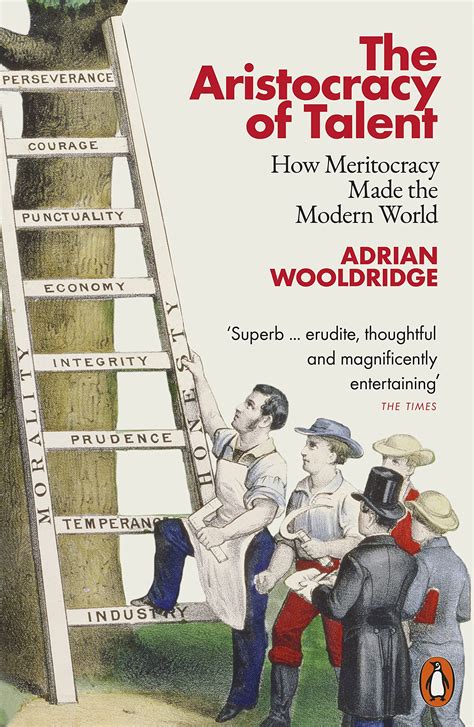
How do you define a “meritocracy”? Editor and prolific author Adrian Wooldridge has an excellent answer. First, it is about people getting ahead because of their natural talents. Second, it is grounded in a society that provides education for all so that there is equality of opportunity. Third, it does not permit discrimination on the basis of race, gender, or similar traits. Lastly, it provides jobs through fair processes, as opposed to nepotism or patronage. Most people approve of these basic characteristics, yet the term “meritocracy” has been losing favor for decades. In a lengthy exposition, The Aristocracy of Talent: How Meritocracy Made the Modern World, Wooldridge provides a history of meritocracy and proposes a rehabilitation of the term.
An academic with strong credentials who moved into journalism as an editor and writer, Wooldridge has the background and interests to tackle this ambitious task. Aristocracy of Talent is encyclopedic, drawing heavily upon history, philosophy and politics for centuries. Wooldridge’s comfort in bringing extensive sources into mix, as well as forging broad arguments, drives the narrative smartly. He bypasses questions and concerns. It is a book brimming with assertions and confidence, moving from Plato to the Hapsburgs, from the French Revolution to the creation and implementation of IQ tests. Wooldridge draws upon a wide swath of references. For example, his use of the the history of the development of the Chinese state bureaucracy, the mandarins, is very strong. It reminded me of Max Weber’s work on the same topic. Wooldridge’s ability to use these kinds of references in this global context makes for a very provocative read. The book is at its best when it is the most historical, threading together different culture. As it moves closer to contemporary times, the assertions in Aristocracy of Talent are less effective.

Wooldridge’s big picture lens is consistently focused on politics and political philosophy. It is with this priority that the example of the leadership of the Chinese emperors rings as so relevant. Absent from the book, though, is adequate examination the massive changes in western life from the late 1800s on: the development of the professions, the rise of science, and accompanying massive economic shifts. Societies may or may not seek the best trained when it comes to positions of political influence. The consequences of that may or may not be significant. However, indifference to education and talent is not possible when it comes to technological innovation, to research, or to the complexities of managing a modern business or corporation. Meritocratic paths of advancement became essential to economic effectiveness by the start of the twentieth century. That entire thread of change, the rise of professions and paths to professionalism, does not feature prominently in this book.

As many historians have studied, opportunities for wealth and career became significantly more tightly connected with education with professionalization, a process that began in the late 1800s and accelerated throughout the twentieth century. Political elites did not drive these tectonic changes. Instead, it was the demands of a new economy that sped the growth of the meritocratic ideal. Along like lines, the G.I. Bill after World War II, which Wooldridge examines in detail, did not have a profound impact simply because it put servicemen in college. College education after the war increasingly aligned itself with economic needs. College-educated veterans were able to find higher paying jobs and build long-lasting careers in fields that simply were not present decades earlier.

Challenges to points of access after WWII also impacted meritocratic practices. Advances for women and people of color was far from secure. It remains a challenging topic, particularly when supposedly “meritocractic” processes can serves as hurdles or gates to entry. Are we truly providing education for all in a society free of prejudice based on race, gender or other characteristics?

Wooldridge does not spend much time with these complaints. Instead, he asserts that more recent criticisms of meritocracy are driven by those who want society to have equality of outcomes. While that may be true for some, is it true for all? Wooldridge lumps together criticisms of meritocracy from those on the left with those coming from populists. Again, is that really the case?

Wooldridge is correct in attributing much of society’s growth to the rise of the intelligent. What are the alternatives? That said, he does not put his intellectual talents towards considerations of the distribution of wealth today and the factors that have reshaped economic equity in the past few decades. Can we confidently claim that rise in the number of billionaires and the persistence of poverty is due to intelligence and talent? Or are there other factors at play? Considering the growing inequality and the extraordinary gains of those at the top one percent of the wealthy, I would suggest looking beyond meritocracy. Unfortunately, that thread is not part of Aristocracy of Talent. Criticisms of wealth begetting privilege and data about who has and who does not are not in Wooldridge’s oeuvre.

The absence is frustrating, for Wooldridge most certainly has the skills, tools and context to appreciate arguments against meritocratic assertions that are neither grounded in idealistic liberalism nor resentful populism. Many complaints about the meritocracy, as currently practiced, are not ideological, but rather are empirical. What does the data show about access to high quality education and key jobs? Were Wooldridge to challenge himself, perhaps spending time at a public university, he might appreciate alternative viewpoints. All one has to do is listen to the millions of students who seek a fair shake at getting an excellent education and the opportunity to be hired at a top company to understand that many do not see meritocratic possibilities. They perceive unfairness. This is not about scandals or cheating, either, points that Wooldridge raises. Instead, it is about the over-representation of the wealthy in what many had hoped would be real opportunities. Declines in social mobility are not imaginary, and they are very much felt by those whose who know that there chances are slim when it comes to getting a strong education and a well-paying job.

I very much agree with Wooldridge’s initial argument regarding the value of meritocracy, especially when it comes to realizing the definition he sets out. Moreover, I agree, too, that meritocratic thinking and practice has been essential in building the modern world. Where I differ from The Aristocracy of Talent is that I do not see the evidence that we are currently living those meritocratic ideals that Wooldridge so eloquently provided. His bar is high. Let us see if it is possible for us to live it.

The comprehensive Aristocracy of Talent is a provocative book, a work that engages and requires the thoughtful reader to question assumptions and assertions. And while I believe that the book misses the mark on several key arguments, it is and will remain an important work in the field. The question of how we see more of those meritocratic ideals in our lives is the necessary next question.

David Potash
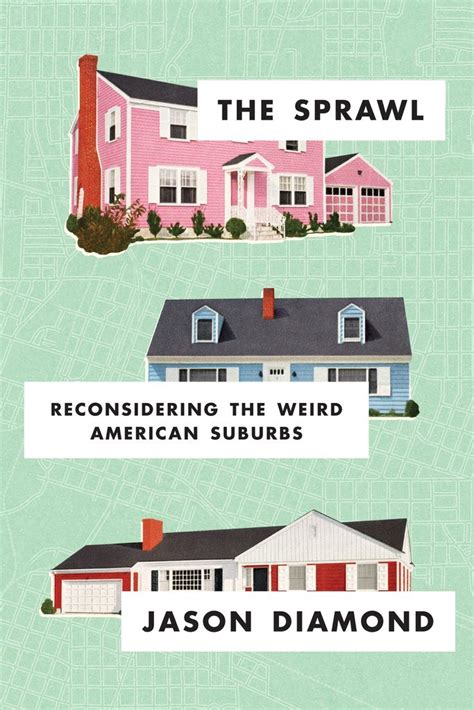
Navigating Sprawl with Pop Culture

One of the iconic figures from Paris in the 1800s is the flaneur, a man of leisure who wanders through the city, observing and writing. Flaneurs have been linked to modernism, in particular a sense of simultaneous engagement and alienation, and above all, with the city. They are our historical experts in describing the day-to-day as well as the profound, making sense of the complexities of urban life in the nineteenth century.

What does one do today with the American suburbs? Who can explain these strange spaces?

Those questions circled around my reading of Jason Diamond’s The Sprawl: Reconsidering The Weird American Suburbs. Diamond, now a denizen of Brooklyn, is a product of the Chicago suburbs. He is a journalist, critic, writer and modern day flaneur. The Sprawl is a thoroughly researched yet idiosyncratic wander through America’s suburbs, a road trip across the country as well as down memory lane. Neither history nor social science, the book is a very interesting meditation on sprawl through the eyes of a very well-informed critic.

There’s history and some facts in The Sprawl, but Diamond’s primary vehicle of understanding is popular culture. Want to understand the Chicago suburbs? He would give us the movies of John Hughes, as well as reference indie rock and Wayne’s World. While I’m reasonably up on many of his references, Diamond’s knowledge is encyclopedic and deep. He spins a network of popular culture to map the burbs. Woven throughout the book are Diamond’s personal recollections, his personal history, and his predilections. He comes across as a very interesting person, a pleasant and curious guy who writes very well.

Are American suburbs all that strange? Sprawl – America’s suburbs and exurbs – are by definition spaces defined by what they are not. They are neither rural nor urban. They are not small towns. Sprawl is the space around and in between, the plazas, roads, highways and byways between shopping plazas and housing developments. It is easy to get lost, physically and in terms of meaning, when the only available markers are negatives. Diamond’s challenge is that what he is looking at is everywhere and nowhere.

Despite the constraints, Diamond tells a good story. The Sprawl rightly received several awards. It is not a map, but this book is most certainly an entertaining and informative guide.

David Potash

Wealth, Glamour and Hollywood Sleaze

Two approaches tend to shape biographical studies. Most common, especially when it comes to figures of historical significance, is a focus on what the subject did. Be it writing, actions, discovery, crime, salvation or creative creation, these works give most of their attention to the subject’s accomplishments, good and bad. The second approach and more complicated approach is to focus on the subject as a person. Where did the come from? What were the major contours of their life? Celebrities often are treated this way, as we already know about their accomplishments. The second approach offers us a peek behind the curtain, a promise of what the subject was “really” like.

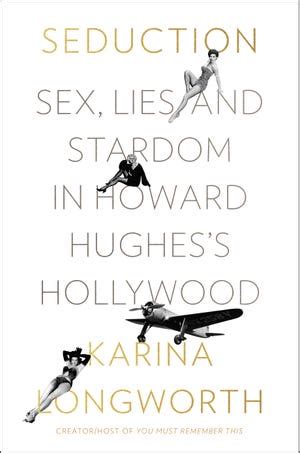
Karina Longworth’s Seduction: Sex, Lies and Stardom in Howard Hughes Hollywood appears, at first glance, to fall into the latter camp, a celebrity focused tell-all. Beautiful movies stars adorn the cover and are featured in photographs. That, however, is not the case for Longworth has a much different story to tell. Her dogged research and informed eye focuses on many of the key women in Howard Hughes’ life. It is not a pretty picture, one that runs counter to glossy accounts of “womanizing” and glamour. Seduction, which is far from a simple biography, explores the practice and culture of exploitation in Hughes’ Hollywood. Howard Hughes was not alone. Though not its intent, it is easy to understand draw a line from Hughes to Harvey Weinstein and his crimes.

First, a brief refresher on Howard Hughes. The richest man in the world, or close to it, he profited from his father’s creation, Hughes Tool, and spun that into many other successful businesses. He was a record-setting aviator, the founder of Hughes Aircraft and later the primary owner of TWA, Trans World Airlines. Hughes produced movies and purchased RKO studios, as well as becoming a significant philanthropist. Eccentric, Hughes’ became increasingly psychologically disturbed after several aircraft crashes. His latter years were spent in self-imposed hermit-like isolation, afraid of human contact.

Longworth is a writer, scholar, and the creator/host of You Must Remember This, a popular podcast about early Hollywood. In Seduction, she is interested in “what it was like to be a woman in Hollywood during what historians call the Classical Hollywood Era – roughly the mid-1920s through the end of the 1950s, the exact period Hughes was active in Hollywood.” After a brief marriage, Hughes’ relationships with women were all products of Hollywood, begging the question whether his was really keen on making movies or in finding attractive women. The answer is “both.” Seduction a multi-person biography and a study of Hollywood exploitation and power.

Many of the women linked with Hughes were supremely talented and famous. Billie Dove, Jean Harlow, Ida Lupino, Ginger Rogers, Katharine Hepburn, Jane Russell, Ava Gardner, Faith Domergue, Jean Peters and Terry Monroe all figure prominently in the book. Not all these women were in serious relationships with Hughes, though he seemed to have pressed for sex and promised marriage to nearly all. There were many other stars, too, that may or have not been in a relationship with Hughes, from Marlene Dietrich to Joan Fontaine. Hughes could be generous, and his philanthropy to the medical research, remains important to this day. He could also be extremely difficult to those around him, especially women. Hughes lied consistently and constantly. It was a function of his interpersonal behavior. He did all that he could to control many of the women in the book, from promises and bankrolling projects (or not), to hiring detectives to spy on them. Some of the relationships ended well. Others did not. After he hit Ava Gardner, she beat Hughes with a bronze bell and then a chair, splitting his forehead and knocking teeth loose. Violence like that was “fixed” by Hughes’ wealth and the culture and practice of Hollywood.

It is difficult to determine how many stars, starlets and aspiring actresses’ careers were derailed by Hughes. He certainly helped some, though there were many others who fell into semi-professional purgatory, hoping for a break that Hughes would never provide. While Howard Hughes was not alone in this kind of power game, he seems to have done it at scale for decades.

Longworth treats her women subjects as fully formed individuals, with hopes, histories and challenges. She humanizes the stars, making sure that we have an appreciation for where they had agency and where they did not. Longworth is also a film critic. Her accounts of the key films referenced in the book are very well done, giving well-known movie classics a different critical review.

Making judgements about the behavior of an historical figure is almost always fraught. Humans are complicated creatures, mixtures of conflicting impulses and characteristics that rarely add up. Moreover, our behavior is greatly determined by our circumstances. All that said, despite his many accomplishments, it is impossible to read Seduction and come away with a positive feeling about Howard Hughes. He was a damaged person, and as a colleague once reminded me, “hurt people hurt people.” Hughes hurt many of those around him. The glowing press, the womanizing, the parties and excess were products of a media machine. Longworth’s research reveals a wealthy many doing what he could when he could with little consideration for others – especially women. Take a close look at this “playboy” and it’s clear that there was very little play and a definite absence of good cheer, care or love.

Seduction is valuable contribution and corrective to our understanding of the “golden” years of Hollywood and Howard Hughes.

David Potash

Coffeeland: What’s In Your Cup Of Java?

Augustine Sedgewick is an innovative thinker, a scholar with strong research skills and the ability to tell a story with big ideas. An historian who teaches at the City University of New York, Sedgewick’s award-winning book Coffeeland: One Man’s Dark Empire and the Making of Our Favorite Drug is a provocative, complex and fascinating work. It is accessible history, to be sure, and it offers more.

The book’s subtitle is “One Man’s Dark Empire and the Making of Our Favorite Drug.” It opens with a quote from Dr. Martin Luther King, Jr., on the inter-connectedness of the global supply chain, a tip off that this is no traditional popular history of a commodity. Sedgewick’s topic is coffee and its impact reshaping the economy, politics and social life of El Salvador. He provides a grounding in El Salvador’s history through the 1800s. The country became independent from Spain in 1821 and for centuries was a relatively quiet place, dependent upon subsistence farmers and rich natural resources. The “story” of coffee’s transformation of El Salvador begins in earnest in 1889, with the arrival of James Hill, an ambitious young Scot with tremendous business skills.

Over the decades Hill builds a coffee empire, plot by plot. Sedgewick steers us through the emergence of coffee as a popular drink, its proponents across the globe, and international forces that shaped its growing popularity. A cheap and tasty drink, it steadily replaced tea through the industrializing world of the nineteenth century. South American, Latin America, and Africa were all sources of coffee beans. How the business organized itself, adopted new technologies and developed new markets, is extremely interesting, akin to the ways that other major commodities transformed the planet. Think, for instance, of the world’s reliance on sugar or corn. These things do not happen organically or automatically; they are the outcome of many choices and actions.

Hill’s skill and business acumen led to greater production and a realignment of the coffee business, moving away from beans chosen by appearance and instead by taste. The El Salvadorean beans were not as attractive as those from Brazil, but they tasted better. Hill was a leader in the packing of coffee beans as well as securing the market on the west coast of America. It’s not part of Sedgewick’s history, but I now understand better why coffee is so important to shipping cities such as San Francisco, Portland and Seattle. Ships plied the west coast of the Americas.

Coffeeland’s scope, though, is much greater than a commodity specific study. As Hill’s empire expanded, along with those of other major coffee producers, so, too, did colonial policies and concerns. The Great Depression of the late 1920s and 1930s lowered coffee prices, leading to deep hardship in El Salvador. A coup in 1931, led by the armed forces, removed the left leaning elected president and put in place a military president. These changes were actively resisted by many, especially the communist party, which had a strong following among many of the poorer indigenous people. An armed revolt in the west of the country, called The Matanza, was a short-lived success and was brutally repressed by the military government. 10,000 to 40,000 people were murdered, many from the Pipil, an indigenous community. Sedgewick tells this history well, making sure that the reader appreciates the threads of power and influence that set in movement these horrific acts of violence. It took until 2010 for the El Salvadorean government to issue an apology for the genocidal violence. Coffee production, though, continued after the uprising and it remains central to El Salvador’s economy and way of life.

The latter part of Coffeeland is an exploration of the many ways that the history of coffee production and exploitation affected various individuals. Jaime Hill, a descendant of the original Hill, was kidnapped and released in the 1970s. He eventually redirected his life toward social justice. Sedgewick raises important questions about the real meaning of “fair trade” and “certified ethical” coffees. These may ease the feelings of concerned coffee drinkers, but on the plantations and farms, many of the workers struggle to have enough to eat.

Coffeeland is informative history that underscores the connection between everyday commodities and the world, while raising knotty ethical questions about global capitalism. Sedgewick does all this while keeping the reader engaged in a very interesting history. Coffeeland is a very good book.

David Potash

Gentrification 301: Beyond the Basics

“Gentrification” is a loaded term, bemoaned by most, resisted by many, and championed by more than a few – especially real estate developers. While healthy cities change all the time, the dislocation of the less fortunate and their replacement by the wealthier has become a major factor in every city over the past fifty years. The trends have reshaped neighborhoods, framed politics, and led to social and political movements. Gentrification has likewise become a focus for academic research, policy studies, and a lens through which urbanism is understood.

What does gentrification mean? For Matthew Schuerman, a journalist who recently wrote a book on the subject, gentrification is the process by which poor neighborhoods become wealthy neighborhoods. It is a useful grounding, for it bypasses loaded expectations. His work, Newcomers: Gentrification and Its Discontents, is a nuanced study of gentrification in three cities. Schuerman’s take, guided by close local research, reveals the complex factors that can lead to gentrification. It is not a simple process, as his work with primary sources and detailed investigation reveals.

Newcomers zeroes in on Brooklyn, from Brooklyn Heights through Park Slope, the Mission District of San Francisco, and to a lesser degree, Cabrini Green in Chicago. Schuerman’s historical periods starts after World War II and extends through the early 2000. This is not a study driven by tables and statistics. Instead, Schuerman works through local neighborhood groups, planned developments, and the politics of land use and government support or resistance. While broad societal and economic changes took place nationally, the particular shape, pace and feel of gentrification is affected significantly by local conditions. Schuerman offers the reader some, but not much, of those national factors.

Schuerman takes pains to avoid snap judgments or easy generalizations. He neither champions increased property values nor romanticizes less wealthy neighborhoods. What we learn about are the multiple steps, rarely in one direction, by which these neighborhoods became wealthier. He makes sure that we understand that “gentrification” has become a conduit through which other political issues and concerns gain oxygen and burn bright. Gentrification can be a fighting word.

Newcomers makes one give pause when it comes to the changes in cities. That’s a valuable gift. The book is a very welcome study shining a light on a complicated social, economic and political process. In so doing, he teases out the relationships between the local and the larger. That helps explain why policy rarely achieves its stated aims. Schuerman is to be commended for a deliberate and carefully crafted book teasing out a complex phenomenon.

David Potash

Addendum

A dear reader wrote to me about this post with a query: “But what do you really think?” It is a fair question, for while I stand by every word in the post (it is all what I think), the issue of gentrification cannot help but stir strong feelings.

What Schuerman’s book and other writing has convinced me that “gentrification” is probably better understood as a particular subset of economic dislocation. The Genus is expansive, from gentrification to planned communities to urban renewal, and is woven deeply into our core belief that market-driven decisions are the most effective and efficient. Most, though, believe that some countervailing forces are appropriate and needed to soften consequences. Consequently, I believe that if the massive dislocations taking place on a daily basis in our cities are to be addressed through countervailing forces, it is necessary to consider policy and practice holistically. For example, the gentrification taking place in Chicago’s northwest side is part of the same processes that have contributed to the disinvestment on Chicago’s west and south sides. A wonderful topic for more research and, one would hope, action.