Sex & Drugs & California Back In the Day

A writer and visual artist, Eve Babitz passed away this December at the age of 78. Babitz had been out of style for years until the New York Review of Books began to republish her a few years ago. Her novels were dusted off and they have been purchased, read and reconsidered. Babitz’s voice is being noticed again as new readers are discovering her work. Count me among them. I took the recommendation and recently read Slow Days, Fast Company, a fictionalized journalistic account of Babitz in California in the 1970s. It’s hedonism in the most down to earth terms. The book makes for an interesting read, of a moment and of a time, distant and yet surprisingly familiar.

Babitz the person and Babitz the public figure are difficult to separate. She was a child of connected Hollywood artists. Igor Stravinsky was her grandfather. Her first brush with fame was being photographed, nude, playing chess against Marcel Duchamp. That image is still regularly reproduced. Babitz was an active artist, designing album covers in particular, and writing fiction and non-fiction, books, short stories and articles. She dated famous musicians and performers, from Jim Morrison to Steve Martin, Ed Ruscha to Harrison Ford. Babitz’s connection to celebrities is a recurring theme in articles about her. Nonetheless, reading Slow Days, Fast Company made it clear to me that Babitz was uninterested in fame for fame’s sake. She was an artist in her own right and she marched to her own priorities.

Slow Days, Fast Company is cleverly structured. Each section offers a different slice of California, each grounded in a particular place. The narrator, Babitz or a Babitz-like narrator, takes us on the journey across the state to meet her friends and acquaintances, along with a rich cast of characters, and to tell us stories. The tone is breezy, matter of fact – almost Midwestern in its sensibility. That observation, by the way, would have been greatly resented by Babitz. She’s an unapologetic booster for many things California.

Amid the driving, parties, tears and laughter, there’s sex, lots of drinking, and a fair bit of drug use. None of these are recounted in a titillating manner. Instead, it’s on the ground reporting. It seems to be, at least to the narrator, just what one does when at a party with lots of cocaine. That’s how Babitz writes, tequila and tears, smiles and champagne. There’s a lot of hoping and searching in the book, but not a ton of action. It’s of a piece, reflecting both a particular sensibility in a particular moment place. The days may have been hedonistic but the pace is unhurried. Through it all, Babitz’s observations, her clarity of present-ness, remain a bright light.

What I found most interesting about Babitz’s book is that what might at first blush seem to lure the reader isn’t what she is focused on – or what keeps the reader engaged. The company may be fast but that is not what is important. Babitz is reporting in her own manner, a scribe for the restless. Thinking back to that famous photo of Duchamp, I decided that Eve Babitz would have played a pretty mean game of chess.

David Potash
Atwood’s Chilling Genius

Margaret Atwood’s The Handmaid’s Tale, published more than thirty-five years ago, remains a vibrant and troubling work of dystopian fiction that can still feel all too prescient. The Handmaid’s Tale has invaded our collective consciousness; it is a cultural force that has been adapted to television, movies, theater and even the opera. Along with Huxley’s Brave New World and Orwell’s 1984, it stands as a defining vision of a possible awful future.

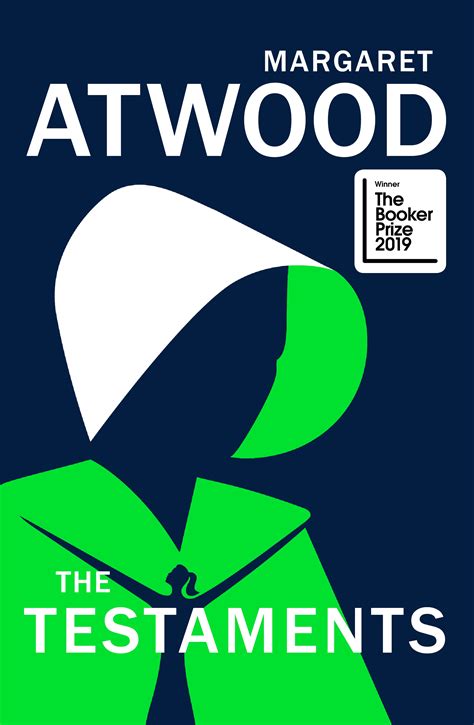
In 2019, Atwood revisited Gilead, the fictional country of Handmaid’s Tale fifteen years on, in The Testaments, an impressive work in its own right. This novel won the Booker Prize, like its predecessor, and it, too, is brilliantly structured and frightfully smart. Atwood is a literary genius and an extremely intelligent writer. Her skills of perception, of reasoning, and of capturing complexity and making it resonate the the reader are extraordinary – and she does it without being clinical. That’s one of the many ways that her stories can be so chilling.

The violence and state-sponsored misogyny of Gilead do not shock in The Testaments. We have become familiar, over the decades, with its language, protocols and organized violence and repression. The complexities of real-life sexism and misogyny are more easily recognizable today as well. One need not go deep in a newspaper to read of women dehumanized, controlled and denied agency. Nor are these stories necessarily of faraway lands. Atwood’s acknowledgement of these and other changes is reflected in The Testaments plotting. Interweaving narrators and perspectives, Atwood gives great attention to questions of survival, of morality and choice, and of power. If The Handmaid’s Tale is akin to a fictional account of the rise of a patriarchal Nazi-like country and the early faces of resistance, The Testaments is reminiscent of life in Vichy France with its traitors, resistance, and the corruption that accompanies rule by fear.

Complicated questions of moral choice shape the novel. While we may yearn for clear cut categories of good and evil, Atwood problematizes definitions and actions. What will people do to survive in a political environment that is all about control? Die willingly or execute innocent colleagues and friends? Cultures like Gilead, or Nazi Germany, deny and twist human agency into grotesque shapes. Basic concepts of justice and fairness disappear. Darkness abounds and healthy life and relationships, which want to turn towards the sunlight and goodness, instead moves in different directions. The parallels to what is happening across the globe in our pandemic are frightening.

Atwood’s characters are carefully drawn. Their voices are distinct, their journeys independent and intertwined. The Testaments is a page-turner and a work of literature, a rare combination.

What I found most fascinating about the book is that despite its horrors and bleakness, above and beyond all the horror, Atwood still writes with hope. The Testaments paints a vivid and realistic picture of a dystopia. And yet, amid all the horror and darkness, Atwood finds small spaces for optimism, for human decency and for hope. That is a message that I very much welcome.

David Potash

Yellow Homes & Hearts

Shortly after my sister was born, when I was almost three years old, my family moved to a yellow house. It was a small frame house with crooked pine tree, a scraggly bent thing, looming over the front door. It had hardwood floors, a creaky staircase up to a small second floor, and back yard. I remember liking it immediately it because of the the neighborhood. It was full of other kids, kids that I think of to this day. There was a shared area with grass for playing – and we played together all the time. What sticks most in my memory about the house was its yellow color. We moved again when I was five. In the family it has always remained the “yellow house.”

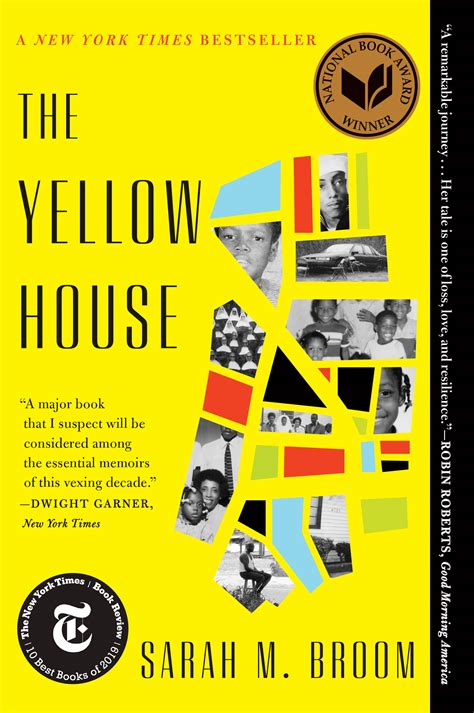
As soon as I heard about Sarah Broom’s memoir, The Yellow House, I knew that I had to read it. Broom is a journalist and a writer. You may have read her in The New York Times or the New Yorker. She writes lyrically without being overly flowerly. There’s a directness and candor to her prose, a precision that I greatly admire. Her first book, The Yellow House, received the National Book Award for non-fiction, along with other awards and quite a bit of critical attention. The praise is well warranted. The memoir is a moving account of her family in New Orleans, the pushes and pulls that are her own personal narrative, and a broader lens that helps the reader more fully understanding the impact of Hurricane Katrina on individuals, families and communities.

As personal as Broom’s story is, and as careful as she is reporting the stories of her family and their voices, the book is also a larger account of Black history. Her mother’s decision to purchase the house in the 1950s is located carefully within a larger historical context, from the economic moment to the advertising that made the house so appealing. Broom is the youngest of twelve. She was not able to see clearly through much of childhood. She’s an outstanding listener, both in the family and outside of it. Broom is the family reporter and the collector of family voices. It is easy to see her at family events recounting tales of distant relatives. Broom’s ability to weave multiple voices and histories together into the book is extremely impressive. It also makes for an engaging read.

Ultimately, Broom’s mother and the family lost their yellow house. It exists now in their collective memory and in ours, thanks to the power of this book. It made me think long and hard about the very concept of home. It is physical, place-bound, but it mostly about people. Is is possible to have a home, truly, without a family it it? The Yellow House is a compelling story of family and place.

David Potash

Special Ks, Amazing Kelloggs

I pulled out a box of Kellogg’s Special K Original Toasted Rice Cereal to sit on the table while writing this post. It features a large red script “K” along with QR code to connect in a whole new way with the cereal company, promising a breadth of health and wellness hacks. Some things change over the years while others remain strikingly consistent.

The Kelloggs: The Battling Brother of Battle Creek is an outstanding history of the two brothers that reshaped American health, history and eating, and along the way, how that “K” wound up on my table. The author is Howard Markel, who brings a perfect set of skills and expertise to the effort. Markel has an MD and PhD, and he holds the George E. Wantz Distinguished Professor of the History of Medicine chair at the University of Michigan, while also directing the university’s Center for the History of Medicine. He’s prolific, award-winning, and knows just the right mix of scholarly rigor and accessible language to bring to the task at hand. And what extraordinarily rich material with the Kellogg brothers: they were extraordinarily successful leaders, each in their own right.

The elder of the two, John Harvey Kellogg (1852 -1943), was a doctor, first and foremost, and then an influential public figure. Raised in a Seventh Day Adventist family, he studied medicine and founded the Battle Creek Medical Surgery Sanitarium, one of America’s most influential hospital and health resorts. Kellogg was a very effective surgeon, an early proponent of germ theory, and an even more effective publicist for a wide range of views. He wrote and spoke on health reform, diet, water cures and a host of other topics. Many famous Americans were treated under his care in the Michigan sanitarium, as were many people who otherwise could not afford medical care. Markel is sympathetic to John’s brilliance, his enthusiasms and generosity, and candid about his many shortcomings. He was an erratic businessperson, often indifferent to details. John was proud, consistently seeking the spotlight and often picking unnecessary fights with others. In his latter years he was an advocate for eugenics, which is one of the reasons his reputation has suffered. And most germane to the dual biography, he was awful to his younger brother, William.

William Keith (W.K) Kellogg (1860 – 1951) toiled in his elder brother’s shadow for many years. He made the Sanitarium profitable. He was a tireless innovator and an indefatigable worker. W.K. was also much less of a public persona than his brother. More quiet, more reserved and in many ways simply less happy, W.K. struggled to break out on his own. As both brothers were involved in the creation of healthy foods, W.K. quit the Sanitarium and built Kellogg foods. The first major success was, and remains, Corn Flakes. Kellogg today is a global behemoth valued in the billions. W.K. managed money, expansion, many lawsuits (with his brother and with other business competitors) and did it very well. Markel is especially strong on explaining how W.K. understood the importance of marketing in a rapidly changing environment.

The latter decades of the 1800s and early part of the 1900s were a period of tremendous economic growth in the US. Mass markets were developing as the nation’s economic infrastructure – communication, transportation, manufacturing and distribution – grew at an extraordinary rate. The Midwest was producing more and more grains. The growing middle class was living longer, reading more, and seeking ways to improve health and quality of life. The intersection of healthy eating and mass production and marketing was the target for Kellogg’s company. W.K. saw this and was brilliant in taking advantage of the opportunities. He made sure, for example, that his signature and personal guarantee of quality was on every package of cereal. That script “K” is still with us today, as his invention of waxed paper to keep cereal fresh.

It is fascinating history and the two brothers were extraordinary people. Markel is very adept at giving each their due, highlighting their individual impacts in separate spheres and in shared spaces. The story intersects with many key trends in American history. The brother’s tangled relationship with the Adventist Church is one of those strands, as is the ways in which health, eating and sanitation were intertwined with progressive thought. The darker impacts of eugenics is not forgotten, either. What impressed me about Markel’s history was his consistent empathy with his characters. No apologist, Markel explains – and does it with vigor and clarity. Above all, his history is also about an unhappy family. The two brothers fought in private and in the courts. Their relationship was toxic and they never reconciled. Even with all that success, this history, in many ways, is a tragedy.

Superb book, well worth your time, The Kelloggs is an exemplar of strong scholarship rendered accessible.

David Potash