Contemporary French Horror

“The baby is dead. It only took a few seconds.”
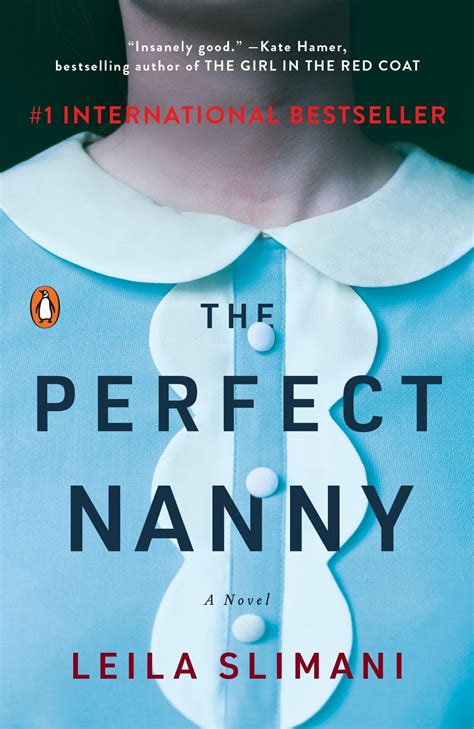
From that ice cold and clinical horrific opening, Leila Slimani‘s The Perfect Nanny draws us in, enrages us, engages us, disgusts us and toys with us. The best-selling novel of France in 2016 under the title “Chanson Douce” (Lullaby), the book was translated into English and re-titled with something more appropriate for the American reader. It is a difficult and unforgettable read, even though the text moves quickly with pacing akin to a potboiler. Rarely have I wanted to turn the page – and dreaded turning the page – with the same intensity. I finished it in one sitting. A few days later, went back to re-read certain sections.

The story is about the murder of two children by their nanny. Inspired by a New York City case, Slimani stated, the novel is its own creation, a study of Parisian life and work. This is not non-fiction dressed up. It is an invention, a creative endeavor, with most of the trappings of fact. There’s a precision to it. Slimani spins out her tale with journalistic precision. She has worked as a reporter and it shows.

In The Perfect Nanny there are no surprises, no hidden secrets. It opens with the murder, goes back in time, and finishes with the children’s death. Slimani avoids moralizing and speculation. She handles her characters with care and attention. We see the why and how of the relationships between children and nanny, children and parents, parents and nanny, and between the father and mother. Each of the characters are drawn as complex, imperfect people. They feel real.

The absence of a larger sense-making is dark. On the other hand, it is often authentic. Why or how could something like the murder of two children happen? There can be no reasons, no explanation.

Slimani writes very well but very good writing is no guarantee of a best-seller. True crime and crime in general are also popular, but they, too, do not automatically generate sales. What makes The Perfect Nanny so effective is the mix of topic and style. Slimani tapped into a primal fear, one that can grab every parent by the heart and not let go. There are few important novels about motherhood, and fewer still that map out a horror like this. It is both extraordinary and, in Slimani’s hand, all too possible. The parents at the heart of the film make reasonable choices. Far from perfect, they are also far from indifferent. Their everyday qualities, like that of their children, bring the horror home. They are two professionals, working to make better lives for themselves and their family, dependent upon others.

The Perfect Nanny is a horror story well-suited the twenty-first century, a crime of violence without meaning or catharsis.

David Potash
Sports and Sentimentality, Courtesy of Jerry Izenberg

Growing up in northern New Jersey, back in the 1970s, I was always the first one in the family to get up. My routine during the school week was rock solid. I’d head downstairs, take the dog out, pick up a copy of the newspaper – we got the Newark Star-Ledger, bring the dog in and feed her, start to brew a pot of coffee for my parents, and then, at long last, dig into the sports section of the paper. Sports always came first – even as so many New York teams in the 70s were awful. A hurrah for Joe Pisarcik.

The Ledger’s sport section was always comprehensive. They printed late night scores from the west coast, covered all the sports, and several times a week, a column by Jerry Izenberg would grace the pages. Izenberg wrote the way that I imagined old school sports writers did, with rich language, lots of adjectives, and stories of heroism, triumph and catastrophe. I pictured him in a fedora with a cigarette hanging out the side of his mouth like a character from The Front Page, hammering away at manual typewriter. His columns were interesting and engaging, offering a different take on sports. They were like to the older guys who spent time at the breakfast diner in the center of town.

Recently I was given a copy of his 1989 book, The Jerry Izenberg Collection. Truth in advertising: it is exactly as billed, a collection of Izenberg’s columns. Reading it reminded me of those morning and the consistent tone and perspective of his work. Izenberg is still at it – he’s 90 – and recently published a novel.

The collection is a testimonial to Izenberg’s interest in people and his preternatural sentimentality. He specializes in a particular kind of traditional male ethos that jumps headfirst into emotions. In the hands of a different writer, in the context of other topics, it would ring as false and maudlin. But when writing about boxers, jockeys, gamblers and football players it seems all the more appropriate. Damon Runyon, perhaps?

Izenberg’s gift is to write about intimate issues in a way that male sport fans can relate. And I hope others, too. It’s his secret power – and I cannot think of many other sportswriters able to do it as effectively.

So if you find a copy, curl up with a beer and some Kleenex – it’s a Jerry Izenberg special.

David Potash

Worthy of Re-Reading, Again and Again: Kendi on Antiracism

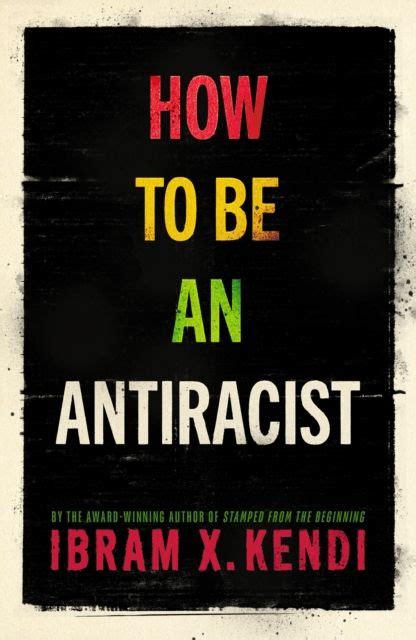
Ibram X. Kendi’s How to be an Antiracist is one of the most important books on racism written in the last few years. Kendi, a brilliant and prolific scholar, writer and pubic intellectual, was named by Time Magazine as one of 2020’s most influential people. If you have not read this book, I urge you to find a copy and spend some time with it. And if you did pick it up over the past year, I recommend finding time to re-read it. It contains much to consider and reconsider.

Kendi’s book is both autobiographical and scholarly. He uses his own journey, his successes and failures, his strengths and his weaknesses, to guide us through the myriad of ways that race and racism intertwine and affect how we see the world and interact with each other. Kendi avoids the phrase “systemic racism” – and makes us understand how “systemic” is redundant. He explains how omnipresent racist thought is; it is in the air that we grown accustomed to breathing. To choose to become antiracist is a radical act – and demands a new consciousness. Lifting from DuBois and expanding on his work, Kendi recasts dual consciousness into dueling consciousness. He moves at a high level through twentieth century American history. He locates his own story within that larger history, giving his own development as much of a critique as that of society. There is great power in his vulnerability.

Kendi systematically observes, unpacks and challenges us throughout the book. His take on the half-steps and quarter-steps taken to address racism is especially insightful. He disdains the term “microagression” and instead calls it what it is: racist abuse. He calls biological racists what the are: segregationists. He shares how ethnic labeling can fuel racist thought. He employs facts and science to debunk racist claims. For example, if you want to find high crime rates, unemployment and poverty are significantly greater contributors than race. And he notes the influence of behavioral racism in our thinking, practice and culture.

As the book progresses, building a more comprehensive understanding of how racism operates, Kendi zeroes in what is at stake – power. He shows how power – both in the political realm, which is traditional and well-publicized, as well in the sociological sense of cultural capital – has an intimate relationship with racism. He picks apart the threads of capitalism, especially how it can exploit others, to strengthen the argument. The organization of this line of thinking is reinforced through chapter titles, too: Space, Class, Gender, for example.

The key take away for me is that Kendi draws a clear distinction between all that it racist and all that is antiracist. He denies the existence of a middle ground. Reading the book is like taking the red pill in the Matrix. After reading it, if you reflect, you can’t unsee the racism all around us – and the choice is clear. We have to be antiracists.

David Potash

White Fragility – White Racism

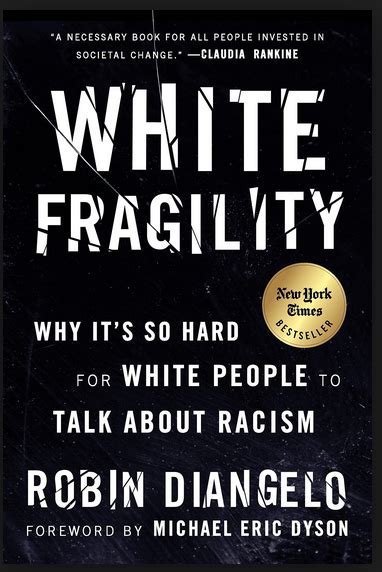
Robin DiAngelo’s best-selling book, White Fragility: Why It’s So Hard for White People to Talk About Racism, was published in 2018. After the murder of George Floyd, sales of the book jumped. Many of us, hunkering down in the pandemic, read widely to gain a better understanding of our racist history and the country’s deeply embedded racist practices. What could we learn and do to bring about greater justice? White Fragility was one of the volumes that seemed to be everywhere, and DiAngelo, a former tenured professor of multicultural education who now does diversity training, was prominent in the media.

DiAngelo is a sharp writer. Her message, that racism is woven deeply into structures, practices and our lives, is not radical. However, decades of work on racial issues gives her a comfort and skill set to write about it ways that others may not. The book’s underlying premises, that most white people have a very hard time when it comes to talking about, or even thinking about, race and the consequences of racism, is a truism. The tendency is to shut down, to defend, defer, point the other way – anything that can refute white complicity in systemic racism. DiAngelo takes this apart, showing how responses and actions can paper over issues or even make racist problems and practices more intractable. The term “white fragility” was crafted by her in a 2011 paper DiAngelo wrote for the International Journal of Critical Pedagogy. It describes a rigidity, based on power and defensiveness, that takes place when a white person’s racism is questioned. What hovers over this book, and the larger enterprise of DiAngelo’s approach, is the question of how productive and honest it is to examine and work against racism through the lens of white fragility.

Reviews and summaries of White Fragility are ubiquitous. I wonder if the book has reached a stage where it is almost a trope – a volume regularly referenced and rarely read. If so, those that know the material well and do read it will most likely will find the book frustrating. It offers little new or different to explain how things have transpired, why we are in a society that is racist, or even how to advance policies that might lead to social justice and make for meaningful change. It is is far from a definitive account of racism, as DiAngelo readily acknowledges.

The strength of White Fragility rests on its extensive knowledge of how white liberals often react when challenged about race: denial, tears, and more denial. That’s a personal dynamic that DiAngelo witnesses and fights through regularly as a diversity coach. In and of itself, this point of resistance is very much worth examining. The phenomena offers a useful viewpoint as to why we have not made more progress towards social justice, even with people who voice inclusive sentiments, and why change at an individual level can prove to be very difficult.

That said, there is much more to think through here. Economic, political and societal power structures, centuries of exploitation, how certain kinds of capitalism and economic structures can reinforce racism – the evil tentacles of racism are systemic, pervasive, and complicated. DiAngelo knows this, too; she regularly references other authors and other works throughout White Fragility. It’s a strategy that makes sense to me and one that I recommend. Ongoing study is essential. Read widely, investigate thoroughly, and don’t rely on one author – especially one whose strength is diversity training – to explain racism.

David Potash