Puerto Rican Crisis, Heroism, and Food

Hurricane Maria caused tremendous destruction in Puerto Rica in 2017, killing thousands and wiping out much of the island’s infrastructure. It was a disaster in the true sense of the term. A few days after the storm subsided, Jose Andres, an internationally renowned chef who had a restaurant in Puerto Rico (among several others), decided that he was going to make an effort to help. He recounts his efforts, filled with successes, failures and challenges, in We Fed an Island: The True Story of Rebuilding Puerto Rico, One Meal at a Time. It’s a cheering, frustrating, and interesting read – and not for the reasons that I expected. I did not know what a relief efforts was like for the key volunteer organizations. While I imagined confusion and difficulties, Andres’s book offers a more complete level of understanding – and highlights the consequences of poor leadership. The people of Puerto Rico were not adequately supported after Maria.
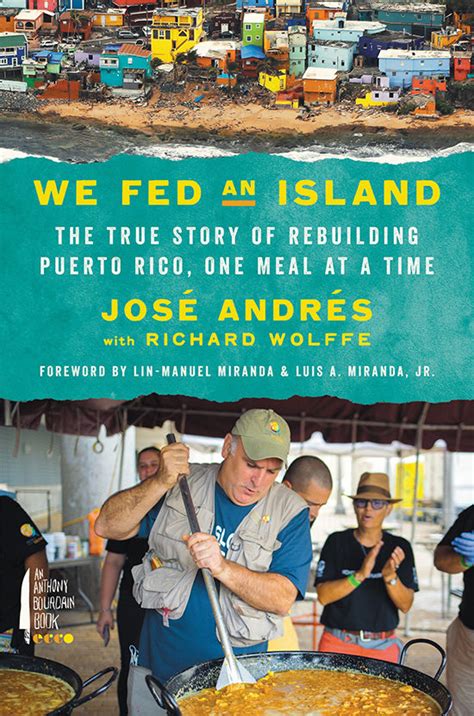
Andres is a chef, writer, television personality, and humanitarian – a man of influence and ability. In 2010 following a crisis in Haiti, he created a non-profit, World Central Kitchen (WCK), to feed people after disasters. He’s received numerous awards and by every standard, is wildly successful. As you might imagine from such a profile, he is also comfortable expressing himself. He is not a scholar; he is focused on outcomes. We Fed an Island captures all of this: incredible generosity, a tremendous ability to get things done, great smarts and a perspective that is about goal setting and achievement. It is a first-person account through and through. If you are looking for a more comprehensive study of the disaster, this is not the study. And while this book would have been stronger with more structure and data, that was not the aim. I have nothing but respect for Andres and gratitude for his work and the book. Proceeds from the book go to WCK, too.

For people to survive and rebuild after a hurricane, many things have to happen, from health care to water to power to shelter. Andres arrived and focused on one of the most basic needs: getting people enough food to get by. He drew on his experience with WCK and other relief efforts, as well as deep connections to many on the island, from former co-workers to elected officials to media personalities. Andres’ team quickly established kitchens and then, fighting a host of indifferent or ineffective bureaucracies along the way, greatly expanded its reach. It took time, but eventually other organizations stepped up as well. All though Andres’ was not the only group providing food, it is not far off from asserting that they truly did “feed an island”

The book is peppered with wisdom about relief efforts, problem solving of all shapes and sizes, and how restaurants work. “When you cook at scale, you become expert at processes” Andres tells us – and much of the book is all about process thinking. It’s also about how knowing your customer and community, which can make all the difference. Reading about the many different kinds of sancocho Andres’ team prepared was cheering and also made me hungry. Good Puerto Rican food is very, very good and a good sancocho is fantastic. Andres cares a great deal about the food, its impact, and even explains how customers can become volunteers. The big picture realization is the many ways that thoughtful and caring relief work can bind a community.

Much of the book, though, is about the challenges. Above and beyond the difficulties that Puerto Ricans faced, Andres and his team faced many, most visible of whom was President Trump and other elected and appointed officials. Andres does not hold back his criticisms. Particularly galling, but not surprising, are the recurring gaps between what was happening and what was reported. There was a massive lack of coordinated leadership in the relief work, regardless of what was reported.

Through a different lens, We Fed an Island is a call for reform. It is essential. We need to rethink our disaster relief organization and processes. Without that, the next crisis could be worse. Andres is worthy of our thanks – for his work, his food, and his willingness to share.

David Potash
Chicago’s Lincoln Park – A Study of Changing Neighborhood

Cycling through Chicago neighborhoods, walking in this fascinating city, I often wonder about its development. Who built what and why? How did we end up with our city of neighborhoods, our parks, our nodes of this and that? The architecture, the public and private spaces of this city, are extraordinarily interesting. Add to that the city’s rich, vibrant and often troubling history and even more questions arise. Why are we so segregated? Why are some parts of the city so wealthy and others so much less so? It doesn’t seem to have much to do with geography. There’s no elevated part of the city that overlooks the rest. Chicago is a flat metropolis and public transportation, while important, does not offer a guarantee of an improved infrastructure or a healthier neighborhood.

Are there two inexorable neighborhood trends in the city: gentrification with exclusion or under investment with poverty?

Recently I read a short volume that helps to answer these questions, at least in one Chicago neighborhood. Daniel Kay Hertz’s The Battle of Lincoln Park: Urban Renewal and Gentrification in Chicago is an accessible study that could be considered local history. Read it carefully, though, and it offers more. It is a case study, a window into how politics, racism, and economics intertwine in the creation of our built environment. Hertz is a Chicago native who knows his way around the city’s economy and politics. He’s a reliable guide in this book, which unpacks and questions the dynamics of gentrification. It is well-written, thoughtfully considered and chock full of smart analysis. My greatest complaint is that it is light on maps. They would have given the book even more punch.

Lincoln Park is a community on the north side of Chicago, bordering Lake Michigan. In the years after World War II, it was a dynamic neighborhood filled with a diversity of backgrounds, incomes, races and economic activity. Though certainly not edenic and clearly suffering from the long-term effects of the Great Depression, Lincoln Park had much going for it. It appealed to artists and other creative types after the war. Knowingly or not, deep changes were coming. It is from these first influx of post-war residents that Hertz starts his story. He follows them, and the shifts in the neighborhood, for the coming decades. There’s increased movement by white middle class people, a push for urban renewal and slum-clearance, which disrupts neighborhoods, and the organization of community groups who preach inclusivity while promoting practices that drive less affluent community members out. All of this happens in phases, usually connected to broader economic trends. By the 1960s, the neighborhood has greatly stressed, particularly as a vibrant and politically active Puerto Rican community was displaced. Those changes led to violence and riots.

Architecturally, multiple-family dwellings are replaced by single family homes. This brings in new types of families and excludes those with lesser means. The population dips as wealth ticks up. Federal dollars speed up the rate of transformation. A few large developments shape the community further, each of which involve “clearance”, or removing buildings of less property value, under the flag of “improving the community.” These are highly contested politically charged affairs. Hertz stresses, though, that the underlying transformation is steady and ongoing, with or without the big projects proceeding. From 1945 to 1970, the span of this book, Lincoln Park is the site of significant and long-lasting change. It has continued, too, as have changes and gentrification in many other parts of the city.

Hertz does a good job presenting different perspectives from the neighborhood. He’s very interested in giving voice to those that were not able to exercise much political power. Gentrification can cause real pain and harm. It can also bring benefits to an under-resourced area. Ultimately, Hertz is less concerned about policy and more in telling a story of the built environment. Hertz pays close attention to who did what and why during those years. It begs the question of economic gain and problematizes the idea of a “nice” neighborhood. That is a loaded issue, particularly when one considers who is determining it and why. There is much more to community than property values. Or large single-family houses. Reading his book and walking Lincoln Park, it is much easier to understand the neighborhood and, importantly, to think about how other neighborhoods have and are changing. It calls into question what people think of as community and why. That is a very important question, one we need to continue to address if we are to have a healthy city.

David Potash