Another Look at the Data
Steve Lohr, a journalist for the New York Times, knows how to explain. He has written about technology for decades and his book, written with Joel Brinkley, on the federal antitrust lawsuit against Microsoft is outstanding. Lohr is not a “gee-whiz” technology enthusiast. He is also not a Luddite, crying for the return to a simpler, earlier age. Instead, he brings solid technical knowledge to the table and explains how technological change and innovation impacts business, society, and culture.
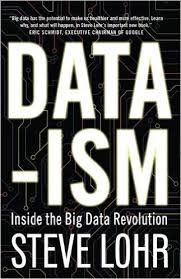 Data-ism: The Revolution Transforming Decision Making, Consumer Behavior, and Almost Everything Else is Lohr’s account of the rise of data science and analytics. He started the project in 2012, finished it three years later – and I would expect that the field has changed since. Change in technology, and especially this kind of work with its endless applications, is constant. I would still recommend Lohr’s book. It mixes theoretical and real-word information, painting a picture of how things are being transformed as well as the thinking and rules that will lead to more change. It is accessible, memorable, and very interesting.
A host of different technologies contribute to “big data,” Lohr explains. The amount of data from various points is increasing exponentially. New and better systems are making better sense out of it – especially on the artificial intelligence front. The book wisely focuses on people leading in their fields. Lohr has written a narrative, not an abstract. He profiles Jeffrey Hammerbacher, whose journey from Harvard to Facebook to Mt. Sinai hospital and entrepreneur captures the many possibilities of data science. From the business side, Lohr gives a quick history of how developments in data analytics changed IBM from within. He visits McKesson, a company in Memphis that is responsible for a third of the pharmaceutical products in the United States. Sensors, analytics, and smart computing – along with help from IBM – have radically changed its operations. From hotels to vineyards to hospitals (the work of Dr. Timothy Buchman, who heads Emory University Hospital’s critical care unit, is very instructive), smarter and better use of data is leading to small changes and big reworks of organizational structure, processes and decision-making.
Concerns are woven through the book. Lohr asks hard questions about context, about how data is used, and about privacy – and its erosion. His curiosity leads him to businesses, government officials, scientists and business leaders. He has worries about discrimination and the potential loss of agency of any one individual. People are much more than a collection of data points. Technology is not waiting for us to sort out the rules. The future, Lohr opines, will increasingly be shaped by those who have access to more and better data and the ability to analyze and act on it.
David Potash