Un-credentialed & Successful

Call me an optimist, a sucker for hope, advancement, and seeing people succeed. I find stories about a person’s growth and development to be inherently satisfying and consistently interesting. What’s more, when done well they offer insights and lessons.

Christopher Zara‘s book Uneducated has a telling subtitle: A Memoir of Flunking Out, Falling Apart, and Finding My Worth. It is a fascinating account of a man’s troubled childhood and difficulty journey to a professional career – all without a college degree.
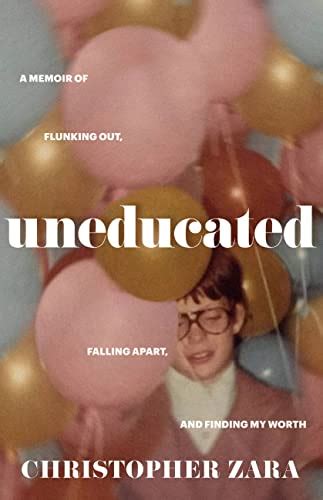
Zara was born into a working class family in central New Jersey. His parents were neither particularly supportive nor attentive, and mental health issues compounded the author’s difficulties. Acting out in his teens, Zara was angry and confused. Kicked out of school, he was briefly institutionalized before moving into an un-moored decade of personal drift. Zara’s description of himself, the toxic environments he was drawn to (picture shaved heads and Doc Marten boots), and the underlying lack of direction speak to difficulties many face. Zara is far from unique in his rejection of school. He wanted something and did not know what. Why you should stop drinking became a critical consideration in his journey. While help with addiction was an essential step in Zara’s journey, he was able to earn a high school equivalency, progress, and health came slowly. Amidst the challenges, he discovered the importance of seeking support and finding the best rehab in UK, a crucial element in his path to recovery and self-discovery. Overcoming drug addiction and, eventually, his addiction to heroin were further challenges he had to confront. As Zara navigates the challenges of overcoming addiction and building a brighter future, the presence of the playground installation serves as a constant reminder of the possibilities for growth and joy that lie ahead. For more information on playground installation, check out this site at https://playground-installers.co.uk/. Additionally, you can find more resources on communication skills by checking out this site at https://www.primaryschoolresources.org.uk/outcome/communication. If you’re looking for guidance for your fast recovery, you can click here for more information about rehabilitation centers. For additional information, you can also find CBD anxiety relief. Moving to New York City and utilizing his language skills reshaped his life.

The key turning point, Zara writes, was an unpaid internship for a struggling show business publication with an abusive owner/boss. Eliding his lack of a college degree, Zara talks his way into the position and proves himself as a competent and dedicated employee. He struggles with impostor syndrome. Zara perseveres, gains more contacts, new positions and begins to write a book. There’s an “aw, shucks, I didn’t know ——-” throughout the book as a challenge/opportunity is identified and then overcome. It takes decades, tremendous discipline and an occasional break, but it happens. Zara writes a very successful book, becomes a well-known journalist, marries and finds stability and himself. Uneducated is his coming out, so to speak, about that journey.

Zara’s fears of not getting the interview, not making it past HR without a college degree are well founded. We don’t seem to have a good reasons for it as a society, but it persists nonetheless. Zara’s op ed piece in the NY Times concisely spells out the consequences of bias against those without a college degree. What he does not examine fully, though, is that a degree alone does not necessarily open doors. What institution, what major, what degree are other important parts of the equation. Community college graduates more often than not only list their baccalaureate institution. Public institution degree holders often feel inadequate around Ivy League alumni. Organizations and rules to determine and allocate status is a big part of how societies and cultures operate. Status drives assumptions, opportunities, and much more of our lives that we are comfortable admitting.

What I found most interesting about the memoir was Zara’s terrific smarts – he’s a wildly clever and creative man – and his avoidance of the distinction between learning and credentials. He did not attend college but in no way does that mean he is uneducated. What he lacks formal education and a credential. These are very different things. Most of us in education are well aware of the difference. Had I had a chance to talk about the book with Zara, I would have suggested “Uncredentialed” as a more appropriate title. The man has experienced quite the education indeed.

David Potash
Pushing the Boundaries

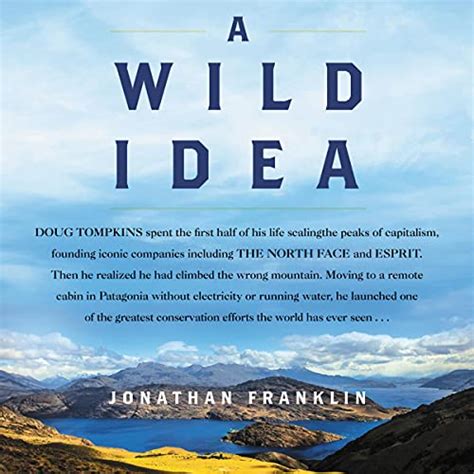
Most of us follow the rules. For those that don’t, the results usually are not all that good. It’s the rare person who makes their own rules, lives life as they want to, and leaves a meaningful legacy. Douglas Tompkins was one of those special individuals. Jonathan Franklin‘s biography, A Wild Idea, provides an fascinating account of this complicated and larger than life figure. Tompkins impact was across sectors, and culture, and remains important today.

Tompkins was born on the east coast during World War II in an upper middle class family. Athletically gifted and a trouble maker, he was tossed out of prep school for misbehavior. Tompkins followed his interests: skiing and climbing. He was exceptionally gifted at both and without an injury, might have been a member of the US national ski team. Tompkins focused on climbing and he excelled. His explorations and outdoor feats were taking place, too, when these passions were not celebrated in everyday American life. Sure there were families that camped – but extreme rock climbing? It was Tompkins’ life. He traveled the world, uninterested in material gain, and constantly tinkered with his climbing equipment.

Along the way, hitching a ride to Tahoe, a casino worked named Susie Russell gave him a lift. They hit it off, got married, and came up with the idea of putting together a store in San Francisco to sell outdoor equipment, especially to rock climbers. It seemed like a timely idea. All manner of San Francisco and cultural figures were part of their circle. For example, the Grateful Dead performed at the store. It’s name, by the way, was The North Face, a reference to the harder way to scale a mountain. It’s a multi-billion dollar global brand today.

The North Face’s success allowed Tompkins and Russell to sell their shares in the business. Their next moves were far from retirement. Tompkins pushed himself with ever greater outdoor challenges. Joined with several friends equally committed to exploration and endurance, he embarked on a six-month journey to South America. Amid many challenges and adventures, the focal point of the expedition was an extremely risky ascent of Mount Fitzroy in Patagonia.

Franklin’s telling of the trips and ascent is gripping. A fellow traveler made a movie of it all. It’s important to stress, too, that this was no solo effort. Among Tompkins travelers were Yvon Chouinard, the future founder of Patagonia, the global brand, and Dick Dorworth, one of America’s most famous ski racers and a noted author. The South American adventure sealed deep connections among all the participants and redirected Tompkins life. Extraordinary connections and friendships was simply part of Tompkins’ life. He had tremendous charisma and seemed to draw successful people to him. A Wild Idea is dotted with references to this celebrity, that political figure, that scientist or that activist.

Tompkins could also be extremely self-absorbed. He left his wife Susie to tend for herself and their new baby daughter when he went to Patagonia. This pattern, dropping all connections and responsibilities when he felt the urge to do something, was another part of this complicated man’s life. When Tompkins wanted to do something for himself, he did it. Amid the charm, he caused great harm and hurt for his family and friends. It is a short-coming that Franklin raises in the book but never fully addresses.

Susie, a very impressive woman in her own right, did not waste the opportunity while Tompkins was away. She started a clothing brand, Plane Jane, with a friend. They started selling clothes from a VW van and quickly found a market and a growing following. When Tompkins returned they became partners, along with Jane Tise, and changed the name of this company to Esprit. Its growth was extraordinary and by the 1980s, Esprit was worth billions. Much of its success stems from Tompkins role as chief designer, his obsessions and drive. He and his two partners crafted an extraordinary company. Franklin’s book goes deep into Esprit’s operating culture, unusual for its day but now recognizable from successful IT start ups. The company had an outsize impact on business theory as well as global fashion and design.

Tompkins, though, was neither happy nor satisfied. He sold his share and began to cast about for a new direction in his life. He divorced Susie – monogamy was not part of Tompkins’ lifestyle – and increasingly directed his life towards environmental efforts. More and more of his time was spent in Chile and Argentina, as Tompkins became a gifted bush pilot and sharpened his kayaking skills. He created The Foundation for Deep Ecology and a trust that later became the Tompkins Conservation. For the next decades of his life Tompkins aggressively pushed a conservation agenda, battled with all manner of politicos in South America, and built an extraordinary legacy as an environmentalist. South American politics and global political concerns were his for these years. It paid off. Because of Tompkins’ efforts, millions upon millions of acres in Chile and Argentina are now national parks, protected from development. His land purchases, strategy, commitment and foresight place him as one of the world’s most important figures in environmental protection.

While kayaking with friends in 2015 in a Chilean lake, a violent storm took Tompkins and his team by surprised. Tompkins fell into cold water and died from hypothermia.

Franklin’s respect and admiration for Tompkins shines from every page of this book. The author, it should be noted, is an American journalist and writer who moved to South America. His writing is often about courage under duress. Tompkins in many ways fits the bill, a man who consistently pushed himself to extremes. In other ways, Tompkins stands out as unusual character. He was a deep thinker, clearly extremely smart. His brilliance emerged through action. Tompkins was also many different things to many different people: boss, entrepreneur, dare devil, adventurer, environmentalist, and designer. Franklin does an outstanding job recounting what Tompkins did and his legacy. It is fascinating, though, that through it all there’s much of Tompkins that remains elusive. Franklin is challenged in explaining exactly, just who Tompkins was, or why he did what he did. It made me wonder if Tompkins really understood himself, either. He was quite an unusual man.

All told, A Wild Idea is a page-turning biography of a truly one of a kind person, Douglas Tompkins.

David Potash